
Visible pollen, dust, or leaves can prompt Flower Mound homeowners to consider solar panel cleaning, but a film on the glass does not always call for immediate action. Start with a safe view from the ground, then check the care instructions for your specific panels before deciding whether to monitor, clean, or request help.
Why can dust, pollen, and debris collect on Flower Mound panels?
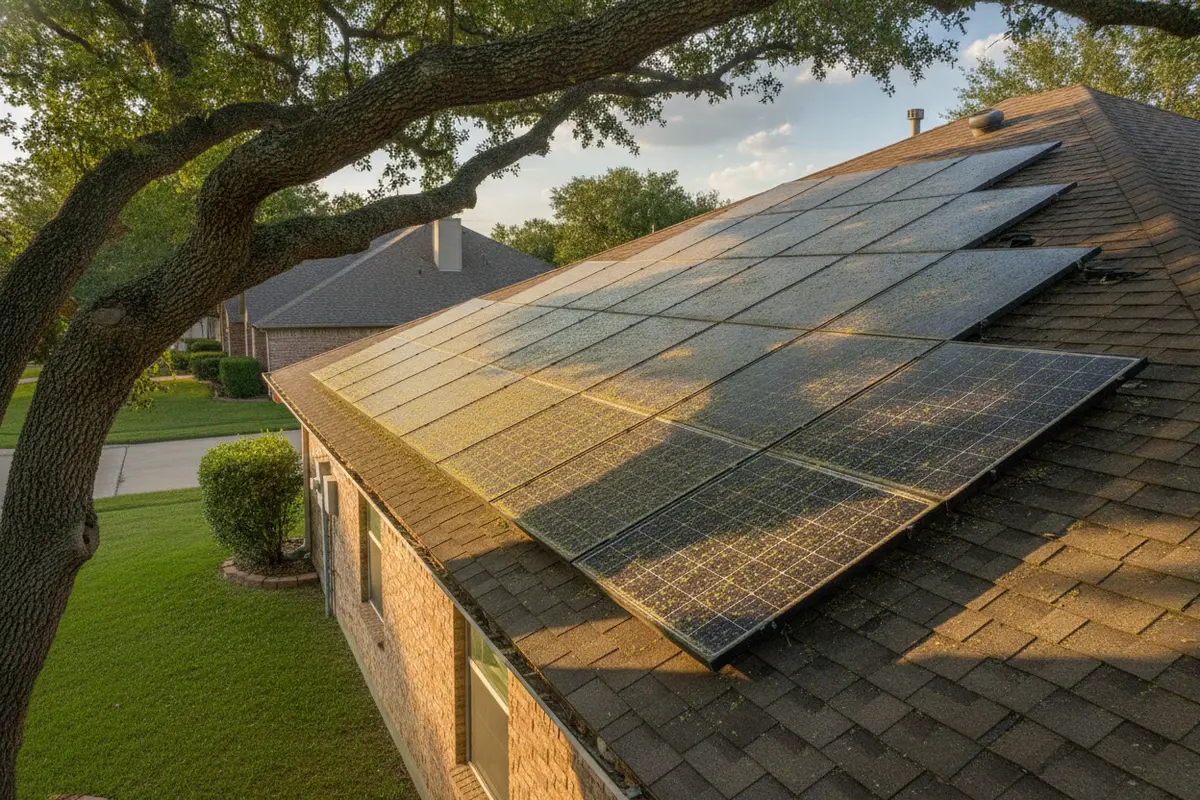
Residential panels collect airborne dust and pollen, plus occasional leaves, twigs, or bird droppings; Window Hero Southlake recommends judging the visible condition rather than assuming every array needs a fixed cleaning schedule. Wind can move fine particles across glass, while trees and other nearby vegetation can leave organic debris on a roof. Roof angle and exposure affect what settles and what washes away.
Rain may rinse loose particles, but it does not guarantee a spotless surface. A deposit that stays in one area may need a different response from a faint, even film that changes after ordinary weather. Even within Flower Mound, one home may sit near mature trees while another has an open roofline. Their inspection findings and access conditions can differ.
Make observations from a safe location. A ground-level view, a window that opens safely, or another secure vantage point can reveal obvious debris. Do not climb a ladder or step onto the roof just to confirm a small patch. If the panels are hidden from view, treat that as a reason to ask for guidance, not as a reason to improvise roof access.
solar panel cleaning flower mound: what is a safe approach?
For solar panel cleaning in Flower Mound, first follow the panel manufacturer’s care instructions and any relevant system guidance; Window Hero Southlake cannot assume one cleaning method fits every installation. Different equipment may have different limits for water, tools, products, and access. The documentation supplied with your system is the best starting point for understanding what is allowed.
Before acting, find the panel or inverter information you received from the installer. Look for cleaning directions, warranty conditions, and instructions for contacting the system provider. If documents are missing or unclear, ask the installer or manufacturer instead of testing an unfamiliar product on the glass.
- Check whether the manufacturer allows homeowner cleaning and whether it specifies water quality, tools, or timing.
- Look for residue from a safe vantage point and note whether it affects one panel or a wider section.
- Do not walk on the panels or lean over an edge to reach them.
- Avoid scraping, abrasive pads, stiff brushes, unapproved chemicals, and high-pressure spray.
- Stop if access, wiring, weather, or uncertainty makes the work unsafe or inconsistent with the instructions.
Gentle does not mean automatically safe. Water can make a roof or access surface slippery, and an ordinary household cleaning product may not be approved for panel glass or system components. Do not assume that a tool used on windows, siding, or a patio is appropriate for solar equipment. Window Hero lists solar panel cleaning separately from its other exterior services, which is a useful reminder to confirm the method for the surface in question.
How can you decide whether cleaning is needed?
Window Hero Southlake suggests considering three things together: visible deposits, the equipment instructions, and whether any work can be done safely. A faint layer of dust may call for continued observation, while leaves or bird droppings that remain may justify checking the approved care method or asking a service provider what they recommend.
Keep a simple record if the panels are difficult to assess at a glance. Write down the date, what you could see, which section appeared affected, and whether conditions changed after rain. A photo taken from the same safe spot can help you compare observations later. Do not use a photo as a reason to approach an unsafe roof edge.
Some solar systems provide production or monitoring information. A change in reported output can have several possible causes, so do not assume dirt is responsible. If you notice a persistent system concern, note when it began and share the available information with your installer or system provider. Cleaning can address appropriate surface buildup, but it does not diagnose an electrical or equipment issue.
| What you can observe | Practical next step | What to avoid |
|---|---|---|
| Light dust or pollen with no persistent patch | Monitor from a safe place and read the care instructions | Climbing for a closer look without a safe plan |
| Leaves, droppings, or a deposit that remains | Check approved care guidance or ask about cleaning | Scraping or applying an unapproved product |
| Panels on a steep or hard-to-reach roof | Ask a qualified service provider to discuss access | Attempting roof work without appropriate training and protection |
| Output concern but no clear visible residue | Contact the installer or system provider | Assuming cleaning will fix the system concern |
When making that decision, separate what you know from what you cannot confirm. You may know that one corner appears shaded by branches or that a visible deposit has remained between two ground-level checks. You may not know whether that deposit affects system performance, whether an unseen section is dirty, or whether a particular rinse method is allowed. Write down the visible facts and leave the technical questions for the installer or service provider. This keeps a simple cleaning question from turning into an unsupported diagnosis.
For example, if the array looks uniformly dusty but there is no obvious stuck material, compare a later view from the same safe location before arranging work. If one panel has leaves or droppings that remain, check the manufacturer's instructions and ask about an approved way to address that specific issue. If the visible surface looks clear but monitoring indicates a change, contact the system provider instead of treating cleaning as troubleshooting. Different observations point to different next steps.
Which care option fits your roof and panel condition?
Start with the manufacturer’s instructions, then match the next step to what you can actually observe. For example, a homeowner who sees only a light film from the yard and has no system warning may reasonably monitor rather than arrange immediate cleaning. A homeowner who sees a persistent deposit but cannot safely reach the array can ask about professional service without attempting the work personally.
A roof with a difficult pitch, panels near an edge, or an access path affected by wet weather changes the decision. A safe method on one installation may not be appropriate on another. Ask what access plan is proposed and whether it fits the manufacturer’s directions. The goal is not to select the fastest tool; it is to determine whether cleaning is appropriate and how to avoid unnecessary risk.
| Option | May make sense when | Before choosing |
|---|---|---|
| Monitor from the ground | Residue is light or uncertain and there is no clear reason to intervene | Note visible changes and review system care instructions |
| Homeowner care | The manufacturer permits it and a safe method is available | Confirm approved materials, water, tools, and access limits |
| Professional cleaning discussion | Deposits persist, access is difficult, or instructions are unclear | Ask about method, access, and fit with equipment guidance |
| Installer or system-provider review | There is a performance concern or uncertainty about system condition | Explain the concern and share any monitoring information |
These options are not competing promises about results. They are ways to make a more informed next decision. A service inquiry can clarify the proposed cleaning method and access plan; it should not replace an installer’s assessment when the question concerns system operation. You can review the local solar panel cleaning service information or the broader exterior cleaning service list when identifying which kind of work you are considering.
What should you ask before arranging professional service?
A useful conversation covers the visible buildup, equipment instructions, proposed cleaning method, and safe access plan before work begins. Share what you can see from the ground. If you have the panel documentation, ask whether the proposed approach can follow its directions.
- What method do you propose for this panel system, and what information do you need about the equipment?
- Can the work follow the manufacturer’s care instructions I provide?
- How would the crew access this particular roof and array safely?
- What tools, products, or water conditions would be used?
- Could weather or roof conditions change the plan or require rescheduling?
- Should I contact my installer first because my concern involves system output or equipment?
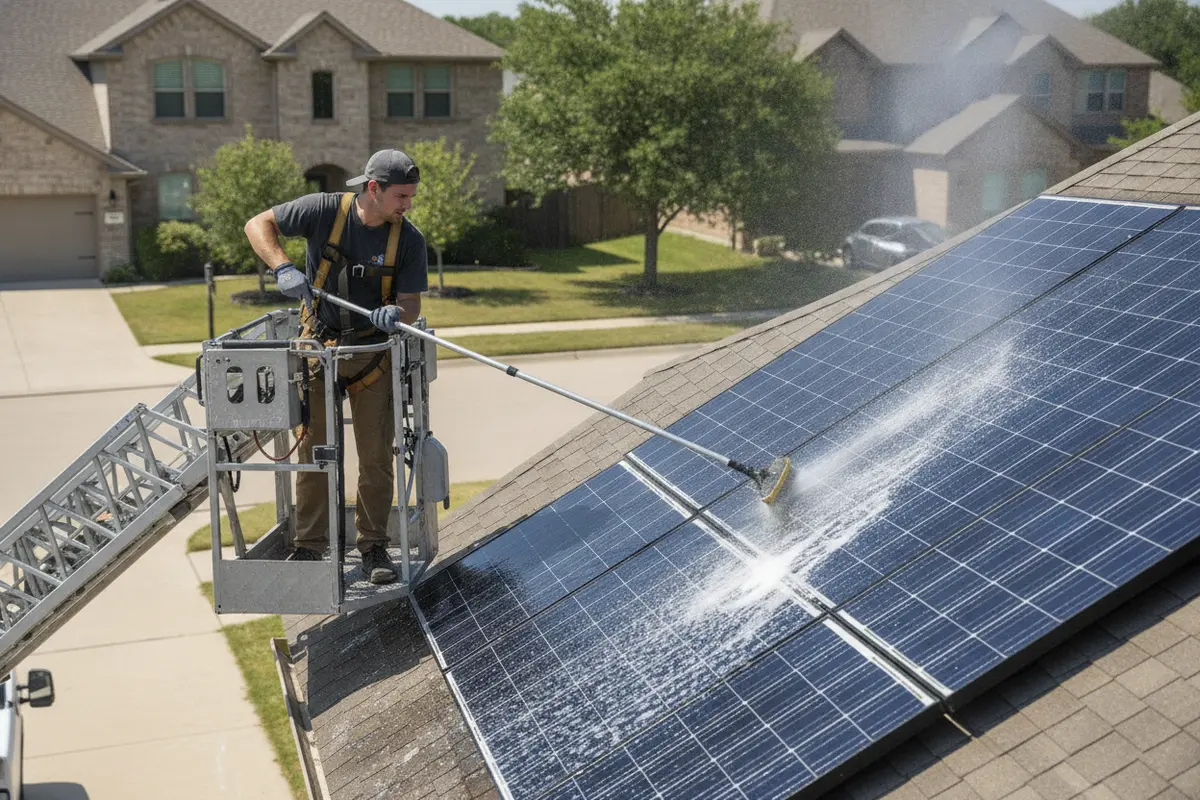
Ask for clear explanations rather than assuming that a standard process fits every home. A technician should be able to discuss the intended method and access considerations in terms you understand. If an answer leaves you unsure whether the method suits your panels, pause and verify with the equipment provider before proceeding.
For general workplace fall-safety context, the Occupational Safety and Health Administration provides resources on workplace safety. This is not a homeowner roof-access plan. Do not take a fall risk to remove a small deposit, and do not treat a general safety resource as a substitute for qualified training and appropriate protection.
How does panel care fit with other exterior upkeep?
Solar panels are one part of a home’s exterior, but care methods should remain surface-specific. A product or spray setting suitable for a different material is not automatically appropriate for solar glass, seals, wiring, or mounting components. Keep separate tasks separate unless each method has been checked for the surface involved.
Homeowners planning more than one exterior task can review services independently. Window Hero Southlake lists window cleaning, gutter cleaning, and house washing as distinct services. These may be relevant to broader home upkeep, but they do not establish that the same tools or methods should be used on a solar array.
For context about solar installations and residential considerations, read Solar Panels for Your Home. Flower Mound homeowners may also check the Window Hero Southlake location page for local service information. The service area includes Flower Mound and nearby communities such as Southlake, Colleyville, Westlake, and Grapevine.
Frequently asked questions
How often should panels be cleaned in Flower Mound?
There is no single interval that fits every roof and exposure. Check the panels from a safe place, watch for persistent buildup, and follow the equipment manufacturer’s care instructions before deciding.
Can rain clean solar panels?
Rain can rinse some loose particles, but it may not remove every stuck-on deposit or material under an edge. Check again from a safe vantage point and use the manufacturer’s directions to decide what to do.
Can I use a pressure washer on solar panels?
Do not assume that pressure washing is suitable. Follow the panel manufacturer’s instructions, and do not use pressure, tools, or products that the instructions do not allow.
Should I climb onto the roof to inspect the panels?
No. Do not climb onto the roof or lean over an edge just to get a closer view. If the panels are hard to see or reach, ask a qualified service provider or your installer for advice.
What if my system output changes?
Visible soil is only one possible consideration, and an output change may have another cause. Contact your installer or system provider if the concern persists instead of relying on cleaning to diagnose it.
For Flower Mound homeowners, the sound next step is to observe safely, follow equipment-specific care guidance, and choose cleaning only when the visible condition and access plan support it.