
Solar panel cleaning North Fort Worth TX homeowners and property managers consider should start with an observation, not a climb onto the roof. Dust, pollen, leaves, and other material can collect on an outdoor array, but the right response depends on visible conditions, equipment instructions, and safe access. A simple review can help you decide whether to monitor, ask the system installer for guidance, or request a cleaning estimate.
Why can dust and pollen collect on North Fort Worth panels?
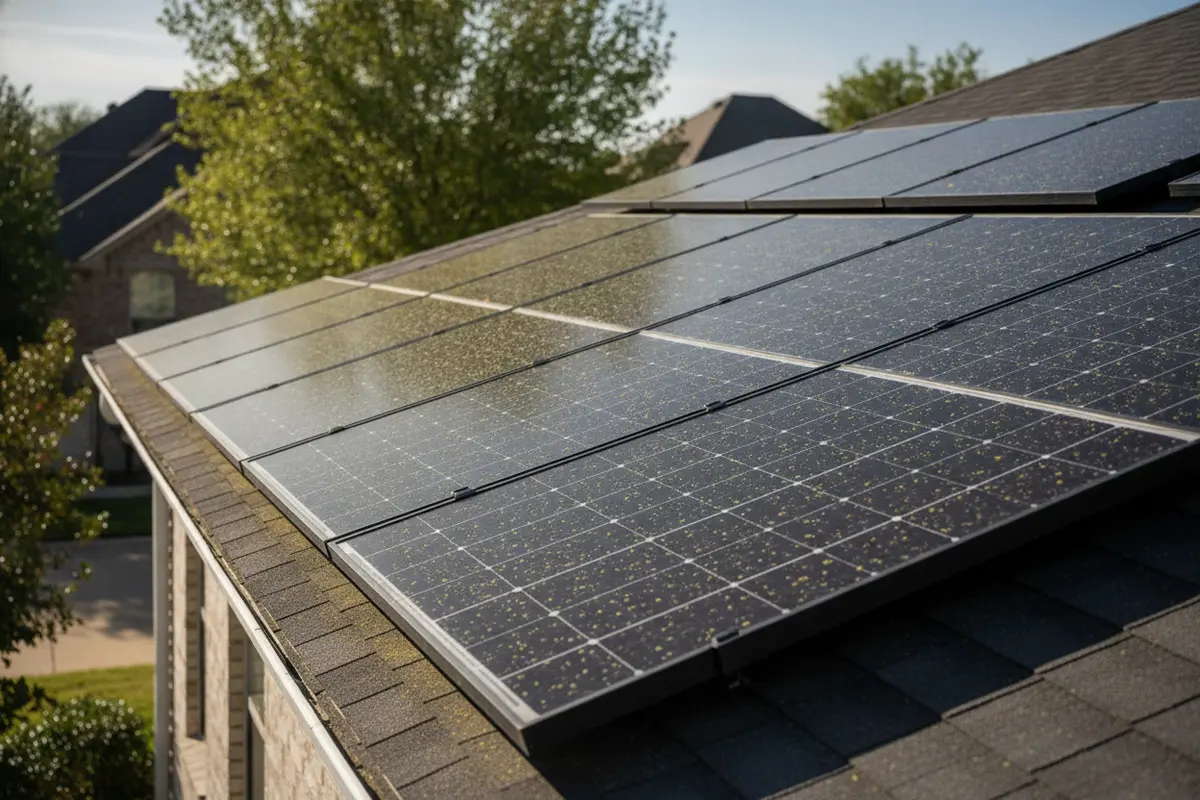
For North Fort Worth properties, seasonal pollen, windblown dust, leaves, and isolated debris can leave visible material on panel surfaces. What collects depends on the array's surroundings and recent conditions.
Solar panels sit outdoors and receive exposure from the same weather and landscaping as the rest of the property. Pollen may leave a fine film during blooming periods. Dust can settle during dry weather, while nearby trees may contribute leaves or small twigs. Bird droppings can create individual marks that look different from a light, even coating.
There is no need to assume that every visible speck requires immediate cleaning. First note whether the material covers much of the array or appears in a few isolated spots. Look from a place where you have stable footing and a clear view. Do not climb a ladder, walk on a roof, or reach over an edge to get a closer look.
A dated photograph from the same safe viewing point can help you compare conditions later. Keep the view consistent and record recent nearby activity, such as landscaping or construction. These notes describe what you can see; they do not diagnose electrical or panel problems.
Solar panel cleaning North Fort Worth TX: what is a safe approach?
Window Hero Southlake recommends treating panel care as equipment-specific work. Review the manufacturer's instructions, avoid hazardous access, and ask questions about the proposed method before scheduling service.
Solar arrays combine electrical equipment with a roof environment where slips and falls can occur. Check the documentation for your panels and inverter before deciding how to clean them. The maker's guidance is the best starting point for approved care methods. If the instructions are missing or unclear, contact the manufacturer or installer rather than guessing.
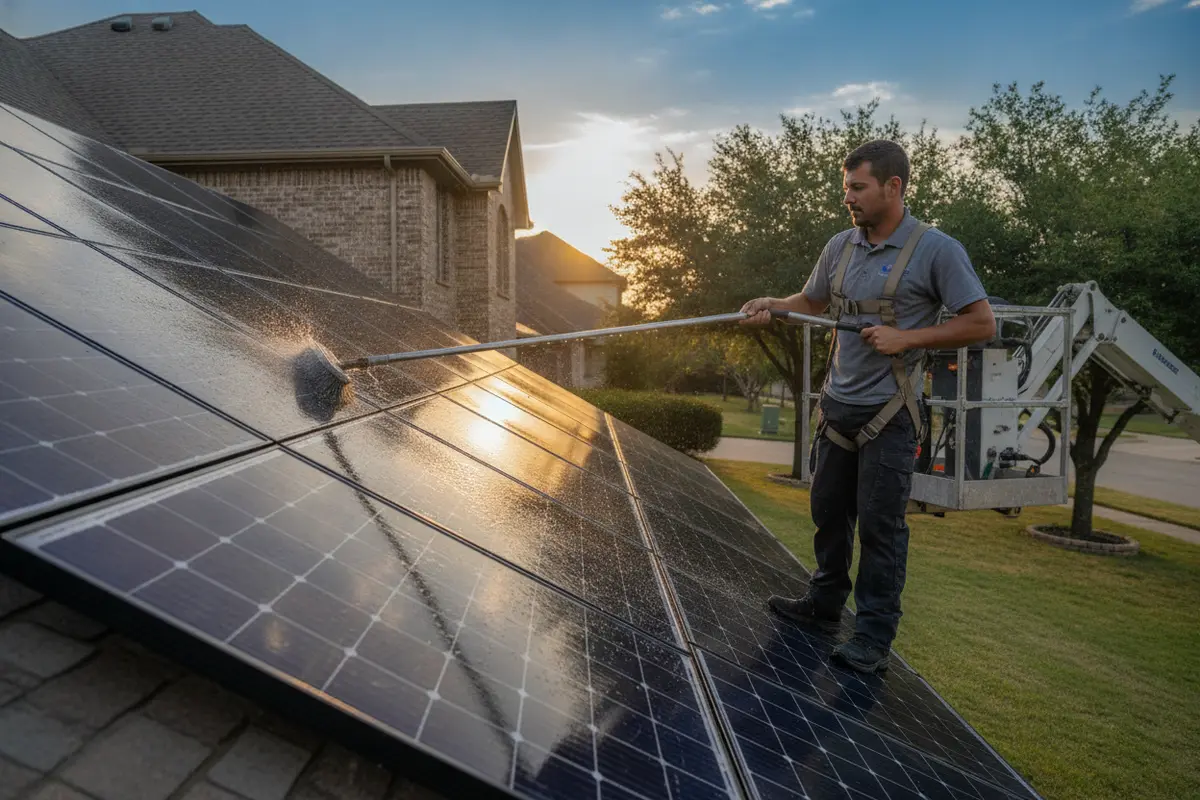
Do not assume that an ordinary household cleaner, abrasive pad, or pressure washer is appropriate. Different systems can have different care directions. A method that seems convenient may not match the equipment instructions or conditions at your property. Ask the service provider to explain the planned tools, water use, access, and precautions.
If you see a cracked panel, loose component, damaged-looking cable, or exposed wiring, do not touch it or attempt cleaning. Keep people away from the area if needed, then contact the installer or a qualified solar technician. Cleaning is not a substitute for inspection or repair.
Homeowners who want broader background can read Solar Panels for Your Home. That general overview is not a care manual for a specific array. Use your own manufacturer's documentation for equipment-specific cleaning directions.
How can you decide whether cleaning is needed?
Window Hero Southlake suggests basing a cleaning conversation on visible buildup, safe access, and the instructions for your equipment instead of relying on a universal calendar.
Begin with what you can observe from the ground. Is residue spread over a large part of the array, or limited to a few marks? Are leaves or other debris resting near panel edges? Has the same material remained after ordinary weather? Write down the answers and the date. This creates a practical record without putting you on the roof.
Next, consider the setting. A home beneath mature trees may face different debris than a more open property. Nearby building work or landscaping can also add dust. Those are reasons to check again, not proof that panels need a particular treatment. If the array is not safely visible, leave the inspection to someone qualified to assess access.
Do not treat a change in monitoring data as proof that cleaning is required. Many conditions can affect system readings, and a cleaning appointment should not replace proper troubleshooting. If monitoring shows an unexpected change or the inverter displays a warning, contact your installer or solar provider. Ask them to review the system concern before arranging work that only addresses surface material.
Some owners use a repeatable observation routine without setting an automatic cleaning interval. For example, note conditions after a period of heavy pollen, compare them after rain, and check again following nearby work. If the surface looks unchanged and the system has no reported issue, monitoring may be a reasonable next step. Follow manufacturer instructions in all cases.
For more context about timing and solar-panel maintenance discussions, see Window Hero's article about late-summer solar panel cleaning. Treat any general seasonal discussion as background, not as a replacement for your panel maker's directions or an installer’s advice about your system.
What should homeowners and property managers compare?
The next step depends on what you can see, whether the array is safely accessible, and whether you have equipment or monitoring concerns. Compare options before choosing how to proceed.
| Option | When it may fit | What to do or confirm |
|---|---|---|
| Monitor from the ground | No substantial buildup is visible, and there is no known system warning | Keep dated observations and follow the manufacturer's maintenance guidance |
| Ask the installer or manufacturer | You are unsure about cleaning instructions or notice an equipment concern | Confirm approved methods and ask whether a technician should assess the system |
| Request professional cleaning | Visible residue remains, or safe roof access is a concern | Discuss the method, access plan, surface protection, and work included |
| Arrange system troubleshooting | Monitoring or equipment alerts raise a concern | Contact the installer or solar provider; do not treat cleaning as a repair |
For a residence, roof pitch, access points, landscaping, and the array's location can shape a service discussion. Describe what you can see from the ground and mention any access limits. Ask whether the provider needs photographs or other information before preparing an estimate. Never climb up to take the requested pictures if doing so would be unsafe.
For a commercial property, discuss who can authorize access and how the work area will be managed. Consider tenant or employee activity, operating hours, and coordination with other building maintenance. Larger arrays can involve different site conditions than a home system. Ask for a scope that identifies the specific array and work area rather than assuming one procedure fits every roof.
Window Hero lists solar panel cleaning among its service information. The local Southlake solar panel cleaning page provides a way to ask about service details. If you are in North Fort Worth, confirm availability for your exact address and array before making plans.
Property owners comparing exterior upkeep can also review Window Hero's exterior cleaning and maintenance services. Solar panels need their own equipment-specific care discussion. Do not assume that a general roof or exterior cleaning task is interchangeable with panel cleaning.
Get a Free Quote for Solar Panel Cleaning
What should you ask before arranging service?
A clear estimate conversation covers the proposed cleaning method, access, scope, and what happens if a concern is found. Ask for details before work begins.
Start with equipment care. Tell the provider whether you have the panel and inverter instructions, then ask how those directions will inform the proposed approach. If the service provider cannot explain how the method fits your equipment, pause and check with the manufacturer or installer.
- Which panel-care instructions will guide the proposed method?
- What tools and cleaning materials are planned, and are they suitable for this equipment?
- How will the crew reach the array and manage roof or electrical risks?
- What will happen if a cracked panel, loose component, or other concern is noticed?
- Does the estimate cover only panel cleaning, or does it include other exterior work?
- What access, water, scheduling, or site preparation do you need to provide?
For commercial sites, also identify the person who will provide access and approve the work area. Discuss whether work should avoid busy periods and how tenants, employees, or visitors will be kept clear of the active area. Ask how the provider will communicate if weather or an unexpected site condition affects the plan.
A useful estimate should make the scope understandable. Confirm the array or building area included, the proposed method, and any stated exclusions. If you are also considering other exterior maintenance, request separate descriptions so you can tell which task addresses which surface. For example, pressure washing information concerns a different service category and should not be read as a panel-care instruction.
Homeowners who are planning other roof-area maintenance may find Window Hero's roof-cleaning overview useful for understanding that roof care is a separate subject. Similarly, this guide to how gutters work provides general exterior-maintenance context, not solar equipment guidance. Keep the scope of each task clear.
What guidance applies to solar equipment care?
Manufacturer instructions should remain the first reference for cleaning and care because methods can vary by equipment. If you cannot locate the documents, ask the installer or manufacturer for the right source. Keep the model information and any instructions together with your service records so they are available when questions arise.
The U.S. Department of Energy is a government source for general energy information. Its broad resources do not replace the operating and maintenance instructions for a specific solar array. For a system question, use the applicable equipment documentation or speak with the installer.
If you are organizing property maintenance more generally, Window Hero's Southlake blog includes local exterior-care articles. Its posts can provide general context, but use the panel manufacturer's guidance for decisions about your solar equipment. The same distinction applies when reviewing a general article about window cleaning: glass-care advice is not automatically panel-care advice.
Request a Solar Panel Cleaning Estimate
Frequently asked questions
Can rain clean solar panels?
Rain may rinse away some loose material, but it does not guarantee that all residue or debris will disappear. Inspect from a safe location and follow the manufacturer's maintenance instructions.
Should I clean panels myself?
Do not climb onto a roof or use equipment in a way that creates a fall or electrical risk. Check the panel instructions and ask a qualified provider when the access or method is uncertain.
Does a dirty panel mean the system has a problem?
Not necessarily. Visible material is one observation, while system performance and electrical condition require appropriate assessment. Contact your installer if monitoring or equipment raises a concern.
Can I combine panel cleaning with other exterior work?
You can ask whether scheduling can be coordinated, but confirm a separate, appropriate scope and method for each task. Panel care should follow equipment instructions rather than being treated as general roof or siding washing.
Choose a safe next step
Whether you manage a home or commercial property in North Fort Worth, begin with a ground-level observation and the panel maker's instructions. If buildup remains or access is difficult, ask a professional to explain the proposed method and confirm service availability for your address before scheduling.