
How to tell if solar panels need cleaning starts in the yard, not on a ladder. In Southlake, oak pollen, dust, leaves, and bird spots can dull the glass. This guide shows what to look for, what rain may remove, and when to call a cleaner or a solar technician.
Get a Free Quote at (877) 464-4766.
A ground-level look beats climbing onto a roof. If dirt covers much of the array, debris stays after ordinary rain, or the panels are hard to see safely, a professional look can help. Window Hero Southlake provides solar panel cleaning in Southlake when a homeowner wants a safer next step.
How to Tell If Solar Panels Need Cleaning From the Ground
Short answer: solar panels do not always need routine cleaning, but visible buildup and hard-to-reach arrays deserve attention. Window Hero Southlake recommends a safe visual check and the manufacturer's instructions.
The U.S. Department of Energy says regular precipitation often removes ordinary dust from solar panels. Its solar frequently asked questions also says homeowners should contact the installer when production does not match expectations. That guidance favors a measured look, not an automatic cleaning calendar.
Southlake conditions can still justify a look. Mature trees may drop leaves or pollen near a roofline. Dry, windy weather can leave a fine film. Bird droppings or tree sap may leave marks that rain does not remove quickly. The useful question is whether the buildup is widespread, persistent, and safe to address.
How to Tell If Solar Panels Need Cleaning Around Southlake
Southlake pollen, dust, leaves, and bird spots are the signs that usually show how to tell if solar panels need cleaning. Window Hero Southlake treats a broad film or stuck-on marks as a reason to look closer, not a few specks.
Solar panels face the same outdoor conditions as the rest of a Southlake property. A home near mature landscaping may see more leaves, pollen, or small twigs than a home with an open view. Nearby construction or lawn work can add dust. Birds can leave concentrated spots instead of an even coating.
Look for a broad film across several panels, debris along panel edges, or residue that remains after rain. A few isolated marks may not justify urgent work. A large amount of material, especially on an array you cannot view from stable ground, is a reason to ask for advice instead of improvising.
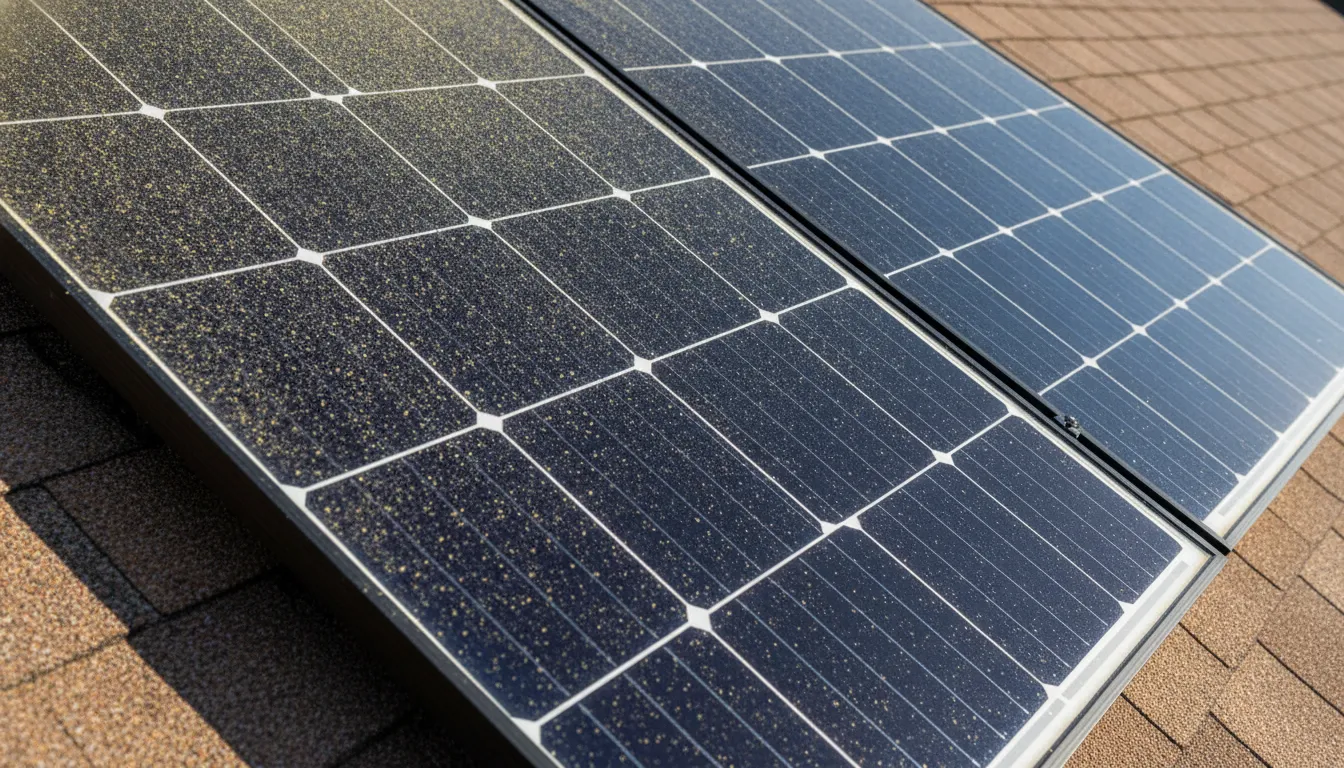
Signs That a Cleaning Estimate Makes Sense
Consider a cleaning estimate when buildup covers a meaningful portion of the array, remains after normal weather, or sits on panels that are unsafe to reach. Do not treat a production change alone as proof that cleaning is the answer.
Use these observations to organize the decision. They help you describe the property without turning a visual check into an electrical diagnosis.
| What you observe | Reasonable next step | Do not do |
|---|---|---|
| Light, even dust after a normal dry spell. | Monitor from the ground and review the care instructions. | Climb up just to remove a small amount of dust. |
| Leaves or twigs near several panel edges. | Request advice if the array is not safely reachable. | Drag debris across the glass or roof surface. |
| Bird droppings or sap on multiple panels. | Ask about a non-abrasive cleaning method. | Scrub with a rough pad or household chemical. |
| Cracked glass, loose parts, or exposed-looking wiring. | Contact the installer or a qualified solar technician. | Touch the equipment or treat cleaning as a repair. |
| Unexpected monitoring data or a production change. | Contact the installer and review system records. | Assume dirt is the only possible cause. |
This comparison separates surface care from equipment concerns. Cleaning can remove material from the panel surface. It cannot correct a cracked module, an inverter issue, a loose connection, a shading problem, or a monitoring error.
Notes to Gather Before You Request a Quote
A few notes can make a cleaning conversation more useful. They also help separate a surface question from a system concern. Keep the inspection simple and stay on the ground.
- Note the visible buildup. Record whether you see dust, pollen, leaves, sap, bird droppings, or another material.
- Estimate the coverage. Say whether the material appears on one panel, one section, or most of the array.
- Describe the setting. Mention mature trees, recent landscaping, nearby construction, roof height, and whether the array is visible from stable ground.
- Separate surface and system concerns. Share unusual monitoring data with the installer instead of treating it as proof that cleaning is needed.
These details help a provider prepare for the right conversation. They do not replace the manufacturer's instructions or a qualified technical inspection.
Why a Ground-Level Look Is the Safest First Step
Roof access adds risk that is easy to underestimate. A roof can be steep, hot, wet, or fragile. Solar panels can change how a person moves across the surface, and wiring or mounting parts should not be disturbed. A ladder may also create a fall hazard before cleaning begins.
Start from a place with stable footing and a clear view. Use the same viewing spot if you take a dated photograph for comparison. Check whether trees, chimneys, or other roof features shade part of the array. Do not climb, walk on the roof, reach over an edge, or use a drone as a substitute for a qualified inspection.
If the panels are not visible from the ground, that is useful information. It means you should not force a closer look. Tell the provider about the roof height, array location, nearby trees, and any visible access limits when you request an estimate.
Can Rain Clean Solar Panels Well Enough?
Rain may remove loose dust, which is why the U.S. Department of Energy says many systems are adequately cleaned by ordinary precipitation. Rain is less reliable for stuck-on bird droppings, tree sap, or residue that collected during a long dry period.
Rain also does not answer the access question. A panel can look cleaner while the roof remains unsafe to reach. Watch the surface from the ground, follow the manufacturer's instructions, and avoid creating a cleaning task when the array needs a technical inspection instead.
Southlake homeowners can compare this topic with Window Hero's guides to solar panel cleaning cost and how often to clean solar panels. Those articles cover budgeting and frequency without replacing the care instructions for a specific system.
When DIY Cleaning Is the Wrong Next Step
DIY cleaning may be unnecessary for light dust and risky when the array requires roof access. If you cannot work from stable ground, ask a professional to explain the planned method before scheduling.
Before using water or a tool, read the panel and inverter documentation. Do not assume that a pressure washer, abrasive pad, strong cleaner, or household window product is approved. Different manufacturers can specify different care requirements. If the documentation is missing, contact the installer or manufacturer rather than guessing.
Never touch a panel that appears cracked or has damaged-looking cables. Keep people away from the area when exposed equipment or other hazards are visible. A cleaning provider can address surface buildup, but electrical repairs and system diagnostics belong with the installer or a qualified solar technician.
Window Hero's DIY solar panel cleaning guide covers the homeowner decision in more detail. Readers comparing professional options can also review professional solar panel cleaning before requesting a quote.
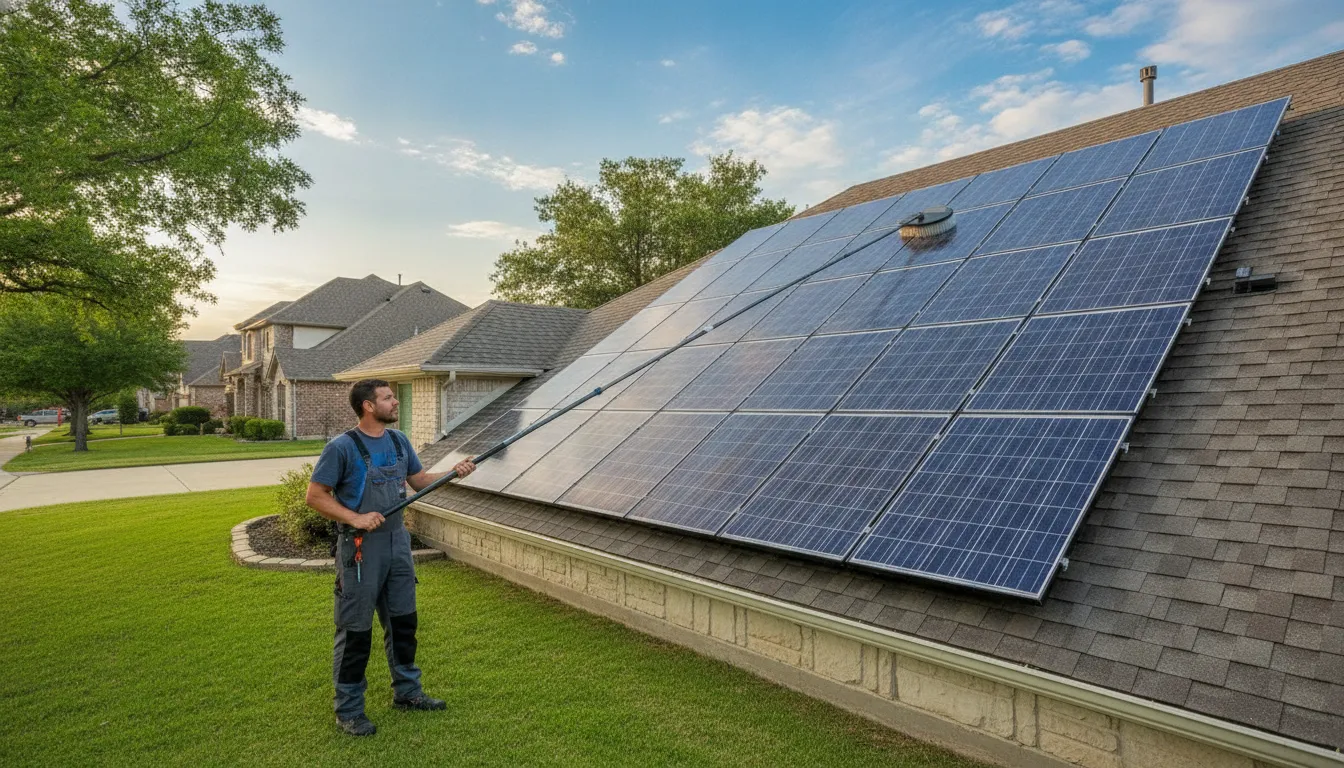
What to Ask Before Professional Cleaning
A professional conversation should begin with the property and the equipment, not a promise of a universal result. Share what you can see from the ground, explain the array's location, and mention any recent landscaping, construction, storms, or monitoring concerns.
The Southlake solar panel cleaning page describes the visit in plain steps. Window Hero inspects the panels, rinses them with pure water and non-abrasive tools, and finishes with a spot-free dry. Ask the provider to confirm the access plan, water use, tools, and precautions for your array. The manufacturer's documentation remains the authority for equipment-specific care.
Nearby homeowners can start with the Colleyville solar panel cleaning guide. The Flower Mound guide and the North Fort Worth guide add local context. The North Fort Worth article is the supporting guide for this question, and the Southlake service page is the local conversion path.
How Local Surroundings Change What You See
Local surroundings can change what lands on a panel. A roof below mature oaks may collect leaves and pollen. A home beside a road or active building project may see more airborne dust. An open lot may have less tree debris but still receive windblown particles during dry weather.
These conditions support periodic observation, not a promise that every array needs the same service interval. Check from a consistent safe location and note whether ordinary precipitation changes the surface. If the condition persists, share the notes with the provider. If the system output changes, contact the installer as well.
Homeowners in Southlake and nearby Colleyville, Flower Mound, Westlake, and Grapevine can face different roof layouts and landscaping. The same decision framework still applies: inspect safely, follow equipment guidance, and request a method that fits the property.
How Often Should Southlake Homeowners Check Solar Panels?
There is no single interval that fits every Southlake array. A home beneath mature trees, a property near ongoing construction, and an open-roof installation can collect different material. Manufacturer instructions, safe access, visible buildup, and system records should shape the decision.
Rather than booking by habit, make a brief ground-level check after extended dry weather, heavy pollen, nearby landscaping, or a storm that leaves debris. Photograph the array from a consistent safe position when useful. If a light film disappears after rain, continued monitoring may be enough. If residue persists or the panels are inaccessible, request an assessment.
Solar care may also come up during broader exterior maintenance. Window Hero's guide to gutter, roof, and solar panel maintenance in Southlake can help homeowners think about these surfaces together while keeping the services and safety decisions distinct.
When Lower Production Is Not a Cleaning Problem
A dirty surface is only one possible explanation for a production change. Shade, weather, inverter behavior, wiring, monitoring software, a damaged module, or another system issue may also matter. The system installer or a qualified solar technician should evaluate those concerns.
Do not use a cleaning appointment as a substitute for an electrical inspection. Tell the service provider if you see cracks, loose mounting parts, exposed-looking wires, or unusual monitoring data. A clear handoff helps the right professional address the problem.
Get a Free Quote for Southlake solar panel cleaning, or call (877) 464-4766.
Frequently Asked Questions
Will cleaning increase my solar production?
Cleaning may remove surface material, but no provider should promise a specific production increase without evaluating the array. Production depends on weather, shade, equipment, orientation, and system condition. Contact the installer when monitoring data looks unusual.
Can I use a pressure washer on solar panels?
Do not assume a pressure washer is approved. Read the manufacturer's instructions and ask the service provider to explain the proposed tools and water pressure. A pressure washer can also create an unnecessary roof-access risk.
Should I clean solar panels after every storm?
No. Inspect from a safe location instead. Ordinary rain may remove loose dust, while a storm that leaves branches or other debris may justify an assessment. Never climb onto a roof to investigate a storm-damaged array.
Does Window Hero repair solar panels?
Solar-panel cleaning is different from electrical repair or system diagnosis. Contact the installer or a qualified solar technician for cracked panels, exposed-looking wiring, inverter concerns, or unexplained production changes.
Get a Free Quote at (877) 464-4766 for solar panel cleaning in Southlake.
For a practical next step, look at the array from stable ground, note what you can see, and compare it with the manufacturer's care guidance. If buildup is widespread or access is unsafe, request a Southlake solar panel cleaning quote from Window Hero.