
Commercial gutter cleaning cost is not a flat fee you can pull from a homeowner chart. A one-story shop and a multi-tenant office do not take the same crew, the same access plan, or the same drainage check. Commercial gutter cleaning costs should be based on the building and its access needs, not a per-foot guess.
Call (877) 464-4766 for a free commercial gutter cleaning quote
A useful commercial gutter cleaning cost comparison starts with a written scope, not the lowest number. Ask what footage is included, how the crew will reach the roof edge, what debris will be removed, and whether downspouts will be flow-tested. Commercial properties across Southlake, Colleyville, Flower Mound, Westlake, and Grapevine can have very different access and drainage needs.
What Changes a Commercial Gutter Cleaning Cost?
Building scale, access, debris load, and the drainage check are the four items that move a commercial quote. A short retail front with ground access is a different job from a long office wing that needs a lift and a flow test at every downspout.
Homeowner charts often quote about a dollar a foot, or a few hundred dollars for a house. Those numbers do not transfer. A commercial run can wrap a plaza, a medical building, or several addresses on one contract. The crew also has to work around tenants, deliveries, and parking, which a house visit rarely includes.
A quote-based approach is more useful than a generic rate. The estimate should look at the property, then separate cleaning, access, and any follow-up. That is the only fair way to compare two bids for the same building.
| Quote factor. | What the estimator checks. | How it changes the scope. |
|---|---|---|
| Building scale. | Linear feet, roof edges, and number of addresses. | More footage and more sites add crew time. |
| Access. | Height, lifts, ladders, and where the truck can park. | Lifts and tight lots add setup, not just cleaning. |
| Debris. | Leaves, seed pods, gravel, and packed sludge. | Heavy or wet debris takes longer to remove and haul. |
| Drainage check. | Downspouts, outlets, and where water leaves the site. | A flow test can add time and can flag a repair. |
Use the table when a vendor sends only a single price. If one bid names footage and a flow test, and another does not, you are not looking at the same job.
How Does Building Scale Change the Quote?
Scale means linear feet of gutter, the number of roof edges, and how many buildings sit on the work order. A corner retail bay and a full shopping center should not share one price.
Linear feet are the starting point
Estimators still measure the run. A single storefront may have one front edge. An office campus can have interior courtyards, loading docks, and long rear wings. Ask the quote to list approximate footage, or at least the roof edges included. A number with no map is hard to compare later.
Multi-building groups should ask for a per-property line. Ask the vendor whether one crew can schedule several addresses, and whether each site stays on its own line. A bundled price is fine if each address is still named. Otherwise one neglected wing can hide inside a portfolio total.
Roof edges and gutter type matter
K-style gutters on a stone facade are not the same as a large commercial box gutter behind a parapet. Box gutters hold more debris and can be harder to see from the ground. Half-round and copper runs need a lighter hand. If the quote does not name the gutter type, ask before you approve it.
Guards change the visit too. Ask whether the crew will clean around or under the guards, and whether guard installation is a separate line. A guard cleaning is slower than an open trough. It should be called out, not folded into a generic clean.
Why Does Access Raise Commercial Gutter Cleaning Cost?
Access is often the largest gap between two commercial bids. The cleaning itself can be similar. The way the crew reaches the edge is not.
A one-story shop with a clear side yard may be a ladder job. A two-story office over a parking row may need a lift, a spotter, and a place to stage equipment without blocking customers. Interior courtyards, sloped glass, and covered walkways add more setup. If the truck cannot get close, crew members carry tools farther, and the visit runs longer.
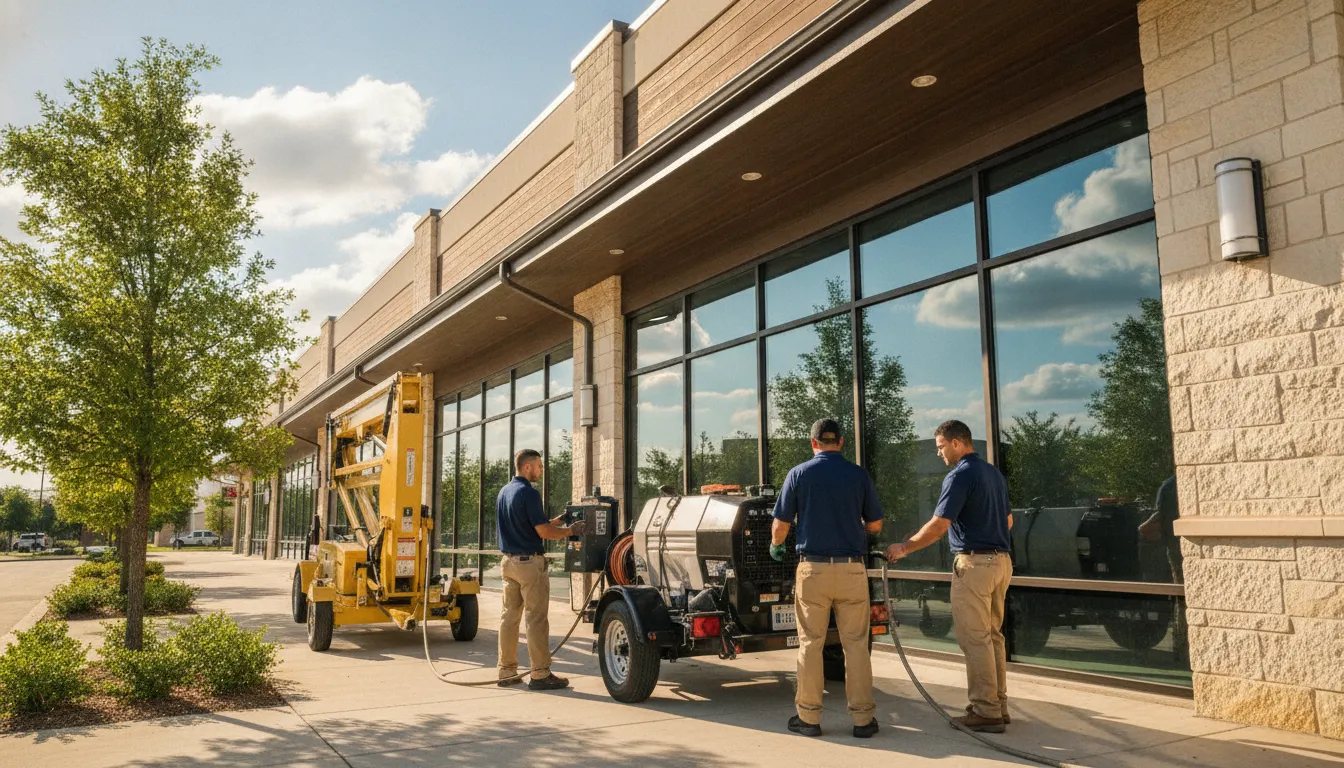
OSHA expects employers to protect workers on walking-working surfaces when an unprotected edge is 4 feet or more above a lower level. Protection can include a guardrail, a safety net, or a personal fall protection system. Portable ladders are handled under their own rules, not that edge standard. You can read the duty in OSHA 29 CFR 1910.28. A cheap bid that skips fall protection is not a bargain.
Ask each bidder for proof of training and commercial insurance before you award the job. Drone-assisted exterior cleaning is a separate service, and it is not the default for every gutter. For high or awkward edges, ask whether the plan uses a lift, a ladder, or another method, and whether that method is included in the price.
Tell the estimator about tenant hours before the visit. Some vendors may offer off-hours or weekend windows, and those options can change labor time. A quote that assumes a weekday morning will not match a job that must wait until the shop closes.
How Do Debris and Drainage Checks Affect the Price?
Debris volume and a real drainage check decide whether the price covers a sweep or a working system. Pulling leaves out of a trough is only part of a thorough commercial gutter cleaning visit.
What gets removed
North Texas properties collect live-oak leaves, seed pods, roof grit, and the occasional tennis ball from a nearby court. A light season is a quick scoop. A packed, wet season is heavier, slower, and messier to haul. Post-storm cleanups add the same problem on a shorter timeline. If the building just took a hard rain, ask the vendor to price that visit on its own instead of folding it into a routine clean.
Ask where debris goes. A complete scope includes removal from the gutter, not a pile on the sidewalk. It should also say whether the crew flushes downspouts and checks that water leaves the building. Put debris removal, clog clearing, a flow test, and a damage inspection on the quote as items you expect, not as extras you discover later.
What a drainage check is
A drainage check means water is run through the downspout, the outlet is confirmed open, and the crew notes where water discharges. A clogged outlet can send water back over the fascia, into a planter, or toward a doorway. On a commercial site that water can also cross a walkway your customers use.
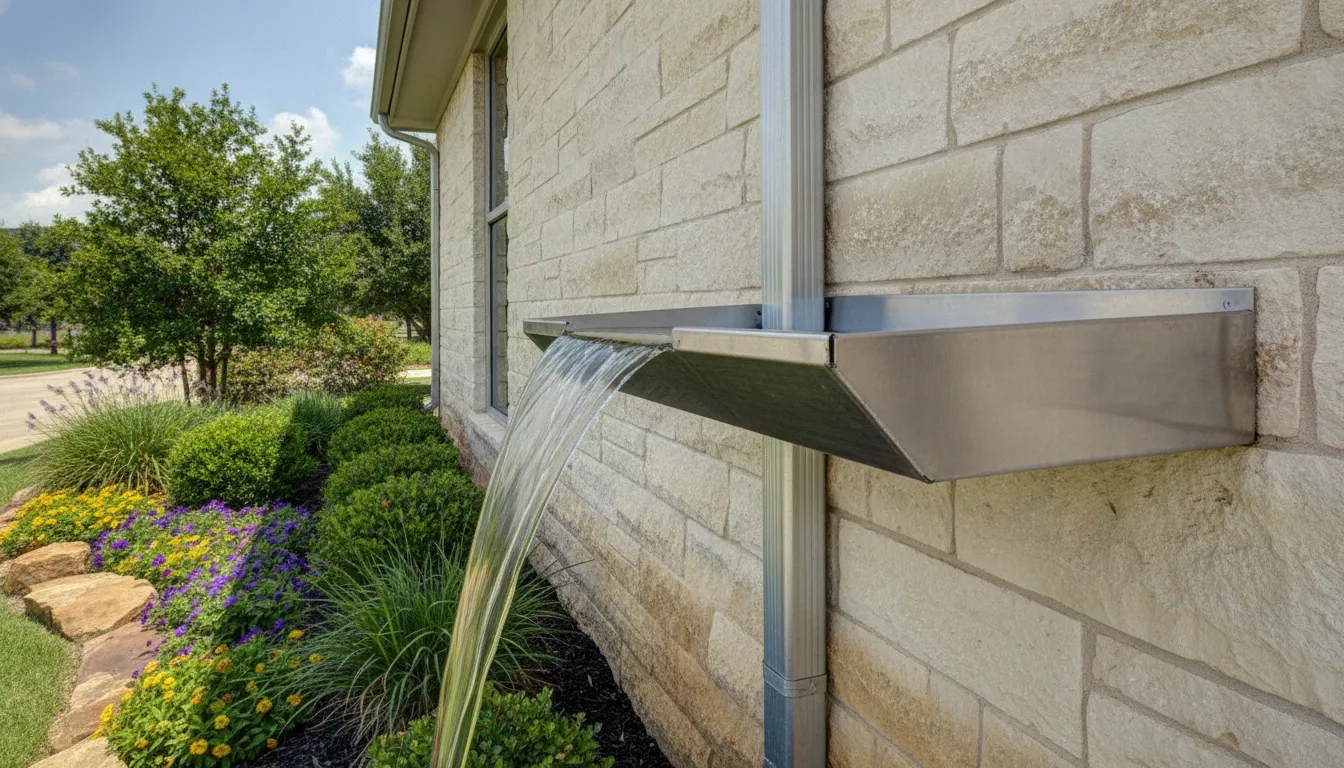
The check is not a roof replacement and it is not a plumbing repair. If the crew finds a separated joint, a crushed outlet, or a slope that holds water, that item should be listed as follow-up. Keep it off the cleaning line so you can approve it on its own.
Guards reduce how often you clean, but they do not replace the first visit. If sludge is already packed under a guard, the quote should say the guard will be lifted or cleaned around. Otherwise you may pay for a rinse that never reached the clog.
What Should a Commercial Quote Include?
A commercial quote should list the buildings, the access method, the debris work, the drainage check, and anything that is not included. Price alone does not tell you which of those items you are buying.
Use this list when you read a proposal:
- Name every address and roof edge included in the visit.
- State the access method, and whether a lift is included.
- Describe debris removal, haul-away, and downspout flow testing.
- Separate inspection notes and any recommended repairs.
- Give the service window, including after-hours work if you need it.
- Show insurance, and say what happens if the result is not right.
Ask for a written quote, and ask what a return visit covers if something is missed. Some vendors can schedule evenings or weekends so tenants stay open, but confirm availability and any labor change in advance. If you also want windows, soft washing, or roof washing, those are related services many owners book together. Ask for them as their own lines. A bundle should not bury gutter footage inside a vague exterior package.
For a wider look at how to hire, read how to choose the right commercial cleaning service. Then use the scope list above so the gutter portion stays specific.
Request a Southlake gutter cleaning quote
How Should Property Managers Compare Bids?
Compare bids on the same footage, the same access plan, and the same drainage test. If those three do not match, the lower price is usually a smaller job.
Start by walking the building, or by sharing recent photos and a site plan. Mark roof edges you want cleaned, downspouts that have overflowed, and lots the crew cannot block. Send that same note to every vendor. Ask each one for a short look at the property before a price is locked. Give every bidder that same picture so the numbers mean something.
Then line the proposals up. Circle missing flow tests. Circle "debris left on site." Circle access described only as "as needed." Those phrases let the price move after the crew arrives. A written scope that already names the lift, the edges, and the test is the one you can approve.
Recurring visits are a different decision from the first clean. The first visit often deals with years of sludge. Later visits can be shorter if the system was actually cleared. A maintenance plan can be quarterly, twice a year, or timed around storms. Do not lock a yearly price until the first scope is honest. Owners who want the rest of the exterior on a schedule can review a recurring commercial exterior cleaning schedule and keep gutter work as its own line.
Insurance and the guarantee belong in the comparison too. Ask every bidder to show commercial coverage and to say what a return visit includes. A bid that will not show coverage, or will not describe that return visit, is incomplete even if the price looks sharp.
Which Related Services Belong on a Separate Line?
Windows, roofs, pressure washing, and drone work can share a visit, but they should not share one unexplained price. Each has its own access and its own result.
Commercial window cleaning is the service many Southlake tenants notice first. It can ride along with a gutter visit when the crew is already on site, especially at a storefront. It still needs its own description: interior, exterior, or both, and which floors. Start with Southlake window cleaning if glass is the main complaint and gutters are the add-on.
Roof washing uses a soft-wash approach on commercial roofs so the surface is cleaned without a high-pressure blast. That is a different crew plan from scooping a gutter. If both are due, ask for two lines and one trip. The commercial building exterior cleaning guide shows how those exterior tasks fit together.
Sidewalks, entries, and dumpster pads are pressure-washing work. They do not tell you whether a downspout is open. Property managers comparing hard-surface bids can read the commercial pressure washing guide for property managers, then keep the gutter scope beside it.
High or complex roofs sometimes call for drone help. If a provider proposes drone work, ask what the drone will reach and what a person will still do from the ground. Price drone exterior work separately from a standard gutter clean. More on that service sits in the DFW commercial exterior and drone guide.
Contract language is the last split. A yearly exterior contract can include gutters, but the gutter section should still name frequency, footage, and the flow test. The commercial exterior cleaning contracts guide is the place to think about terms. This page stays on the cost drivers inside that contract.
How Do You Read the First Proposal?
Put the proposal next to the building, not next to a national average. Check that every address you sent is listed. Check that access is a method, not a shrug. Check that debris leaves the site and that someone will run water through the downspouts.
If a line says "gutter cleaning" and nothing else, send it back. Ask for footage or roof edges, the access plan, haul-away, and the drainage check. Use that same split when you talk with any vendor, so each price covers the same work.
Southlake, Colleyville, Flower Mound, Westlake, and Grapevine properties can all sit on one property-manager list. A fair commercial gutter cleaning cost is the price of the scope you actually need at each of those sites. Once the scope is written, the number is easy to judge.
Call (877) 464-4766 to book a commercial gutter cleaning quote
You can also review the service on the commercial gutter cleaning page before you call.
Frequently Asked Questions
What is included in a commercial gutter cleaning cost?
A complete price should identify the agreed roof edges, debris removal, haul-away, and any downspout flow test. Access equipment, after-hours work, and repairs should be separate lines. Ask the vendor to put those items into a free quote so you can see the scope before you approve it.
Why do two quotes for the same building differ so much?
They usually describe different work. One bid may include a lift and a drainage check. Another may be a ground-level scoop that leaves debris on site. Match footage, access, and the flow test before you compare the dollars.
Do homeowner per-foot prices apply to commercial buildings?
No. House charts assume a short run and a simple ladder. Commercial buildings add length, height, tenant timing, and several downspouts. Use those charts only as a rough residential reference, then get a property-specific quote.
How often should a commercial property schedule gutter cleaning?
Many buildings do well twice a year, with an extra visit after a heavy storm. Tree cover, flat roofs, and guards change that rhythm. Set the first visit as a full clean, then choose a lighter schedule once you know the debris load.
Can gutter cleaning be billed with window or roof care?
Yes, as long as each service stays on its own line. Some owners group exterior work for offices, retail, and HOAs, including off-hours visits. Ask for gutter footage and the drainage check even when windows or roof washing share the trip.