
Exterior cleaning is easier to manage when it follows the property calendar instead of becoming an emergency request after buildup is visible. For DFW property managers, the right plan connects each building's surfaces, exposure, occupancy, access limits, and observed condition to scheduled service.
Get a Free Quote from Window Hero Southlake or call 817-928-9500.
A recurring commercial exterior cleaning schedule should begin with a property evaluation, then assign windows, facades, walkways, gutters, and other services to inspection-based calendar intervals. Window Hero Southlake supports one-time and recurring commercial service, with scheduling coordinated around operational needs rather than a universal frequency.
That approach gives managers a practical baseline for coordinating one site or an entire portfolio. It also helps determine when specialized access or a different cleaning method is appropriate. For additional context, review commercial exterior cleaning and drone services for DFW buildings before building the first service calendar.
How to Build a Recurring Commercial Exterior Cleaning Schedule in DFW
Window Hero Southlake can help property managers turn a scattered maintenance list into a property-specific recurring service calendar.
Start by inventorying every building and outdoor area in your portfolio. Record addresses, building heights, surface materials, tenant activity, entrances, walkways, loading areas, parking zones, gutters, and known problem areas.
Next, schedule an initial quote and evaluation for each site. The evaluation should connect visible conditions with suitable methods, access requirements, preparation needs, and post-service review steps. For example, water-fed pole systems with purified water can support ground-level window cleaning up to three stories. Delicate surfaces may require a lower-pressure soft-wash approach.
Document conditions before choosing service dates
Ask the provider to note current buildup, staining, organic growth, pollen, dust, red clay soil, shade, and areas exposed to heavy foot traffic. These observations create a baseline for future inspections without forcing every property into the same cadence.
Use that baseline to separate routine work from inspection-triggered work. Windows, common-area walkways, building facades, gutters, and other surfaces may need different planning rules. The right calendar should reflect property type, surface, exposure, occupancy, budget, and observed buildup.
Coordinate access and stakeholder communication
List the people who must approve or support each visit. Include property managers, onsite staff, security teams, tenants, residents, retailers, and vendors affected by equipment or water use.
Set access windows for gates, rooftops, mechanical areas, parking sections, and restricted entrances. After-hours or weekend scheduling may reduce disruption, but confirm availability for the specific property and service.
For a multi-property portfolio, group locations by geography, access requirements, or service type. Window Hero can coordinate service across multiple properties for property management groups and HOAs. Keep one shared calendar with site contacts, preparation notes, service scope, and review dates.
Before approving recurring work, clarify scope, documentation, rescheduling terms, access responsibilities, and review procedures. See this guide to DFW commercial cleaning contracts for related planning considerations.
How Often Should Commercial Properties Schedule Exterior Cleaning in DFW?
There is no universal interval for commercial exterior cleaning in DFW. The right cadence begins with the property, its surfaces, and the conditions affecting them.
Window Hero Southlake recommends an inspection-led schedule that adjusts to property type, surface condition, exposure, occupancy, budget, and observed buildup.
Start with the property and its exposure
A shaded condominium courtyard may develop organic buildup differently from an exposed office facade. A busy retail walkway may show soil sooner than a restricted service area.
Review the building type, surface materials, surrounding trees, traffic patterns, drainage, and tenant activity. Note which areas affect first impressions, access, or daily operations.
Southlake-area conditions can include spring oak pollen, red clay soil, dust, and tree shade that may promote algae growth. These conditions make site observation more useful than a generic calendar.
Use the first service as a baseline
A first cleaning can establish a clear condition baseline. Document the surfaces, areas of buildup, access constraints, and the time required for each service.
Then inspect the property at practical intervals. Compare how quickly glass, facades, walkways, gutters, and common areas show visible soil. Shorten or extend the schedule based on what the property demonstrates.
For example, a property with heavy foot traffic may need more frequent walkway attention. A low-traffic office may prioritize periodic facade and window reviews.
Separate routine service from inspection triggers
Do not wait for a fixed date when buildup, staining, blocked gutters, or tenant complaints signal an earlier need. Likewise, do not schedule every surface at the same frequency without evidence.
Coordinate recurring window cleaning, pressure washing, soft washing, gutter care, or roof-related work according to each surface and access requirement. Methods should match the material, especially where delicate surfaces need lower-pressure cleaning.
After each visit, record observed buildup and operational feedback. That record helps property managers plan a recurring commercial exterior cleaning schedule based on evidence rather than competitor claims or seasonal hype.
Coordinate Windows, Facades, Gutters, and Pressure Washing in One Calendar
A recurring calendar works best when it treats the property as one operating system. Window cleaning, facade care, walkway washing, gutter work, and specialized access may have different triggers, but they still affect the same tenants, entrances, loading zones, and staff schedules.
Window Hero Southlake can coordinate recurring service across multiple properties, while the final cadence should reflect each site's surfaces, exposure, occupancy, and observed buildup.
| Service | Useful trigger | Planning notes | Disruption considerations |
|---|---|---|---|
| Window cleaning | Visible soil, pollen, dust, fingerprints, or tenant-facing glass concerns | Group buildings by height, access method, and occupied areas. Water-fed poles with purified water support ground-level cleaning up to three stories. | Coordinate entry points, interior access, parking, and tenant notices. After-hours or weekend scheduling may help reduce business disruption. |
| Facade or soft washing | Algae, organic buildup, dust, or surface-specific staining | Match the method to the facade material. Soft-wash systems use lower pressure for delicate surfaces. | Protect landscaping, entrances, and occupied areas. Confirm water access and the work zone before scheduling. |
| Walkway and common-area pressure washing | Accumulated soil, tracked-in debris, or visibly dirty high-traffic surfaces | Prioritize entrances, sidewalks, pool decks, and shared paths according to property use and observed conditions. | Plan around pedestrian traffic, deliveries, parking, and drying time. Separate work zones when a site must remain open. |
| Gutters or roof care | Seasonal debris, visible blockage, or inspection findings | Record roof sections, drainage points, access requirements, and follow-up observations in the property log. | Coordinate building access, ground-level staging, and occupant communication before work begins. |
| Specialized access | Areas that cannot be reached efficiently from the ground | Identify elevations, restricted areas, and site-specific access needs during the initial evaluation. Keep the access plan attached to the service record. | Reserve staging areas and coordinate with management before selecting a service window. |
For the pressure-washing portion of the plan, review commercial pressure washing for properties. The broader commercial building exterior cleaning guide can help identify overlooked surfaces. For complex buildings, see commercial exterior cleaning and drone services for DFW buildings.
Call Window Hero Southlake at 817-928-9500 to coordinate a recurring exterior cleaning calendar.
Build Exterior Cleaning Into the Annual Property Management Budget
Window Hero Southlake helps property managers plan recurring exterior cleaning around property conditions, access needs, tenant schedules, and approved scope rather than unsupported price assumptions.
Start with a baseline evaluation for each property. Window Hero's commercial process includes an initial quote and evaluation, preparation, service execution, and a post-service review. That sequence helps separate known maintenance needs from contingency work.
Separate the budget into clear planning categories
A practical annual budget can divide exterior care into five categories:
- Baseline evaluation: Reserve planning time for reviewing surfaces, buildup, access, and areas that need immediate attention.
- Routine services: Group recurring window cleaning, walkway care, facade washing, gutters, or other approved services by property and season.
- Access needs: Account for equipment, specialized methods, height, staging, and areas that require additional coordination.
- Disruption controls: Plan notices, parking adjustments, restricted walkways, tenant communication, and scheduling windows.
- Contingency work: Keep a separate allowance for newly observed buildup, weather-related delays, or surfaces that require a different cleaning method.
Commercial pricing is quote-based, so avoid carrying a copied price from another building into your budget. Instead, document the scope behind each allowance. Review commercial exterior cleaning quote factors before requesting proposals.
Access and disruption deserve their own review. Window Hero reports that commercial scheduling can include after-hours and weekends to reduce business disruption. These are planning options, not automatic guarantees, so confirm availability for each property.
Washwater planning also belongs in the scope discussion. The EPA notes that equipment washwater can carry sediment, detergents, oils, grease, and heavy metals. Proper practices can reduce contaminated discharges to downstream waters. Read the EPA washwater guidance for that narrow environmental planning point. Do not assume every project has identical water-management requirements or savings.
Finally, compare the annual plan with actual inspection notes after each service. Adjust future scope when observed buildup, occupancy, exposure, or access conditions change. This keeps the budget connected to the property instead of locking the team into an arbitrary interval.
What Should You Ask About Recurring Service Guarantees and Safety?
Window Hero Southlake can help property managers define a recurring exterior cleaning schedule around documented scope, safe access, and practical follow-up. Ask for clear answers before approving a standing service plan.
What exactly is included? Request a property-specific scope that identifies windows, facades, walkways, gutters, roofs, or other surfaces. Confirm which cleaning methods match each surface. Window Hero describes lower-pressure soft washing for delicate materials and specialized equipment within its commercial delivery process.
How will the contractor inspect and document the work? Ask whether the initial evaluation records access points, surface conditions, sensitive areas, and existing buildup. Confirm what the post-service review covers. Photos, service notes, and follow-up recommendations can help a manager compare conditions across buildings without relying on memory.
How will access and disruption be controlled? Discuss loading zones, tenant notices, locked areas, sidewalks, business hours, and weather-related changes. After-hours or weekend scheduling may be available to reduce disruption, but treat those windows as options to confirm rather than automatic guarantees. For elevated work, ask whether the proposed method fits the building and site conditions. A drone cleaning guide for high-rise buildings can provide useful background on specialized access questions.
What safety information applies to the planned work? OSHA 1910.66 addresses powered-platform installations dedicated to interior or exterior building maintenance. Its building-maintenance scope includes window cleaning, among other activities. That narrow reference does not establish a blanket certification, license, or guarantee for every contractor or service. Ask the vendor to explain the equipment, work area controls, training, and documentation relevant to your property.
What happens after service? Confirm who receives the completion report, how missed areas or surface concerns are recorded, and when follow-up recommendations arrive. For vendor-selection criteria, review this guide on how to choose a commercial window cleaning company. These questions create accountability without promising an identical cadence for every property.
For broader planning context, compare the provider's answers with the DFW commercial exterior cleaning options available for different building conditions.
Set Up a Recurring Commercial Maintenance Schedule With Window Hero Southlake
A workable maintenance plan starts with a clear picture of each property, its surfaces, and the access limits your team manages. Gather the details below before requesting an evaluation so the first conversation produces a usable service plan.
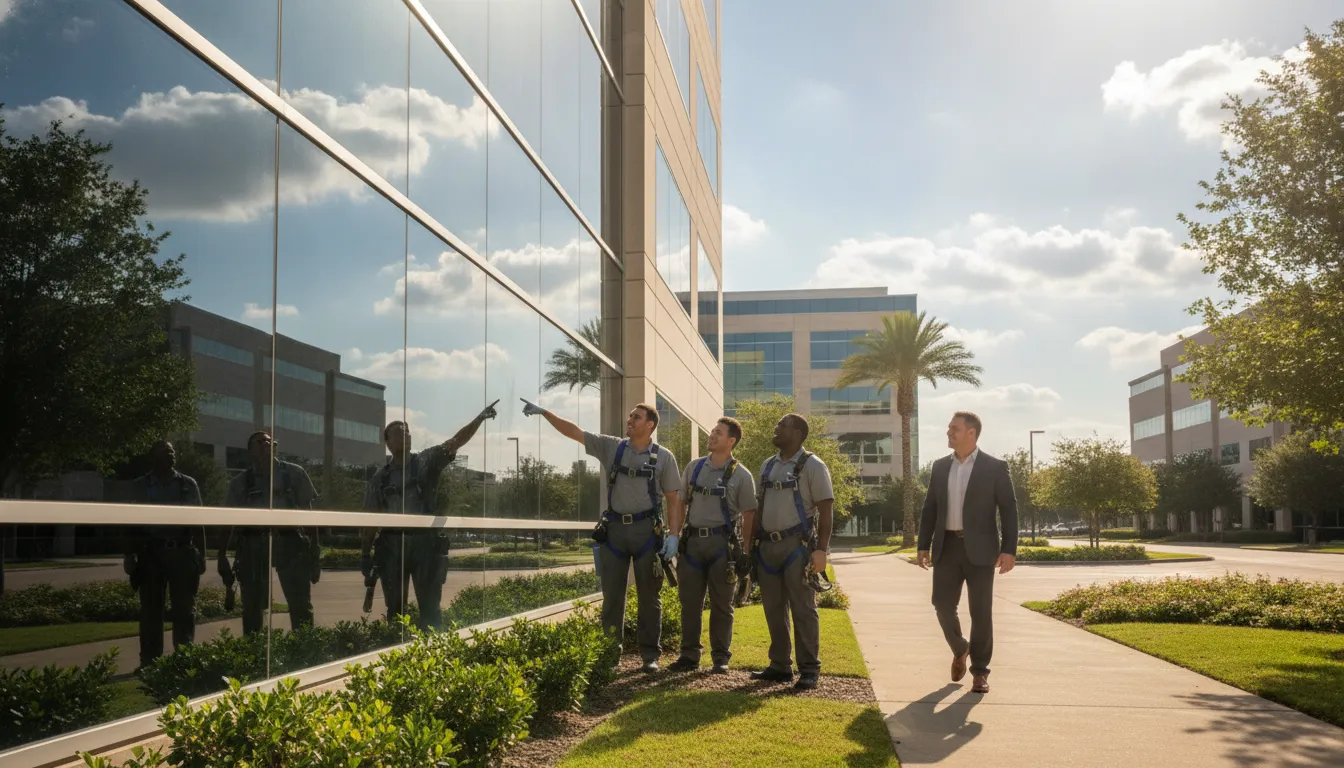
Window Hero Southlake can help property managers build a recurring plan around property type, surface condition, exposure, occupancy, budget, and observed buildup. Its commercial model supports both one-time and recurring service, with scheduling coordinated to the needs of the site.
- List each property address, building height, surface type, and priority area.
- Note visible buildup, seasonal concerns, tenant traffic, events, and sensitive access points.
- Identify preferred service windows, including whether after-hours or weekend scheduling should be considered.
- Share gate, parking, water access, loading, contact, and tenant-notification requirements.
- Decide whether windows, walkways, facades, gutters, or other services should be coordinated.
For a portfolio, provide the same information for every site. Window Hero can coordinate multi-property service for property management groups and HOAs, which helps keep approvals, contacts, and scheduling organized across the DFW area. The initial evaluation should document current conditions, confirm suitable methods, identify disruption controls, and establish what the post-service review will measure.
A first service can also create a practical baseline. Later inspections can compare buildup and surface condition against that starting point, then adjust the schedule when the property or operating conditions change. For examples of recurring needs in public-facing properties, review this guide to regular window cleaning for community buildings.
Request a property evaluation from Window Hero Southlake or call 817-928-9500 to discuss your recurring maintenance needs.
Frequently Asked Questions
How do I choose a cleaning cadence for a commercial property?
Start with a property evaluation rather than a universal interval. Review the property type, exterior surfaces, exposure, occupancy, budget, and observed buildup. Southlake-area conditions such as oak pollen, red clay soil, dust, and tree shade may affect what you see between services. A baseline clean and post-service review can help your team adjust the schedule using actual property conditions. Window Hero Southlake supports quote-based planning for recurring commercial service.
Can windows, walkways, facades, gutters, and roof areas share one schedule?
Yes. Build one property calendar with separate service lines, triggers, access notes, and review dates. Commercial exterior care may include window cleaning, walkway and common-area pressure washing, building soft washing, gutter cleaning, and roof cleaning. Coordinate the work around surface suitability, tenant activity, equipment access, and seasonal buildup instead of forcing every service into the same interval.
How can property managers reduce disruption during exterior cleaning?
Document loading zones, entrances, tenant notices, access requirements, and restricted work areas before each visit. Ask whether after-hours or weekend scheduling is available when business activity makes daytime work difficult. Window Hero reports that commercial scheduling can include after-hours and weekends to help minimize disruption, but timing should be confirmed for the specific property. DFW commercial cleaning contracts can help define these expectations.
What should happen during the initial property evaluation?
The provider should review the building and surfaces, discuss access and disruption controls, identify the services that fit each area, and prepare a quote. Window Hero's commercial process includes an initial quote and evaluation, property preparation, service execution, and a post-service review. Ask how observations will be recorded so the next recurring visit can reflect changes in buildup, occupancy, or site conditions.
Get a Commercial Exterior Cleaning Schedule for Your Property
A recurring schedule can help property managers coordinate exterior care around building needs, access requirements, and tenant activity. Window Hero Southlake can review your property goals and help outline a practical service schedule for the DFW area. Call Window Hero Southlake at (817) 928-9500 to request a recurring commercial exterior cleaning schedule and property evaluation.