
A proposal can sound complete while leaving important details open: which glass, walkways, or building surfaces are included, how often crews visit, and what happens when access or site conditions change. For a property manager, those gaps can complicate budgets and tenant coordination.
To evaluate commercial exterior cleaning contracts in DFW, compare the same property areas, service frequency, access assumptions, exclusions, safety documents, and approval process for added work. A clear written scope helps you understand what each proposal covers without assuming a vendor's standard terms apply to your site.
Start by treating the agreement as an operating plan, not just a list of services. The useful details are the ones that make each visit measurable, workable around occupants, and straightforward to review afterward.
How to Review Commercial Exterior Cleaning Contracts in DFW
A useful commercial cleaning agreement identifies each site, included surfaces, planned visits, access assumptions, completion evidence, and how changes are approved.
Before comparing totals, check whether every property is actually named. Does the site list include each building, address, entrance, loading area, or other area covered? If a portfolio includes several locations, ask how a new site or a temporarily unavailable area would be documented rather than assuming it falls under the same scope.
Next, look for surface-level detail. Does the written scope separate windows from walls, sidewalks, parking areas, roofs, or gutters? Are the included elevations, sides, and areas clear enough that a manager and service crew would interpret them the same way? Window cleaning is a core commercial service, while other exterior work can be selected for the property. A commercial pressure washing plan can help clarify what those surfaces may involve, but the agreement should still state the actual work selected for each site.
Ask how the schedule is described. Does a visit mean a defined set of surfaces, or merely a date on the calendar? Is the expected frequency recorded for each service, and how are access restrictions, weather delays, tenant activity, or off-hours work handled? Window Hero Southlake offers flexible off-hours and weekend scheduling for commercial service, but confirm availability and fit for the specific property. Do not assume one frequency suits every building.
Review method and access assumptions without turning the agreement into a technical manual. Does it identify the expected access approach, areas that must be cleared, water or equipment needs, and any site restrictions? If the proposed method or site condition changes, who discusses the impact before work proceeds?
Completion and recordkeeping deserve equal clarity. What will count as a completed visit? Should the manager expect a service log, notes about inaccessible areas, or notification of damage or conditions needing follow-up? Which surfaces or tasks are excluded, and how are optional add-ons or out-of-scope work approved before they are performed? Ask who may authorize a change and how its revised scope is recorded.
Finally, read payment and cancellation terms as questions, not standard clauses. When is an invoice issued, and what supports it? Ask how disputed items are handled. Clarify notice and process for ending or changing the arrangement. A public Tarrant County window-washing bid package offers a historical example of separate specifications, terms, evaluation criteria, price forms, and a building list. It is not a universal contract template. Make scope and expectations reviewable before work begins.
How Should a Contract Define Cleaning Frequency and Scheduling?
A commercial cleaning contract should state the agreed service interval, visit window, notification process, and steps for handling weather or access disruptions. Set those terms around the building's needs and operating hours, rather than assuming one schedule fits every property.
Frequency is a contract decision, not a universal commercial standard. A property manager and provider can agree on recurring window cleaning or pressure washing, but the right interval depends on the site, selected surfaces, tenant activity, and the property's upkeep priorities. Define the work covered by each visit and the planned interval in the proposal or service schedule. List buildings or areas separately when they need different treatment. Avoid vague phrases such as "regular cleaning."
Put the service window and tenant notice in writing
Specify when crews may arrive and what hours are acceptable for work. A retail entrance, occupied office, and residential common area can have different traffic patterns, so the contract should identify any restricted hours or operational constraints. Include who coordinates tenant or occupant notifications, how much advance notice the property expects, and who receives changes to the schedule.
Off-hours and weekend scheduling is available for commercial service, but availability and suitability depend on the property. Ask whether the proposed window works for the selected service, site access, and building operations. The written agreement should record the confirmed arrangement, rather than treating general flexibility as a promise that every time slot is available.
Agree on contingencies and closeout records
Weather, locked areas, special events, or other access conditions may prevent planned work. Ask the provider to describe how either party should report a disruption, who will contact whom, and how the parties will agree on a replacement visit. Identify one property contact and one provider contact for rescheduling. Clear responsibilities help avoid missed messages and confusion about whether a visit was completed or postponed.
Define what confirmation follows each visit. A useful closeout record might identify the date, areas serviced, incomplete work, and any access issue that needs attention. Agree on the delivery method and recipient, such as a property manager or facilities team. These records can help compare planned and completed work across a portfolio without implying a guaranteed reporting system that has not been agreed upon.
Keep the contract focused on the interval, work window, notice, disruption handling, rescheduling contact, and completion evidence. Review exterior cleaning for property management groups for service details. Confirm the proposed terms for your site.
How Can DFW Property Managers Bundle Exterior Services?
A useful service bundle is a set of clearly scoped line items, not an assumption that every task belongs in one package or earns a discount. Start with the property's surfaces and operating needs, then quote only selected work. Window Hero Southlake offers commercial window cleaning, pressure washing, building and roof washing, gutters, post-construction cleanup, and drone cleaning. Confirm site-specific availability and fit.
Use a schedule of services to make each item comparable: identify the building or area, surfaces, included work, access assumptions, exclusions, and any tenant or customer coordination. Separate one-time cleanup from recurring maintenance, and document who approves additional work if conditions differ from the proposal. Commercial options are customizable and quote-based, with pricing depending on the property and selected work; do not assume a bundled discount.
| Service line item | Property need | Scope to specify | Coordination question |
|---|---|---|---|
| Commercial windows | Maintain clear, presentable glazing at offices, retail, multifamily, or mixed-use properties. | List buildings, window areas, included glass and frames, access method, and any excluded surfaces. | Which entrances, tenant notices, or operating hours affect access? |
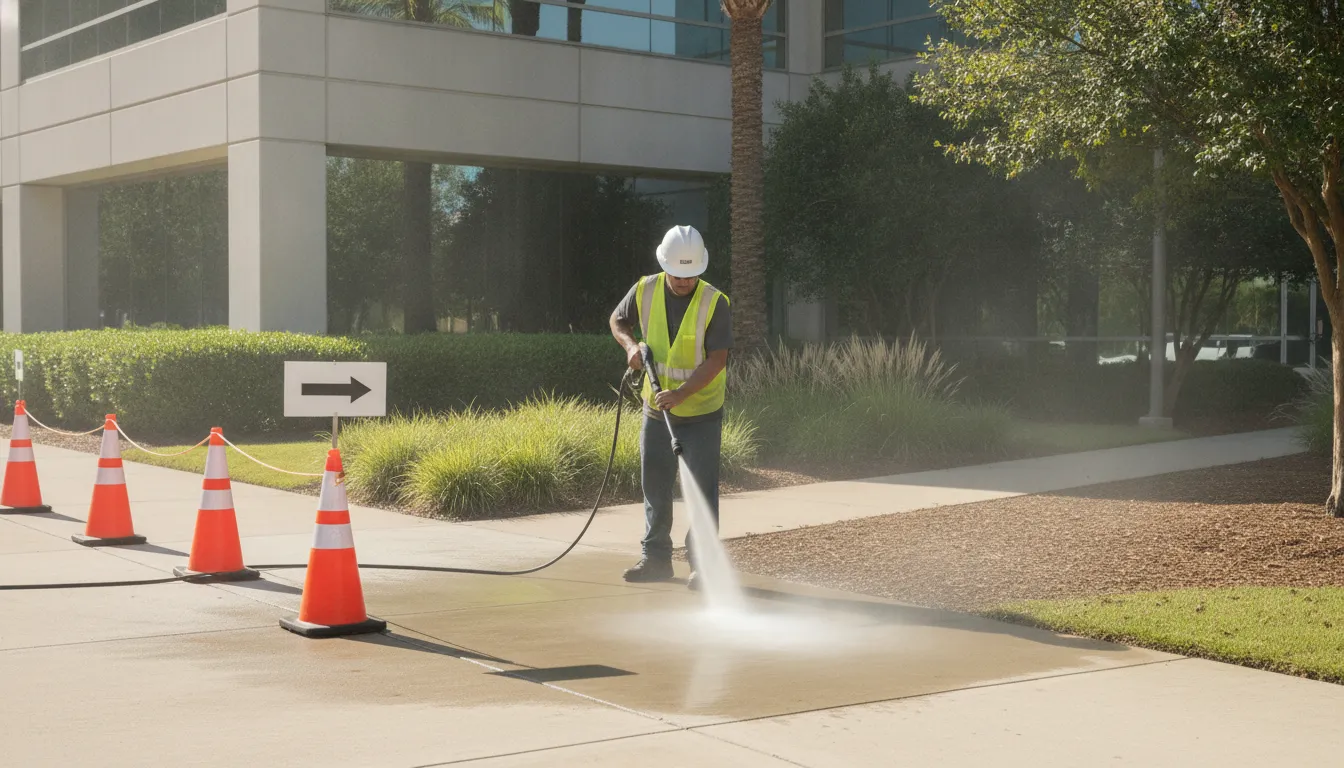
| Pressure washing | Address selected parking areas, sidewalks, walkways, or building surfaces. | Name each surface and area, method assumptions, water access, and site restrictions. See this commercial pressure washing plan for service detail. | How will pedestrian routes, vehicles, and wastewater requirements be handled? |
| Building or roof washing | Clean specified exterior walls or roof areas. | Identify materials, elevations, access, selected method, and surfaces not included. | Are landscaping, nearby occupants, or restricted areas affected? |
| Gutters | Include gutter cleaning where it is part of the property's requested work. | List buildings, gutter sections, access assumptions, and debris handling. | Who provides access, and where may crews stage equipment? |
| Drone or high-reach | Consider for eligible tall buildings or areas with specialized access needs. | Specify target elevations and areas, access plan, and site-specific eligibility. The company's information describes drone service for eligible buildings up to 15 stories (150 feet); confirm fit directly. | What site approvals, airspace checks, or occupant notices are needed? |
| Post-construction cleanup | Prepare defined exterior areas after construction or renovation work. | Identify completed areas, residue or debris included, exclusions, and readiness conditions. | Has construction access ended, and who confirms the area is ready? |
Keep the proposal's line items separate even when coordinating visits together. That makes it easier to approve a subset, track completion, and adjust scope without obscuring what changed. For broader service and access context, review high-reach exterior cleaning options and commercial building exterior cleaning. Ask the vendor to confirm site-specific availability and quote each selected combination for the property.
What Insurance and Safety Records Should You Request?
Before approving work, ask for a current certificate of insurance (COI) that matches the property and proposed work. A certificate summarizes reported coverage, so use it to start a conversation with your risk manager, not as a substitute for reviewing the policy.
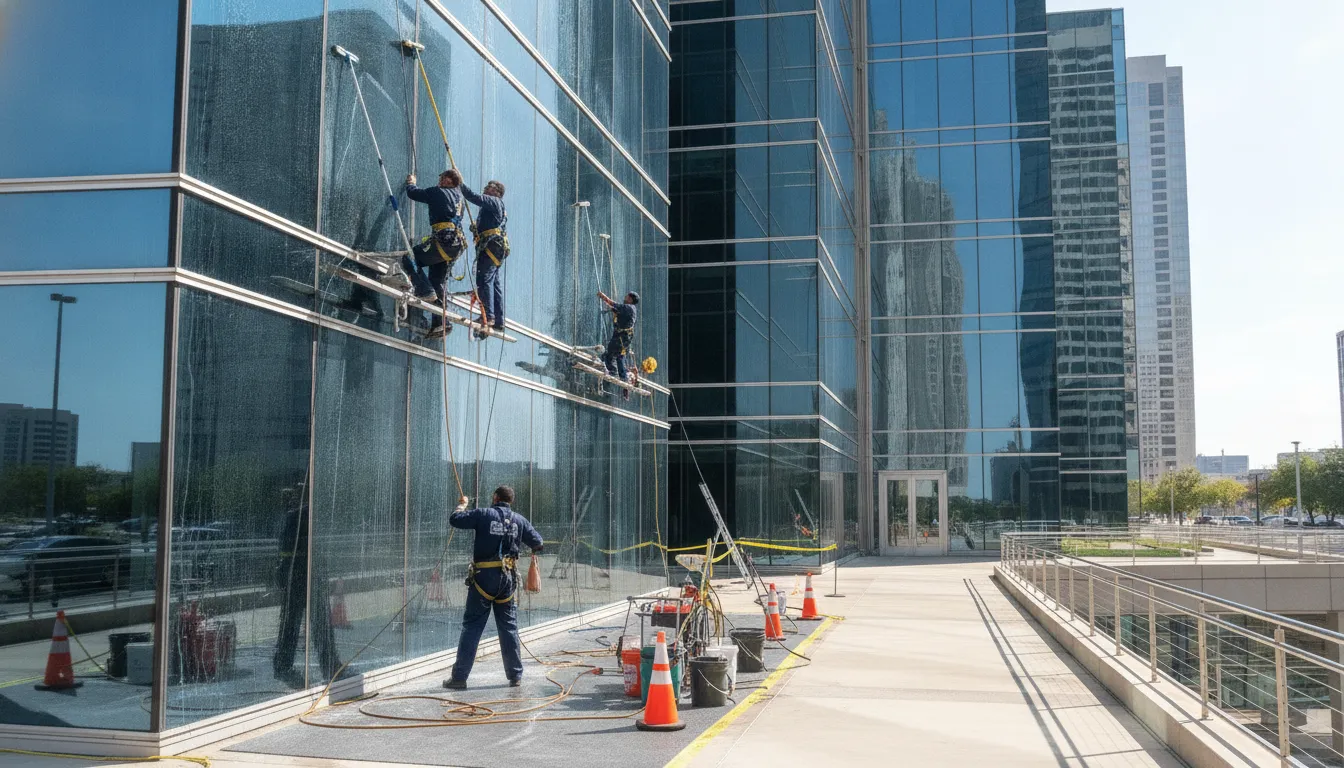
Request a current COI. Verify dates and relevant coverage with your risk team. Document the crew's plan for site hazards, access, equipment, and public safety.
Confirm insurance for this project
Check the certificate's policy dates and the listed coverage types. Window Hero's company information states that it maintains general liability, workers' compensation, and commercial auto coverage. The information does not specify policy limits or confirm the details of a Southlake team's certificate, so request current documents directly rather than relying on a general statement.
Ask whether policies remain active through the service period and fit the work in scope. Share any requirements for named insureds, additional insured status, certificates, or endorsements, and confirm what documentation is available. Clarify project-specific coverage, access, and subcontractor records before the first visit. Your broker or risk manager can interpret policy language.
Review the work plan, not just the certificate
Ask for a site-specific safety and access plan for the proposed surfaces and tasks. How will crews reach work areas? Which entrances, sidewalks, or parking spaces may need temporary controls? How will they coordinate with tenants, customers, and building staff? Who will notify your team if weather, access, or hazards change the plan?
Ask how the contractor identifies hazards, selects personal protective equipment (PPE), trains employees, and protects people outside the work zone. OSHA's general industry PPE standard discusses hazard assessment, equipment selection, and training when hazards make PPE necessary. Its fall-protection standard addresses employees exposed to fall and falling-object hazards. These references are not a complete site checklist or legal advice. Ask your safety team to review the approach.
Agree on records and communication
Before mobilization, identify site and contractor contacts. Decide how to document restricted areas, incidents, property concerns, and completed work. Request an incident-notification process and closeout records, such as completed areas or noted exceptions. Keep agreed documents and access instructions in a shared location.
Clear records help everyone understand what was reviewed and who should respond when conditions change. For broader commercial window-cleaning provider checks, keep the contract discussion focused on the specific property, tasks, and safeguards under consideration.
How Do You Compare Commercial Cleaning Proposals in DFW?
Compare proposals against one written scope, not just the bottom-line quote: the same buildings, surfaces, visit definition, access assumptions, exclusions, and closeout records should appear in each response. This turns a commercial exterior cleaning contract review into an operational comparison. It also makes clear whether a difference reflects price, work included, or assumptions that still need confirmation.
Start with the property list and marked surfaces. Specify which elevations, window areas, walkways, parking areas, or other selected surfaces are included, and identify anything excluded. For each scheduled visit, ask vendors to define the work completed, not simply label it a "service visit." Window cleaning and pressure washing can be recurring commercial services. The right scope and frequency depend on the property and selected work.
Then compare the assumptions that affect safe, practical access. Note building access points, water availability, tenant or customer activity, restricted areas, operating hours, and any site rules the vendor must account for. Ask whether proposed methods or equipment depend on a site walkthrough or other approval. Off-hours and weekend scheduling may be available, but confirm the actual time window and coordination plan for your property. For technical service details, see these high-reach exterior cleaning options.
Review the paperwork and the process for work that changes after approval. Ask what current insurance documentation and site-specific records will be provided, who can authorize an added task, and how the vendor will document approval before proceeding. Compare how each proposal handles progress updates, access problems, missed or incomplete areas, and closeout evidence such as a completion report or agreed photo record. These are useful questions to resolve in writing, not assumed standard terms.
Request a property-specific commercial cleaning quote from Window Hero Southlake
Compare price only after the scope is aligned. Window Hero describes commercial pricing as quote-based. The property and selected work determine the quote, so a site-specific assessment may clarify differences. A historical Tarrant County window-washing bid package shows one way a public procurement separates specifications, building lists, price forms, and evaluation criteria. It is an example, not a current DFW template or a required format. See the Tarrant County bid package.
Before selecting a proposal, list unresolved assumptions beside each bid and ask every vendor the same follow-up questions. If one includes a surface or documentation step another omits, request a revised like-for-like scope rather than treating the difference as a direct price comparison. For a broader overview of commercial building exterior cleaning, consult the separate methods guide.
Get a quote for commercial exterior cleaning in Southlake and nearby DFW communities
Frequently Asked Questions
What should a commercial exterior cleaning proposal spell out?
It should identify the property and specific surfaces, the selected services, access assumptions, visit details, exclusions, and how added work or changed conditions will be reviewed. Ask how the vendor will coordinate around tenants and what completion records you will receive. Written details make it easier to compare proposals against the same scope.
Can commercial cleaning be scheduled outside business hours?
Off-hours and weekend scheduling may be available, but the fit depends on the property and project. Discuss tenant activity, access, noise or water restrictions, security procedures, and any site-specific timing needs before confirming a schedule. Window Hero Southlake asks commercial clients to confirm these details for their property.
What insurance documents should I request before work begins?
Request a current certificate of insurance and ask the provider to confirm applicable coverage and project-specific documentation for your site. Window Hero reports general liability, workers' compensation, and commercial auto coverage; ask the local team for current records and details rather than assuming limits or terms.
Can window cleaning and other exterior services be included together?
A proposal can address multiple selected services, such as window cleaning, pressure washing, building or roof washing, gutter cleaning, and post-construction cleanup. Ask for each service to be listed with its surfaces, timing, access needs, and exclusions. Availability and scope should be confirmed for the specific property.
How is a commercial exterior cleaning quote determined?
Quotes are based on the property and the work selected, so there is no single per-square-foot figure that applies to every site. Share the building details, requested surfaces, access conditions, and scheduling needs so the provider can assess the scope and prepare a property-specific proposal.
Request a Property-Specific Exterior-Cleaning Quote
A useful proposal starts with the actual surfaces, access conditions, and operating needs at your property. The Window Hero Southlake team can discuss the commercial cleaning scope and whether an onsite assessment would help clarify it. Contact us to request a property-specific quote or assessment.