
There is no single best gutter guard for every home. Among the main types of gutter guards, micro-mesh is often the strongest starting point for Southlake properties with fine leaf debris, oak pollen, or pine needles. Reverse-curve, foam, and perforated aluminum systems can fit different rooflines and maintenance plans. The right choice depends on debris, stormwater flow, gutter condition, and the upkeep you are willing to schedule.
Get a Free Quote for a practical gutter and exterior-maintenance recommendation from Window Hero Southlake.
Gutter guards reduce the amount of leaves and debris that enter a gutter. They do not make the entire drainage system maintenance-free. A guard can collect material on its surface, and the gutters, downspouts, roof edge, and fasteners still need periodic inspection. This guide compares the main guard types so Southlake homeowners can ask better questions before choosing a system.
For broader property upkeep, review Window Hero Southlake's gutter, roof, and solar panel maintenance guide. It places gutter protection in the context of the complete roof drainage system.
What type of gutter guard is best for my home?
Micro-mesh gutter guards are often the best general-purpose option for a Southlake home with mature trees, but the correct choice depends on the roofline and drainage conditions. Their fine metal mesh is designed to block smaller debris while allowing water to pass. They are not automatically best for every roof, gutter, or storm pattern.
Southlake homes can receive a mix of oak leaves, pollen, twigs, pine needles, roof grit, and storm debris. A home in Timarron or Dove Park beneath mature oaks may collect a different mix than a more open property. That makes the debris profile more important than a product slogan.
The most useful comparison starts with four questions:
- What type of debris reaches the roof edge?
- How does the guard admit water during a heavy storm?
- How will the system be cleaned or inspected?
- Will it fit the existing roof, gutter, fascia, and downspout layout?
Large leaves may be easy for several systems to shed. Fine pollen and small roof particles can settle on a mesh surface or enter larger openings. A guard also cannot correct a sagging gutter, blocked downspout, damaged fascia, or poor drainage outlet.
The City of Southlake explains that property owners are responsible for maintaining private drainage features and removing debris that blocks water flow. That makes a guard choice part of a larger drainage plan, not a substitute for inspection. Read the city's private-property drainage guidance before planning exterior maintenance.
How the main types of gutter guards compare
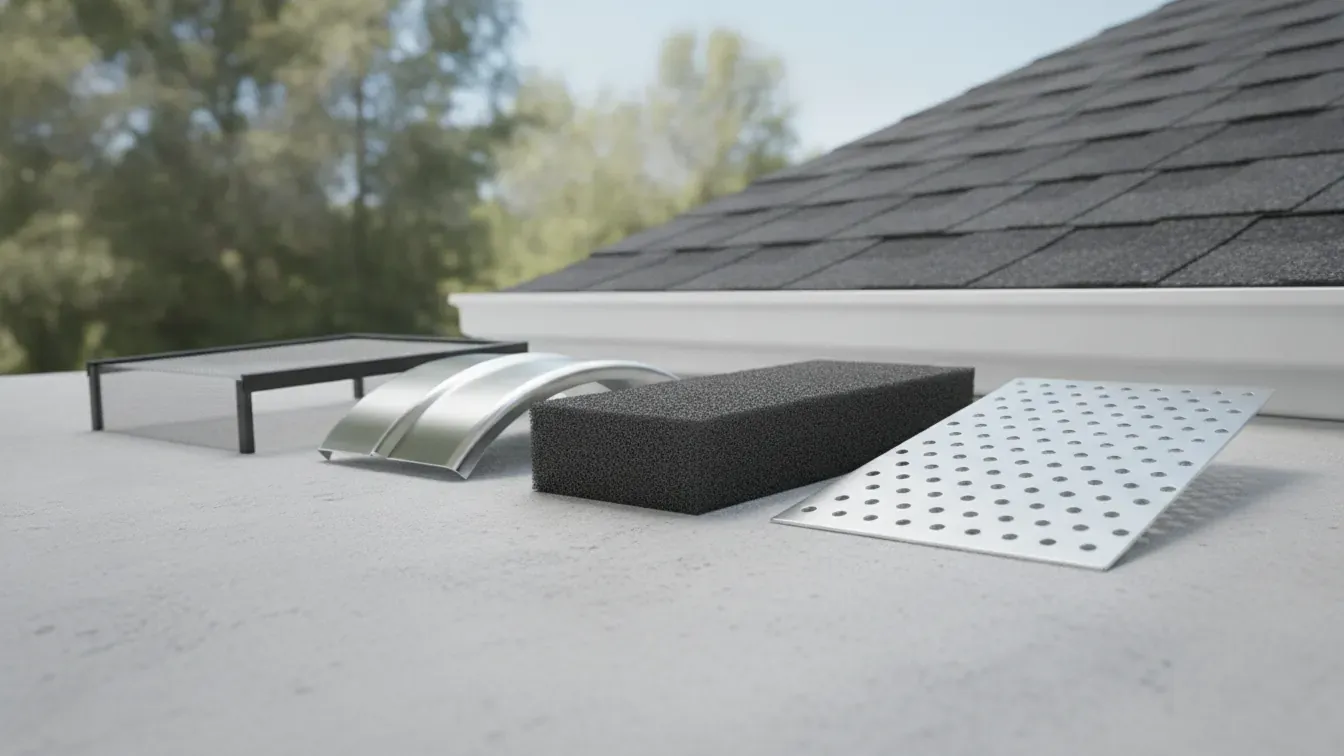
Each guard type trades debris control, water entry, visibility, and maintenance access in a different way. Use the table as a starting point, then match the system to your home's actual roof runoff and debris load.
| Guard type | Best fit | Main strength | Main limitation | Inspection focus |
|---|---|---|---|---|
| Micro-mesh | Fine debris and mature trees | Small openings filter pollen and needles | Surface film can slow water entry | Clean the mesh and check corners |
| Reverse-curve | Broad leaves and a covered roof edge | Leaves fall away from the opening | Heavy runoff can overshoot the curve | Watch water flow and inspect the slot |
| Foam | Low-debris or short-term applications | Simple, low-profile insert | Foam can hold moisture and fine debris | Lift sections and inspect the core |
| Perforated aluminum | Homeowners wanting a rigid panel | Structured cover with a clean profile | Small holes can collect needles and grit | Clear openings and check fasteners |
No table can predict performance at every roofline. Valley runoff, inside corners, gutter width, downspout placement, and the condition of the fascia can change the result. A good evaluation considers the whole path from the roof to the point where water leaves the property.
Micro-mesh gutter guards: strong fine-debris protection with surface upkeep
Micro-mesh gutter guards use a fine metal screen, usually supported by a frame, to filter water while blocking leaves, pine needles, and smaller particles. They are a strong fit for homeowners who want to reduce gutter cleanouts near mature trees. The mesh still needs inspection because pollen and roof grit can form a film across the top.
Why homeowners choose micro-mesh
- Fine openings can block smaller debris that passes through a basic screen.
- A well-fitted system can reduce the amount of material reaching the gutter trough.
- Metal construction can offer a more durable feel than thin plastic inserts.
- The top surface is visible for inspection from an upper window or safe access point.
Limitations to understand
- Pollen, shingle grit, and dust can collect on top and reduce effective water entry.
- Installation quality matters around corners, valleys, roof transitions, and downspouts.
- Existing gutters may need cleaning, resecuring, or leveling before a guard is installed.
- Micro-mesh does not remove the need to check the roof edge and downspouts.
Micro-mesh is often the practical default for tree-lined Southlake homes, but it should be selected after checking water flow and roof compatibility. A product that filters well but sits over a sagging gutter will not solve the underlying drainage problem.
Reverse-curve gutter guards: how surface-tension systems work
Reverse-curve gutter guards, also called surface-tension hoods, use a curved cover to guide water around a nose and into a narrow opening while leaves fall away. They can shed large leaves effectively, but rainfall intensity, roof pitch, installation angle, and the shape of the front edge all affect how much water enters the gutter.
These systems cover more of the gutter opening than a screen. That can reduce visible debris inside the trough, but it can also make inspection less direct. The narrow entry slot may collect roof grit or small debris over time.
When a reverse-curve system may make sense
- Your home receives a large amount of broad leaf debris.
- You prefer a covered appearance along the roof edge.
- The roof and gutters can support the required installation angle.
- You understand that the entry slot still needs periodic inspection.
Questions to ask before choosing one
- How does the design handle concentrated runoff at valleys and inside corners?
- How can the narrow water-entry slot be cleaned?
- Will the system direct overflow away from siding, windows, and walkways?
- Does the installation plan preserve existing roof and gutter warranty conditions?
During intense rain, water can move too quickly to follow the curve, particularly at corners or where roof runoff concentrates. Reverse-curve guards deserve a careful storm-flow evaluation rather than a simple claim that they are maintenance-free.
See the complete Southlake gutter, roof, and solar panel maintenance guide for a broader property-care checklist.
Foam gutter guards: simple inserts with clear tradeoffs
Foam gutter guards are porous inserts that sit inside the gutter and allow water to pass through the foam while keeping larger leaves above the trough. They are simple to install, but the material can hold moisture and fine organic debris. Foam is best considered a short-term or low-debris option, not a promise of zero maintenance.
Why homeowners consider foam
- The insert can be placed inside many existing gutter sections without a complex visible cover.
- It may appeal to homeowners who want a simple, low-profile approach.
- It can block large leaves before they reach the bottom of the gutter.
Where foam can disappoint
- Fine debris can lodge in the open cells and slow drainage.
- Moisture and organic material can remain inside the insert instead of blowing away.
- Foam can compress, crumble, or need replacement as it ages.
- Inspection requires lifting sections, which can be easy to overlook.
Foam may work for a property with limited tree exposure and a homeowner who accepts frequent inspection. It is less attractive when the roofline receives heavy pollen, pine needles, or storm debris.
If you already see standing water, plant growth, or packed material in a gutter, clean and diagnose the system before adding an insert. Installing a guard over an existing blockage can hide the problem instead of solving it.
Perforated aluminum gutter guards: a rigid middle-ground option
Perforated aluminum gutter guards use punched holes in a rigid panel to keep larger debris out while letting rainwater enter the gutter. They can provide a clean roof-edge appearance and more structure than a flexible screen, but the openings may collect fine needles, pollen, and roof grit in tree-heavy settings.
Perforated panels vary in hole size, attachment method, metal thickness, and compatibility with the existing gutter. A panel with larger openings may admit more fine debris. A panel with smaller openings may need more surface cleaning during pollen-heavy periods.
The useful question is not whether aluminum is durable in general. It is whether the specific panel balances water entry and debris exclusion on your roof. Ask how it handles roof valleys, inside corners, long runs, and the transition into each downspout.
A perforated aluminum system can be a reasonable compromise when the home needs a rigid panel but does not have the fine-debris load that favors micro-mesh. It should still be inspected after major storms and during periods when trees shed heavily.
How do I choose the right gutter guard for a Southlake home?
Choose a gutter guard by matching the system to your debris, roof runoff, gutter condition, access, and maintenance expectations. Start with an inspection instead of a brand name. The best product on paper can perform poorly if the gutters are undersized, pitched incorrectly, loose, or connected to blocked downspouts.
- Identify the debris. Look for broad leaves, pine needles, oak pollen, twigs, roof grit, and small seeds. Fine debris generally calls for closer attention to mesh or opening size.
- Check the drainage path. Confirm that gutters, elbows, downspouts, splash areas, and underground connections move water away from the home.
- Inspect the roof edge. Look for damaged shingles, exposed underlayment, fascia problems, and roof valleys that concentrate runoff.
- Match the guard to the gutter. Confirm the width, shape, fasteners, slope, and compatibility with the existing roof system.
- Define the maintenance promise. Ask what must be rinsed, brushed, lifted, or replaced, and who can safely complete that work.
- Review warranty conditions. Understand what the warranty covers, what counts as routine cleaning, and whether installation requirements apply.
- Plan for downspouts. A protected gutter still fails if a downspout is blocked or the outlet sends water against the foundation.
For a Southlake home beneath mature oaks or pines, micro-mesh often deserves the first comparison. For homes with broad leaves and a strong preference for a covered profile, reverse-curve may deserve a closer look. Foam and perforated aluminum can fit narrower use cases, depending on the property's debris and inspection plan.

Window Hero Southlake's gutter guard guide explains the broader maintenance question. This comparison is narrower. It helps you decide which system type deserves an inspection and quote for your property.
What should I ask before buying gutter guards?
Ask how the system handles your actual debris, heavy rain, roof valleys, downspouts, cleaning access, and existing gutter condition. A clear answer should describe the installation method and maintenance plan rather than relying on a claim that the product is completely maintenance-free.
- What debris is the system designed to block or shed?
- How does it handle oak pollen, pine needles, and roof grit?
- What happens at inside corners, roof valleys, and long gutter runs?
- How is the top surface or water-entry slot cleaned?
- Will the gutters be cleaned and secured before installation?
- How are downspouts tested after the guard is installed?
- What maintenance is excluded from the warranty?
- What signs show that water is bypassing the guard?
Third-party comparisons, including This Old House's gutter guard overview, can help you understand the categories. A local inspection is still important because product performance depends on the roofline and drainage conditions at your home.
Get a Free Quote from Window Hero Southlake to discuss gutter cleaning, gutter guard planning, and related exterior maintenance.
Frequently asked questions about gutter guard types
What is the best type of gutter guard for heavy rain?
The best type depends on roof pitch, gutter size, runoff concentration, and installation quality. Reverse-curve systems can overshoot when water moves quickly, while mesh and perforated systems need enough open area to admit heavy flow. A roof-valley inspection is especially important before choosing a guard for storm-heavy conditions.
Which type of gutter guard is better for pine needles?
Micro-mesh is often the strongest option for fine pine needles, but the mesh surface still needs inspection and cleaning. Larger perforations can allow needles into the gutter, while foam can hold fine material inside the insert. Compare opening size, roof exposure, and the planned maintenance schedule before choosing.
Are foam gutter guards a good long-term choice?
Foam gutter guards can suit a low-debris property or a short-term application, but they are not automatically a long-term, maintenance-free solution. Their porous structure can hold moisture and fine organic debris. Homeowners should ask how often sections must be lifted, cleaned, inspected, or replaced.
Do gutter guards eliminate gutter cleaning?
No. Gutter guards can reduce the amount of material inside the trough, but the surface, fasteners, corners, downspouts, and roof edge still need inspection. Southlake homes with mature trees or storm exposure may need more frequent checks than a property with limited tree exposure.
Can gutter guards be installed on existing gutters?
Many systems are designed for existing gutters, but compatibility must be checked first. The gutter should be clean, secure, properly pitched, and connected to open downspouts. Roof edge condition, fascia, gutter width, corners, and valleys can change which guard installation method is appropriate.
Gutter guards work best when they are treated as one part of a drainage system. Compare the four main types honestly, match the design to your Southlake property's debris and roofline, and keep a practical inspection plan after installation.
Get a Free Quote from Window Hero Southlake for help evaluating your gutters and planning related exterior maintenance. Call 817-928-9500 or use the Southlake location page to request the next step.