
Are gutter guards worth it? For many Southlake homes, they can reduce debris-related clogs and ladder work, but they do not replace inspections, cleaning, or repairs. The best choice depends on tree cover, roof access, gutter condition, and the type of debris your property collects.
Gutter guards are worth considering when recurring clogs, heavy tree cover, difficult roof access, or safety concerns make regular cleaning burdensome. They are less compelling when gutters are easy to reach, debris is limited, or the system needs repairs first.
Clean gutters direct rainwater away from siding and foundations. This guide compares common guard designs, explains what they can and cannot prevent, and shows what to ask before choosing installation or regular cleaning. For related home-maintenance planning, see Window Hero's Gutter, Roof, and Solar Panel Maintenance for Southlake TX Homes.
Are Gutter Guards Really Worth the Investment?
For Southlake homeowners, the answer depends on the property rather than a universal promise. Gutter guards can reduce debris accumulation and cleaning frequency, especially on wooded lots. They may also make sense when rooflines are high, access is difficult, or ladder work creates a safety concern. However, guards do not eliminate inspections, maintenance, or the need to repair a failing gutter system.
Gutter guards are often worth considering when recurring clogs, heavy tree cover, difficult roof access, or personal safety concerns make regular cleaning burdensome. They may be unnecessary when gutters are easy to reach, debris is limited, or the system needs repairs before any cover is installed.
Tree cover and recurring clogs
Southlake properties can collect leaves, pine needles, twigs, and shingle grit. A guard can act as a first line of defense by keeping larger debris out of the gutter channel. The benefit is greatest when a home sits beneath mature trees or repeatedly develops clogs between scheduled cleanings.
Still, the guard design must match the roof and debris conditions. Fine material may collect on top of some systems, while other debris can pass through or accumulate at edges. Incorrect installation can also trap material and create new maintenance problems. The goal is reduced upkeep, not a completely maintenance-free system.
Gutter condition and roof access
Guards work best when the existing gutters are secure, properly aligned, and draining correctly. Covers cannot correct loose fasteners, poor pitch, damaged sections, blocked downspouts, or water flowing beyond the system. Inspecting the gutter condition first helps prevent a new installation from concealing an older problem.
Roof height and layout matter as well. A two-story home, steep roof, or complex roofline can make cleaning more hazardous and time-consuming. In those cases, reducing the number of hands-on cleanings may provide meaningful convenience. Homeowners should still plan for periodic inspection because the entire drainage system must continue directing water away from walls and the foundation. The EPA recommends regular inspection and maintenance for infrastructure designed to manage stormwater.
Your maintenance priorities
The right choice also depends on how you prefer to manage the home. Guards may suit busy professionals who value fewer scheduled cleanings and less ladder exposure. Regular cleaning may be more practical for an accessible home with modest debris and a sound gutter system. Either approach protects the purpose of the gutters: directing rainwater away from siding and the foundation.
Before deciding, compare the condition of the system, the property's debris load, roof access, and your willingness to schedule ongoing care. A qualified inspection can clarify whether guards solve a recurring problem or whether cleaning and repairs are the better first step.
How Do Micro-Mesh Gutter Guards Compare With Foam and Reverse-Curve Systems?
Gutter guards all aim to keep leaves and other debris out of the channel, but they do not work the same way. The best fit depends on your roofline, gutter condition, surrounding trees, and the debris your property receives. Fine material such as pine needles and shingle grit can still collect on or pass through some designs.
Micro-mesh systems use a fine screen over the gutter opening. They can filter smaller debris than wider screen designs, but the mesh still needs inspection and occasional cleaning when surface debris restricts water entry. Installation also needs to account for roof pitch, gutter alignment, and the way water reaches the edge.
| System | Debris filtering | Fit and installation | Maintenance and overflow considerations |
|---|---|---|---|
| Micro-mesh | Fine mesh can screen small particles, though pine needles, shingle grit, and surface debris remain maintenance concerns. | Needs a close fit to the gutter and roof edge. Uneven or damaged gutters may require correction first. | Inspect the mesh and seams. Restricted flow can contribute to overflow during heavy rain if debris covers the surface. |
| Foam | Open-cell material blocks larger debris while allowing water into the gutter. Fine debris can settle within the foam. | Fits inside the gutter, but the channel must have enough usable space and should be checked for existing damage. | Foam may need removal and cleaning when it becomes saturated with debris. Hidden buildup can be easy to miss. |
| Brush | Brush bristles catch larger leaves and twigs, but smaller particles can settle around or below them. | Generally sits inside the gutter. Secure placement matters, especially where debris or weather can shift the insert. | Debris can remain on top of the brush and limit water flow. Regular visual checks help identify buildup. |
| Screen | Screen openings block larger leaves and twigs. Smaller debris may pass through or collect on the screen. | Can be practical for many standard gutters, but the attachment method must suit the roof and gutter edge. | Leaves and needles may mat across the top. Cleaning the surface may still be necessary to protect flow. |
| Reverse-curve | Uses surface tension to direct water into the gutter while larger debris moves away. Fine debris can still enter or collect. | Requires careful alignment with the roof edge and gutter. Compatibility can vary on complex rooflines. | Debris can accumulate at the front edge. Overflow may occur when rainfall exceeds the design or the entry path is restricted. |
There is no universal winner. A fine filter may suit a home with persistent small debris, while a simpler design may be easier to inspect on an accessible roofline. Damaged gutters, poor pitch, loose fasteners, or undersized downspouts can create drainage problems regardless of the guard style. Installing a cover without addressing those conditions can hide the underlying issue rather than solve it.
The EPA recommends regular inspection and maintenance for systems that manage stormwater. Gutter guards should support that maintenance plan, not replace it. The most useful comparison is not which guard promises the most, but which design matches your debris load, roof geometry, and willingness to maintain it.
What Can Gutter Guards Prevent, and What Can They Not Prevent?
Gutter guards are a first line of defense against the debris that most often blocks residential gutters. A well-matched system can keep many leaves and twigs out of the channel. They can also reduce pine needle buildup and limit the shingle grit and loose dirt that reaches downspouts. That can reduce clog frequency and make routine maintenance more manageable.
Gutter guards can reduce debris-related clogs, but they cannot correct a drainage system that is poorly designed, damaged, or neglected.
What guards can help prevent
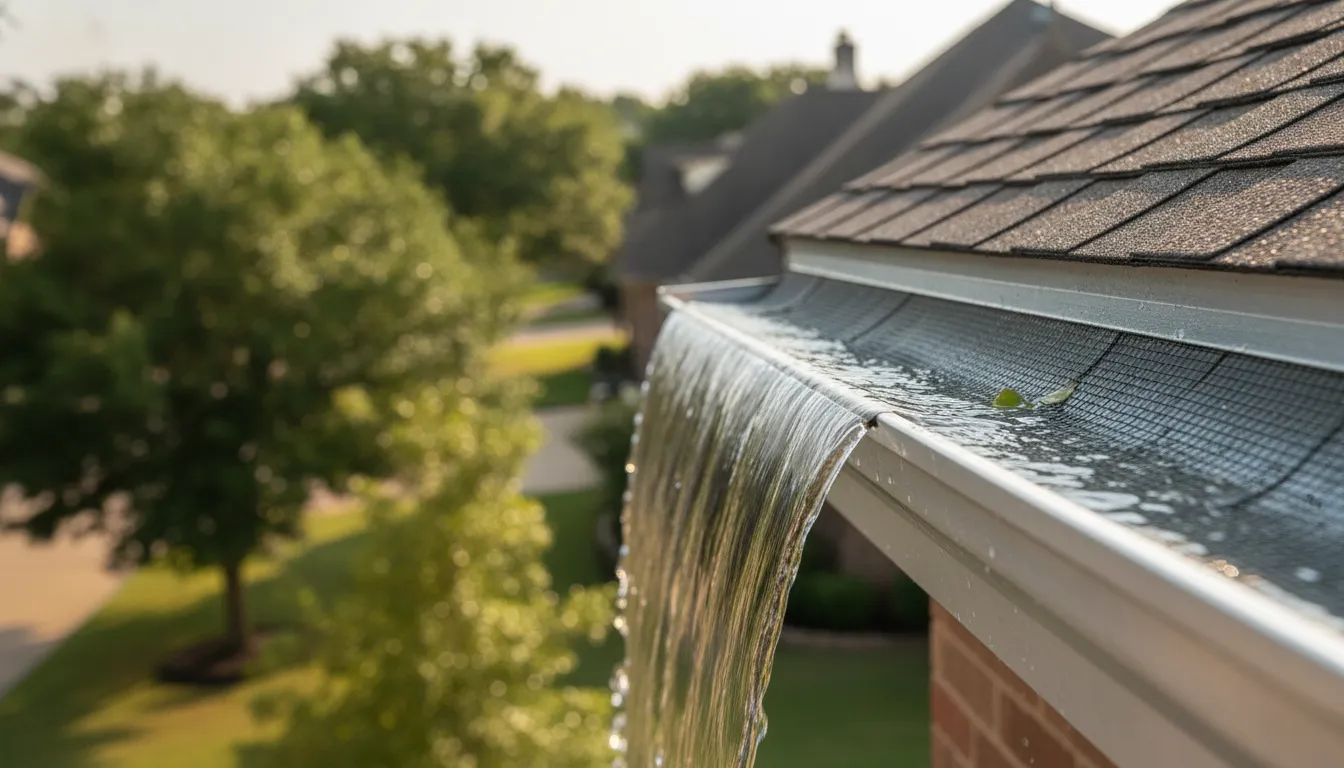
Most guard designs cover the open top of the gutter while allowing rainwater to enter. The cover helps stop larger debris, including fallen leaves, small twigs, and some pine needles. Depending on the design and installation quality, it can also reduce the amount of shingle grit and fine dirt that settles in the gutter.
The practical benefit is fewer blockages, not a completely debris-free system. Debris can collect on top of the guard, and fine material can pass through openings or wash into the channel. Trees, roof material, gutter shape, and local weather all affect the result. Correct installation and a design suited to the roof and debris load are important.
What guards cannot fix
A guard will not repair gutters that are cracked, pulling away from the fascia, or incorrectly pitched. Poor pitch can leave water standing in the channel, while an undersized gutter or downspout may overflow during heavy rain even when the gutter is clear. Guards also cannot correct disconnected downspouts or drainage that releases water too close to the foundation.
Heavy storms can overwhelm any residential system. Leaves and fine debris may also accumulate on top of the cover and restrict water flow if nobody checks the surface. For that reason, homeowners should not treat guards as a permanent substitute for inspection or cleaning.
The U.S. Environmental Protection Agency explains that drainage infrastructure needs regular inspection and maintenance to continue functioning properly. Review the EPA maintenance guidance for the broader principle that applies to residential gutter systems as well.
When asking, "are gutter guards worth it," include the condition of the entire gutter system in the answer. Guards may reduce debris-related work, but repairs, proper sizing, clear downspouts, and periodic inspections still determine whether rainwater moves safely away from the home.
When Are Gutter Guards Worth It Instead of Regular Cleaning?
For many Southlake homeowners, the choice depends less on the product and more on the property. A heavily wooded lot, a tall roofline, or repeated clogs can make gutter guards a practical way to reduce maintenance. An accessible home with light debris may be better served by scheduled cleaning.
Southlake's mature trees can send leaves, pine needles, and small debris into gutters throughout the year. If those materials collect quickly, guards may reduce how often the system needs hands-on cleaning. They still require inspection, however. Debris can gather on top of the guard, enter through openings, or collect inside downspouts.
When guards may be the better fit
Gutter guards deserve serious consideration when your roof has multiple levels, steep slopes, dormers, or other difficult access points. These features can make ladder placement more complicated and increase the risk of attempting the work yourself. Guards can also make sense when cleaning has become a recurring chore after every storm or during heavy leaf fall.
They are especially useful for homeowners who prefer to reduce ladder work or who cannot safely reach the gutters. The right system must match the roof and gutter design. A poorly fitted guard will not solve drainage problems and can make future service more difficult.
When regular cleaning is enough
Regular cleaning is often reasonable when gutters are easy to access, the property has limited tree cover, and debris accumulation is modest. It may also be the better first step when the gutter system needs repairs. Loose sections, poor pitch, damaged fascia, or blocked downspouts should be corrected before installing a guard system.
Window Hero generally recommends cleaning gutters twice each year, typically in spring and fall. That schedule gives a professional an opportunity to remove buildup and identify drainage concerns before they contribute to foundation erosion or siding water damage. You can review the options for regular gutter cleaning when the system is accessible and functioning properly.
For a broader explanation of why this maintenance matters, read about the importance of clean gutters. The best decision is the one that fits your roof, debris load, safety limits, and maintenance expectations. Guards can reduce cleaning frequency, but neither option replaces periodic inspection.
What Should a Gutter Guard Installation Quote Include in Southlake?
A useful quote should explain how the system will work on your home, not simply list a product name. Because every roofline, gutter system, and debris pattern is different, pricing should remain customized and quote-based.
Before approving gutter guard installation, ask for these details about your Southlake property:
- Roofline and gutter layout. The inspection should identify roof sections, valleys, steep pitches, gutter lengths, corners, and hard-to-reach areas. Complex rooflines can change the installation approach and the labor required.
- Current gutter condition. The provider should note sagging, separation, rust, loose fasteners, poor pitch, and existing clogs. Guards should not cover a damaged system without explaining which repairs are needed first.
- Access and safety requirements. The quote should describe how technicians will reach each section safely. Tall elevations, tight side yards, landscaping, and delicate exterior features can affect the work plan.
- Tree cover and debris load. Ask whether the assessment accounts for nearby oak and pine trees, leaves, pine needles, twigs, and shingle grit. The amount and type of debris helps determine which guard design fits the property.
- Guard design and installation method. The proposal should identify the guard style, explain how it handles fine debris, and show how it will attach to the existing roof and gutters. Correct matching matters because an unsuitable or poorly installed guard can trap debris rather than improve maintenance.
- Downspouts and drainage. A complete quote should include downspout openings, elbows, extensions, and discharge areas. Guards cannot solve an undersized or obstructed downspout, so the full drainage path deserves attention.
- Repairs and preparation. Confirm whether cleaning, resealing, refastening, or minor gutter repairs are included, recommended separately, or excluded. Clearing existing debris before installation creates a cleaner starting point.
- Maintenance expectations. The quote should state how often the system needs inspection and what happens when debris collects on top or beneath the guards. Gutter guards can reduce cleaning frequency, but they are not a set-and-forget solution. Window Hero technicians can clean around or under most guard systems when maintenance is needed.

A clear scope makes it easier to compare proposals on fit, preparation, drainage, and ongoing care rather than on product labels alone.
The Long-Term Maintenance Math: Guards or Twice-Yearly Cleaning?
The practical question is not whether gutter guards eliminate maintenance. They do not. The better question is which maintenance routine fits your property, schedule, and comfort with exterior work.
Gutter guards can reduce cleaning frequency, but they still require inspection, occasional cleaning, and timely repairs. The U.S. Environmental Protection Agency recommends regular inspection and maintenance for systems that manage stormwater because neglected components can stop working as designed. Read the EPA maintenance guidance.
Compare the work, not just the installation
With guards, the routine usually shifts from clearing open gutters to checking the guard surface, seams, edges, and downspout openings. Leaves may collect on top. Pine needles and shingle grit can still gather around the system or pass through some designs. That debris may need professional attention even when the gutters look protected from the ground.
Window Hero can clean around or under most gutter guard systems. That matters because a guard does not make a blocked downspout, loose section, poor slope, or damaged gutter disappear. An inspection can identify those issues before they contribute to overflow or water collecting near the foundation.
Without guards, many Southlake homeowners follow a twice-yearly cleaning schedule. This approach can be straightforward when gutters are accessible, the property has limited tree cover, and the homeowner is comfortable scheduling ladder work. Professional regular gutter cleaning also provides a chance to spot repairs before the next heavy storm.
For a broader maintenance plan, review Window Hero's Gutter, Roof, and Solar Panel Maintenance for Southlake TX Homes.
Use safety and repair timing as part of the decision
Homeowner effort is part of the long-term calculation. High rooflines, complex architecture, steep access, and dense tree cover can make repeated ladder work less appealing. A guard system may reduce that recurring exposure, but installation quality and periodic inspection still matter.
Repairs should take priority over either routine. Guards installed over sagging, leaking, or poorly pitched gutters may hide a problem rather than solve it. If the system is sound, compare how often you want to arrange cleaning with how often you are willing to inspect and maintain the guards. If you prefer a coordinated approach, ask about a maintenance plan that combines inspection, cleaning, and repair recommendations.
The right choice is the routine you can maintain consistently without delaying safety checks or needed repairs. For some homes, guards reduce recurring debris work. For others, twice-yearly cleaning remains the simpler and more predictable option.
Frequently Asked Questions
Do gutter guards eliminate the need for cleaning?
No. Gutter guards can reduce debris buildup and cleaning frequency, but leaves, pine needles, and shingle grit may still collect. Periodic inspection and maintenance remain necessary for reliable drainage. The EPA recommends regular inspection and maintenance for drainage infrastructure.
Are gutter guards a good fit for every Southlake home?
Not necessarily. The better choice depends on tree cover, roof design, gutter condition, access, and how often the system clogs. Homes with recurring debris problems or difficult rooflines may benefit more than homes with accessible gutters and little surrounding vegetation.
Which gutter guard material works best?
There is no universal best material. Micro-mesh, screens, foam, brushes, and reverse-curve systems each handle debris and installation conditions differently. A qualified assessment should consider fine debris, pine needles, roof pitch, downspouts, and how the guard will be maintained.
How often should gutters be inspected after guards are installed?
Inspect them regularly and after severe weather, then adjust the schedule based on debris and drainage performance. Guards do not correct damaged gutters, poor pitch, blocked downspouts, or an undersized system. An inspection can identify those issues before overflow damages walls or the foundation.
Can gutters be cleaned if they already have guards?
Yes. Professional technicians can clean around or under most gutter guard systems when maintenance is needed. Window Hero can also inspect existing systems and discuss whether installation or repair makes sense for a Southlake-area property.
Get Started With a Gutter Guard Quote
If you are weighing gutter guards against regular cleaning, a property-specific review can help clarify which option fits your home, roofline, and maintenance priorities. Window Hero Southlake can discuss gutter guard installation or gutter cleaning without relying on a one-size-fits-all recommendation. Get a Free Quote for the next step.