Large commercial facades can take substantial time to clean when crews must first arrange lifts, scaffolding, traffic controls, and tenant coordination. Drone pressure washing for commercial facades can streamline that work by keeping operators on the ground while a tethered cleaning system reaches elevated surfaces. The result is not an automatic promise of a lower invoice. It is a more efficient method to evaluate when access and disruption make traditional cleaning expensive.
Get a Free Quote for your DFW commercial facade and ask which access method fits the building.
Window Hero Southlake approaches commercial drone cleaning as a site-specific service. Building height, facade material, surface condition, surrounding activity, weather, water management, and flight planning all affect the work plan. This guide explains where the savings can come from, where limits still apply, and how property teams can compare methods fairly.
What Is Drone Pressure Washing for Commercial Building Facades?
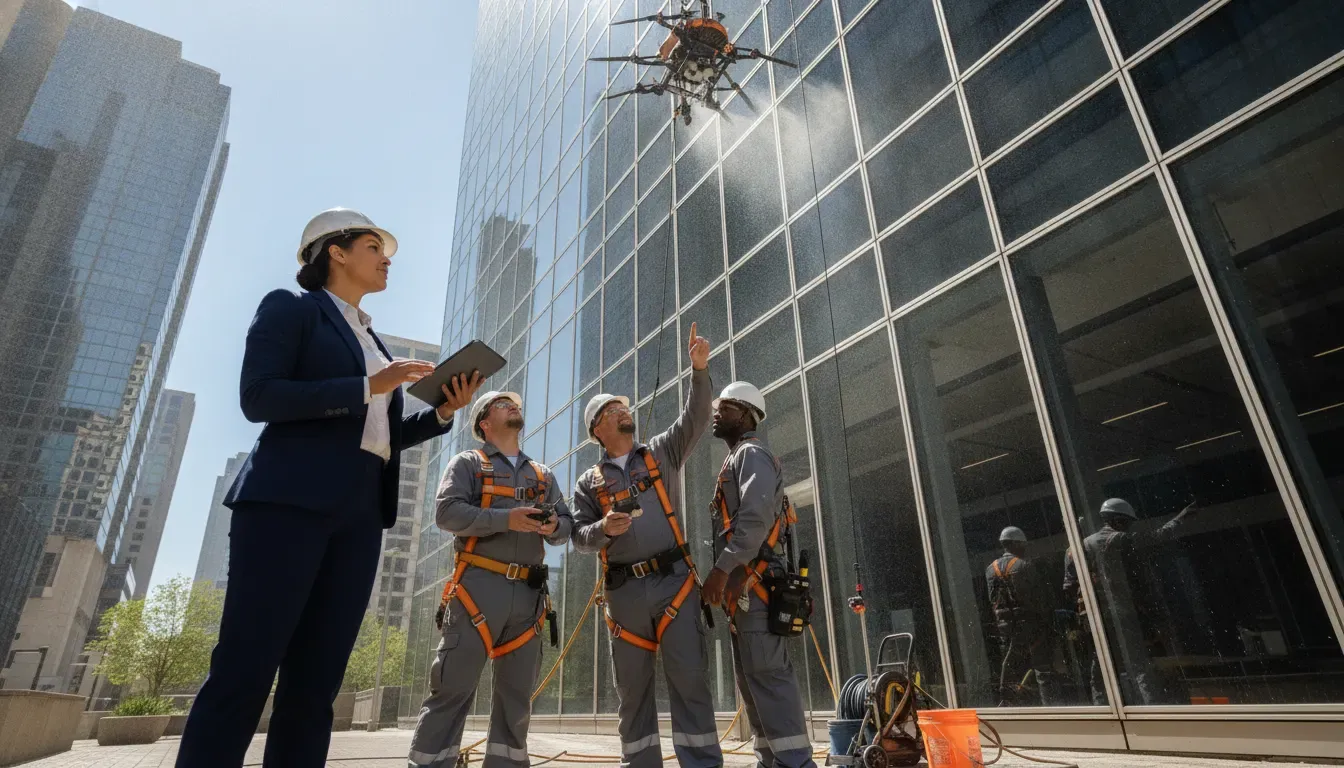
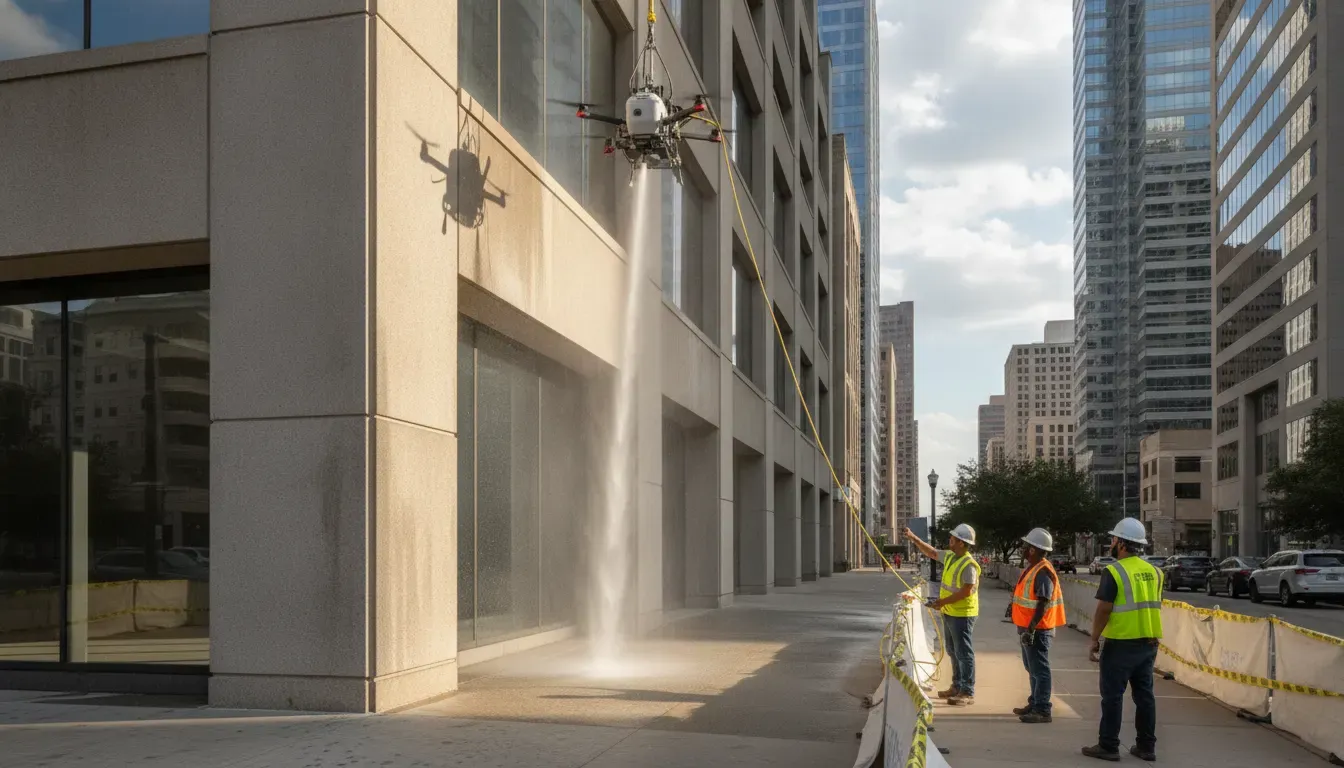
Drone pressure washing uses a tethered aircraft to deliver water or a cleaning solution to an elevated exterior surface. A ground-based system supplies the fluid through a hose. A trained operator controls the aircraft near the facade. The crew can then clean selected areas without placing a technician on a ladder, suspended platform, or lift for every pass.
Drone pressure washing is a ground-operated access method for elevated exterior cleaning, not a replacement for site planning or surface assessment. The system still requires a suitable launch area, clear operating conditions, trained personnel, and a facade that can safely receive the selected cleaning method.
The word "pressure" also needs context. Some facades need controlled pressure washing. Others need a gentler soft-wash approach. Glass, painted metal, masonry, concrete, stone, and composite panels can react differently to water pressure, heat, chemicals, and distance. A responsible provider chooses the method after reviewing the surface instead of treating every wall as a high-pressure application.
For a broader overview of commercial exterior cleaning and drone services, review Window Hero Southlake's commercial exterior cleaning and drone services guide. This article focuses on the operational question behind one part of that service mix: how access choices affect time, disruption, and total project value.
Where Can the Time Savings Come From?
Traditional high-reach cleaning may require more than the cleaning pass itself. A project team may need to deliver equipment, assemble access systems, establish a work zone, coordinate sidewalk use, and move equipment as the crew changes elevation. Those steps can be necessary for some buildings. They can also consume time before water touches the facade.
Drone pressure washing can reduce parts of that setup when the building and site are suitable. The ground crew can stage the pump, hose, controls, and safety equipment in one area. The aircraft can then work across an elevated section while the crew maintains observation and manages the hose. Less repositioning can make a large, consistent facade easier to sequence.
The main time advantage is often reduced access setup and repositioning, not a guaranteed cleaning speed for every surface. A building with many obstacles, narrow setbacks, heavy buildup, or complex architectural details may not receive the same benefit as a broad, open facade.
Comparing the work sequence
| Project step | Traditional lift or scaffold method | Drone pressure washing method |
|---|---|---|
| Initial access | Arrange and deliver access equipment suited to the elevation. | Stage the ground system, tether, controls, and safety area. |
| Elevation changes | Move or reset the platform as work shifts. | Reposition the aircraft while the ground system remains staged. |
| Occupancy planning | Plan around equipment footprints and overhead work zones. | Plan around the launch area, tether path, spray zone, and observers. |
| Surface coverage | Work from each accessible position with the selected tools. | Use controlled passes where the facade, weather, and flight plan allow. |
| Closeout | Remove access equipment and restore the work area. | Break down the ground system and restore the staging area. |
This comparison is not a promise that one method always wins. A lift may be the better option for a smaller elevation, detailed repair work, or an area that a drone cannot safely approach. The right comparison considers the complete project sequence, not just the time spent spraying.
How Does Drone Cleaning Reduce Disruption to Occupied Buildings?
Commercial cleaning often happens while a building remains open. Tenants need predictable access. Customers need clear entrances. Employees need safe walkways. Property managers also need to avoid unnecessary noise, blocked parking, and extended work zones.
A ground-operated drone system may reduce some of those conflicts because it can limit the footprint of high-reach access equipment. The building still needs a controlled area for the crew, hose, equipment, and spray management. The difference is that the project may avoid placing a large lift beside every section of the facade.
Scheduling remains important. A property manager should review launch and landing areas, pedestrian routes, vehicle movement, tenant entrances, sensitive equipment, and nearby structures before approving the method. Work may be planned for lower-traffic periods, evenings, or weekends when the property and local conditions allow it.
The Federal Aviation Administration explains that commercial drone operations under Part 107 involve operating rules, remote pilot certification, airspace responsibilities, and safety requirements. Read the FAA's commercial operator guidance when reviewing the credential and planning questions for a project.
Reduced disruption means a smaller or shorter work footprint when conditions support it, not zero site coordination. The contractor still needs a written plan for people, vehicles, weather, airspace, fluid management, and emergency procedures.
Have questions about occupied-building cleaning? Window Hero Southlake can help you review the project scope. Call 817-928-9500 for guidance.
What Facade Surfaces Respond Best to Drone Pressure Washing?
Drone cleaning is most useful when the facade offers broad, reachable sections and the selected treatment matches the material. The method can be considered for tall commercial exteriors, large walls, high sections above entrances, and areas where lift access would add substantial setup.
- Concrete: Concrete walls may collect dust, soil, and atmospheric staining. The provider must account for the concrete finish, joints, age, and existing damage.
- Masonry: Brick and other masonry surfaces need a method that respects mortar condition and the risk of driving water into vulnerable areas.
- Metal panels: Painted and coated panels require attention to finish condition, seams, fasteners, and chemical compatibility.
- Glass curtain walls: Glass cleaning requires controlled water quality, spray distance, surrounding seals, and a plan for spotting or runoff.
- Mixed facades: A building with glass, stone, metal, and concrete may need multiple methods. The drone may cover one portion while another portion uses a different tool.
Very detailed surfaces can be less suitable. Deep recesses, tight corners, projecting balconies, fragile finishes, loose components, active construction zones, and areas with difficult hose routing may require another access method. A site review should identify those exceptions before the proposal assumes uniform drone coverage.
Why Surface Assessment Protects the Budget
A faster access method cannot correct a poor cleaning specification. Before work begins, the provider should identify the facade materials, visible buildup, sensitive areas, nearby openings, drainage paths, and conditions that may change the treatment. That assessment helps prevent a fast process from becoming a costly repair or rework issue.
Ask whether the proposal separates cleaning from repairs. Cleaning can improve appearance and remove surface contamination. It does not repair failed sealants, cracked panels, damaged coatings, loose masonry, or leaking windows. If the crew observes a condition that could affect the work, the property manager should receive a clear note before the scope changes.
The same principle applies to water and chemical management. A commercial facade project may involve runoff, landscaping, entrances, sidewalks, storm drains, or neighboring properties. The plan should explain how the crew will protect the site and manage those conditions. The details vary by property, so a quote should reflect the actual building rather than a generic per-story assumption.
How Do You Evaluate the ROI of Drone Pressure Washing?
The return on investment is the value of a workable cleaning project compared with its full cost and operational impact. The invoice matters, but it is not the only variable. A method that lowers setup time may also reduce tenant interruptions, equipment coordination, and the number of days a work zone remains active.
Compare the full project cost, access time, disruption, schedule risk, and expected result for the same facade scope. This approach avoids comparing a drone quote for one elevation with a lift quote for the entire building.
Use the same scope for both methods
List the buildings, elevations, surfaces, approximate areas, buildup, access restrictions, desired schedule, and finish expectations. Then ask each provider to identify exclusions. A lower number may simply omit difficult elevations, water management, after-hours work, or final inspection.
Include setup and site costs
Ask how each proposal handles lift delivery, scaffold assembly, platform repositioning, traffic control, sidewalk protection, staging, and breakdown. For drone work, ask about launch areas, tether routing, observers, water supply, and any site controls. The goal is not to favor a method. It is to count the same categories for both.
Measure operational value
Estimate the cost of blocked entrances, tenant notices, customer detours, parking restrictions, and extended supervision. These costs may be difficult to express as a single number. They still belong in the property team's decision because they affect the building's day-to-day operation.
Check the maintenance plan
A recurring cleaning plan may help a facade stay easier to maintain. It can also make future visits more predictable when the building, surface mix, and access conditions remain similar. The appropriate frequency depends on the property, exposure, buildup, and owner goals. Do not assume a universal schedule.
Window Hero Southlake's guide to drone exterior cleaning cost factors covers the variables that shape a commercial quote. Use it alongside a site-specific proposal, not as a substitute for one.
What Should a Commercial Drone Washing Proposal Include?
A useful proposal lets a facility manager understand what will happen before the crew arrives. It should be specific enough to compare, but flexible enough to account for site conditions discovered during the review.
- Property address, buildings, elevations, and surfaces included.
- Recommended method for each surface, including pressure washing or soft washing where appropriate.
- Access plan, launch area, staging area, tether route, and pedestrian controls.
- Expected work windows and how weather or site conditions affect scheduling.
- Water supply, chemical handling, runoff protection, and cleanup responsibilities.
- Credential, safety, and insurance documentation requested by the property team.
- Areas excluded from the method and the alternate access method proposed for them.
- Completion notes, inspection process, and approval steps for out-of-scope work.
For a DFW property manager, this level of detail makes the method easier to approve internally. It also gives the service crew a shared reference for the work. A clear scope can prevent delays caused by an unexpected entrance, restricted sidewalk, tenant event, or facade condition.
Is Drone Pressure Washing Right for Every Commercial Facade?
No. Drone pressure washing is a useful option, but it is not an automatic fit for every building. Wind, rain, airspace, nearby aircraft activity, facade geometry, material condition, water management, and available staging space can change the recommendation.
A provider may recommend a blended plan. A drone can address broad upper sections while ground tools handle lower walls, recessed areas, storefront details, or sensitive surfaces. A lift or other access system may still be appropriate for inspection, repairs, or areas that need close contact.
The best method is the one that achieves the specified cleaning result while keeping people, property, occupants, and surrounding operations protected. If a provider promises the same savings for every property without asking about the building, request a more detailed evaluation.
Request a Drone Pressure Washing Quote for Your DFW Building
Large commercial facade cleaning deserves a plan built around the actual property. Drone pressure washing may save time and money when it reduces access setup, limits equipment repositioning, and shortens disruption around an occupied building. Those benefits depend on surface suitability, site controls, weather, airspace, and a clear scope.
Window Hero Southlake serves commercial properties in Southlake and the surrounding DFW market. When you request a quote, share the building height, facade materials, areas of concern, preferred work window, and any known access restrictions. A site-specific review can then determine whether drone cleaning, traditional access, or a blended approach makes the most sense.
Get a Free Quote for commercial exterior cleaning and discuss a practical plan for your facade.
Frequently Asked Questions
How does drone pressure washing save time?
It can reduce time spent arranging, moving, and removing high-reach access equipment. The actual benefit depends on the facade, staging area, weather, and project scope.
Is drone pressure washing safer than a lift?
It can reduce the need to place workers at elevation, but it still requires trained operators, site controls, airspace planning, and protection for people and property.
Can drones clean glass and concrete on the same building?
Potentially. Each surface needs its own method, pressure, water quality, and treatment plan. A mixed facade may require multiple tools or a blended access strategy.
Will drone cleaning always cost less?
No. Cost depends on height, surface condition, access, scheduling, water management, and scope. Compare complete proposals rather than a single equipment line.
What should I send with a quote request?
Share the property address, building height, facade materials, photos if available, areas of concern, preferred schedule, and known restrictions around occupants or traffic.
Get a Free Quote from Window Hero Southlake for your commercial facade cleaning plan.