
What a Professional Window Cleaning Cost Breakdown Actually Tells You
A professional window cleaning cost breakdown itemizes what drives your quote: pane count, access difficulty, glass condition, and bundled add-ons.
[Image: Homeowner reviewing a window cleaning cost estimate in front of a two-story home with large windows.]
A breakdown lets you compare quotes fairly, spot padding, and understand why two crews quote the same house so differently.
Below, we'll cover how per-pane pricing works, what a real service includes, and the red flags that should end the conversation.
The Average Cost of Window Cleaning per Pane, Explained
The average cost of window cleaning per pane is the base rate for one pane of glass, before access, condition, and add-ons.
A "pane" is one sheet of glass. A double-hung window has two panes; a row of French panes in one opening might have six or more. That distinction is where most first-time buyers get confused.
Why Per-Pane Pricing Beats a Flat Guess
Flat-rate quotes feel simple but hide the math: the company has already estimated your pane count internally, then added a cushion for unknowns it didn't inspect.
Per-pane pricing exposes that math: count your own panes, multiply by the quoted rate, and see where the number comes from. When a quote doesn't reconcile, ask why, a reputable provider will explain without hesitation.
Pro Tip Count your panes before you call. Walk the exterior and tally every individual sheet of glass, not every window frame. That count is your best negotiating tool and the fastest way to catch a padded quote.
Pane Count vs. Window Count: What You're Really Paying For
Window count and pane count aren't the same thing. A "window" is the opening in the wall; a "pane" is each piece of glass inside it.
Standard single-hung windows usually carry two panes; large picture windows may have two or three. Older Craftsman bungalows around Decatur and Morrow often feature divided-light windows with six or nine panes per opening, multiplying labor considerably.
That's why a 20-window house can price very differently from another 20-window house down the street. The frame count is identical; the glass count is not.
What Is Included in a Professional Window Cleaning Service
What is included in a professional window cleaning service varies by provider, but a complete job covers glass inside and out, frame and sill wiping, screen removal and cleaning, and track vacuuming. Anything less is a partial service dressed up as a full one.
Ask specifically which of these are included before you compare prices:
- Interior and exterior glass cleaning
- Screen removal, washing, and reinstallation
- Window track vacuuming and wipe-down
A quote that covers glass only will look cheaper than one that includes screens and tracks. It isn't cheaper. It's a smaller job.
Watch Out The most common mistake first-time buyers make is comparing a glass-only quote against a full-service quote and assuming the lower number is the better deal. Ask each provider to itemize inclusions in writing before you decide.
The Pricing Variables That Move Your Quote Up or Down
Several variables move a window cleaning quote up or down, and most have nothing to do with how dirty the glass is. The biggest swing factors are window type, access and height, glass condition, and timing, understanding each is how a first-time buyer tells a fair quote from a padded one.
Window Type: The Variable Most Guides Skip
Most cost guides stop at "per pane" and never explain that the kind of window changes labor time, and price. It's the most overlooked driver of variance, and worth asking about directly.
- Double-hung and single-hung windows are the simplest to clean. The sashes tilt or lift, so a crew can often reach both sides without a ladder. They price at the baseline rate.
- Casement windows crank outward and expose both faces, but the crank hardware and hinges create edges and corners that take extra wiping. Expect a modest bump over double-hung.
- Picture windows are large single panes with no moving parts. Fewer panes, but more square footage and reach required, pricing often shifts from per-pane to per-square-foot.
Experienced crews often quote French and divided-light windows at a higher per-pane rate, not because the glass is dirtier, but because each pane has four times the edge work. If a quote treats every pane as identical, ask how they're accounting for divided lights. The answer reveals whether they actually inspected the property.
Access, Height, and Ladder Work
Ladder work and multi-story access raise the price because they raise risk and time.
Safety surcharges are a legitimate line item, not a scam. Crews working at height carry additional insurance and follow fall-protection protocols that cost money to maintain.
If a provider quotes the same rate for a ground-floor ranch and a three-story home, ask how they're accounting for the difference.
Glass Condition: Hard Water Stains and Restoration
Hard water stain removal and glass restoration sit at the top of the pricing ladder because they require more than soap and a squeegee.
Atlanta's climate accelerates this. Pine pollen coats everything in spring, and when it mixes with morning condensation it forms a film that bakes on in the sun.
A standard cleaning removes surface dirt; restoration removes damage. They're priced differently because they're different jobs.
Seasonal Timing: When You Book Changes What You Pay
Timing is the variable almost no guide explains, and it's one a homeowner can control. Metro Atlanta window cleaning demand follows a predictable rhythm:
- Spring (peak): Pine pollen season sends demand surging. Crews book out, and scheduling flexibility disappears. Booking early, before the pollen peak, often gets you on the calendar at standard rates.
- Late fall (shoulder): After oak leaves drop and before holiday hosting, demand is steady but not frantic, a good window for bundled services like gutters and windows in one visit.
- Winter (off-peak): Demand softens, and many providers offer more flexible scheduling or bundled pricing to fill the calendar. This is the best time to book a deep clean or restoration job.
Ask any provider how their schedule looks for your target month. A crew with open slots is more likely to bundle add-ons or offer flexible timing than one booked solid during pollen season.
Pro Tip Book your first cleaning in the off-peak window before pollen season, not during it. You'll get more scheduling flexibility, a more thorough first-visit walkthrough, and a crew that isn't rushing between peak-season jobs.
What This Means for Your Quote
A fair quote reflects all four variables, window type, access, condition, and timing, not just a pane count. Ask each provider how they priced divided-light windows, multi-story access, and restoration work. One who can explain those line items is pricing the actual job; one who can't is guessing.
DIY vs. Professional Window Cleaning: A Cost-Benefit Look
DIY window cleaning saves the service fee but costs equipment, time, and risk. The honest comparison comes down to how you value those three, and most first-time buyers underestimate the equipment side.
What a Real DIY Kit Actually Requires
A squeegee and a bucket won't get you a professional result. A kit that can handle a two-story home honestly includes:
- A professional-grade squeegee (cheap ones streak and chatter on glass)
- A scrubber or strip washer for loosening film
- An extension pole long enough to reach second-story glass from the ground
That's a real upfront investment, before counting your time or the risk of ladder work. Most homeowners find the kit pays off only if they clean frequently and have easy access.
The Hidden Costs of DIY
The service fee is the visible cost of professional cleaning. The invisible costs of DIY are where the comparison turns:
- Time: A trained crew moves through a home in a fraction of the time it takes a homeowner working alone, especially on multi-story glass.
- Safety: Ladder work on a two-story home carries genuine fall risk. Most homeowners' insurance treats that risk differently than a bonded crew's coverage does.
- Results: Deionized water systems and proper squeegee technique produce a spot-free finish that tap water and a hardware-store squeegee rarely match. Streaks and mineral spots often show up after the glass dries, after you've already put the ladder away.
The Decision Framework: When DIY Wins and When It Doesn't
Rather than a blanket "hire a pro" answer, use this test:
DIY makes sense when:
- The home is single-story with easy ground-level access
- The windows are standard double-hung with no divided lights
- The glass is in good condition with no hard water staining
Professional cleaning makes sense when:
- The home is two stories or taller, or has windows over sloped roofs, decks, or landscaped beds
- The windows are French, divided-light, bay, or picture windows that multiply labor
- There's hard water staining, mold, or mildew that needs restoration
Key Takeaway The real question isn't DIY versus professional. It's whether your time, safety, and the quality of the result are worth more than the service fee. For most two-story homes with divided-light windows, they are. For a single-story ranch with easy access, DIY can be a reasonable weekend project.
A Middle Path: Bundling Services
If you're hiring a professional for anything, bundling windows with gutters, soft washing, or pressure washing in one visit often makes the per-service cost more efficient than separate crews. Ask about bundling before you book a single service.
How to Choose a Professional Window Cleaner
Choosing a professional window cleaner comes down to four checks: proof of insurance, a written itemized quote, a clear satisfaction guarantee, and a service area that covers your address. Verify all four before you book.
Ask every provider these questions:
- Are you insured, and can you provide a certificate?
- Will you give me an itemized written quote before the visit?
- What happens if I'm not satisfied with the result?
That last question matters more than most homeowners expect: a provider who handles windows, gutters, and soft washing in one visit saves you coordinating multiple crews and often bundles the pricing.
Red Flags to Walk Away From
Walk away from any provider who quotes a firm price over the phone without seeing the property, refuses to put the scope in writing, or can't produce proof of insurance.
Other warning signs: pressure to sign a long-term contract on the first visit, no physical business address, and a quote that changes meaningfully between the phone call and the arrival.
Watch Out A quote given sight-unseen is a guess, and guesses get revised upward once the crew arrives. Insist on an inspection-based estimate, even a quick one, before anyone touches your glass.
How to Read a Window Cleaning Quote Line by Line
Reading a window cleaning quote line by line means checking four things: pane count, inclusions, access charges, and add-on pricing. Each line should be verifiable against your own walkthrough.
Here's what a well-built quote separates:
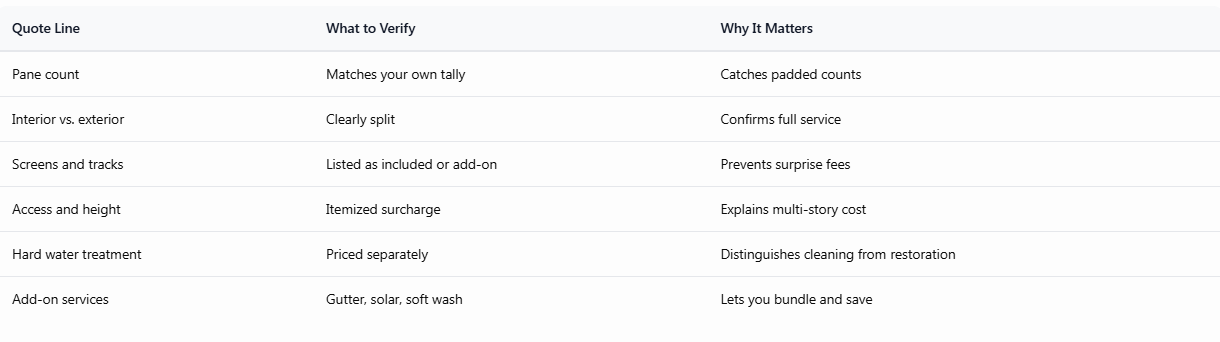
If a quote arrives as one number with no breakdown, ask for the itemized version.
One more note for first-time buyers: service call minimums are normal in this industry.
Metro Atlanta's pine pollen, clay soil, and oak-heavy canopy make exterior maintenance a year-round job, and windows take the brunt of it.
Frequently Asked Questions
How do professional window cleaners count windows for an estimate?
Most count individual panes, not whole window frames. A double-hung window with a storm pane can be four panes. Cleaners also note French panes, skylights, and multi-story access, since each adds time and equipment. Ask whether the quote is per pane or per window so you compare apples to apples. Window Hero Atlanta gives a free 5-minute estimate and explains the count before you book.
What factors influence the final cost of residential window cleaning?
The main drivers are pane count, interior vs. exterior only, height and ladder work, glass condition (hard water stains and pollen film take longer), screen and track cleaning, and service call minimums. In Metro Atlanta, pine pollen and clay dust mean windows get dirtier faster, so condition matters. Frequency also affects price: recurring maintenance usually costs less per visit than a one-time deep clean.
Are professional window cleaners worth it for a beginner homeowner?
For most homeowners, yes. Pros use deionized water and water-fed poles that dry streak-free, and they carry insurance for ladder work on multi-story homes. DIY saves money but risks streaks, water damage around sills, and falls. If your home has Craftsman details, storm windows, or hard water stains, professional cleaning protects the glass and siding. Request a free quote to see the difference in writing.
What should I look for in a professional window cleaning quote?
Look for a per-pane or per-window rate, whether interior and exterior are both included, screen and track cleaning, sill wiping, and any safety or access surcharge. Ask about service call minimums and what happens if it rains. A good quote is itemized, not a single lump sum. Window Hero Atlanta provides a clear breakdown and a 100% satisfaction guarantee so you know what you're paying for.
How often should I have my windows professionally cleaned?
Most Metro Atlanta homes do well with two cleanings a year: one in spring after pine pollen season and one in fall after oak leaves drop. Homes near busy roads or with lots of trees may need quarterly service. Commercial storefronts often book monthly. Recurring plans usually lower the per-visit price and keep hard water stains from setting in. Ask about a maintenance program when you request your estimate.