
Moss on a roof is more than a cosmetic concern. It can hold moisture against roofing materials and make a roof look older than it is. The safest answer to how to remove moss from roof surfaces is to identify the growth, avoid aggressive pressure, and use a roof-safe cleaning method.
Get a Free Quote for Roof Cleaning
Quick answer: Do not climb onto a wet or mossy roof or blast it with a pressure washer. From the ground, document the affected areas. Then ask a qualified roof-cleaning professional to assess the material and use a controlled soft-washing treatment when appropriate.
How to Remove Moss From Roof Safely
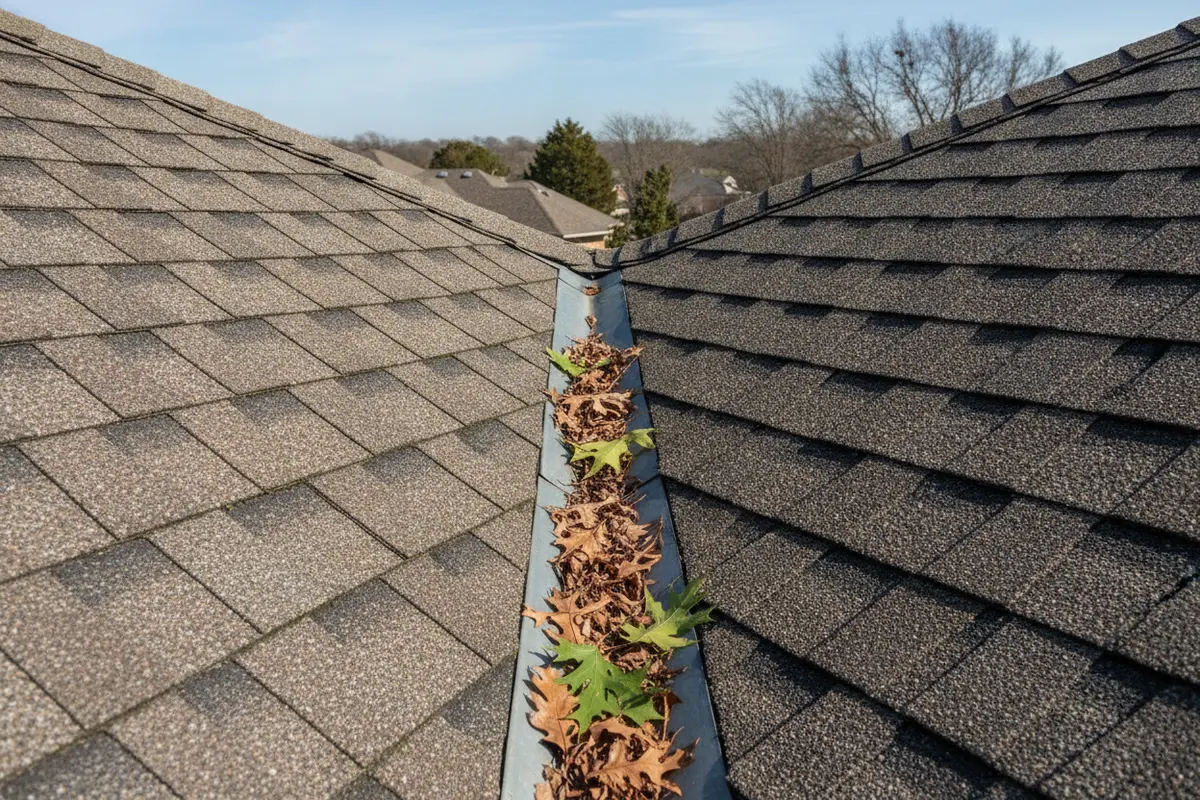
Start with a ground-level check. Look for green growth, dark streaks, leaf piles, lifted-looking shingles, and blocked roof valleys. Take photos from a safe location, and note which slope appears affected.
Next, separate cleaning from repair. Moss, algae, and lichen can create surface buildup, but a leak or damaged shingle needs a roofing assessment. Cleaning should not be presented as a substitute for roof repair.
A professional roof-cleaning visit usually begins with a visual evaluation. The technician considers the roof material, slope, access, surrounding landscaping, and type of growth. That information helps determine whether soft washing is suitable.
Window Hero Southlake describes its roof service as low-pressure soft washing with cleaning solutions designed for organic growth and stains. The service page identifies asphalt shingles, tile, metal, flat, and synthetic roofing materials as service types. The appropriate process still depends on the actual roof condition. See the Southlake service area for related exterior-care options.
How to Tell Moss From Algae, Lichen, and Dirt
Not every dark or green mark on a roof is moss. Several types of organic growth can look similar from the ground. Correct identification helps you ask better questions before choosing a cleaning method.
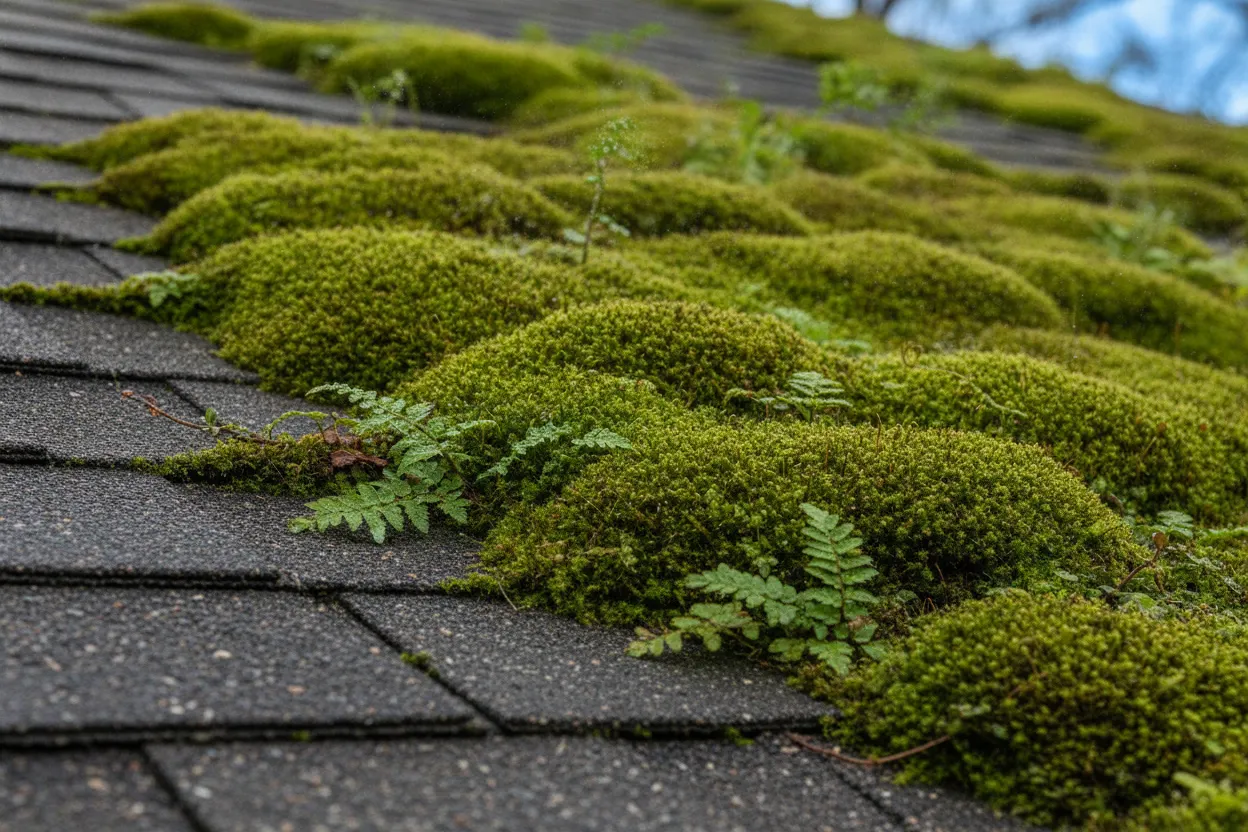
Moss usually looks soft, raised, and green. It may form thicker patches where moisture stays for long periods. It can also trap leaves and soil against the roof surface.
Algae often appears as dark streaks or broad discoloration. It may be flat and spread across shingle surfaces. Lichen can look crusty or attached to the material. Dirt and pollen may look similar after rain, especially beneath mature trees.
These visual descriptions are clues, not a diagnosis. A camera zoom can exaggerate color and texture. A professional should confirm what the surface needs before applying a treatment.
The Oregon State University Extension guide to removing roof moss also cautions homeowners about roof access and explains why prevention matters. Its guidance is useful for understanding the risk, but local roof material and property conditions still control the service plan.
Do not pull at growth to test whether it is attached. Pulling can disturb shingles or surface granules. Instead, take a photo from the ground and describe where the growth appears.
Why Pressure Washing Can Damage a Mossy Roof
A roof is not a driveway. Shingles, tiles, flashing, and gutters can respond poorly to concentrated water pressure. A forceful spray may loosen granules, break fragile material, drive water beneath edges, or damage connected gutters.
Pressure can also spread debris across the property. Moss may be removed from view while moisture remains in seams or shaded areas. That result can create a false sense that the roof received a complete treatment.
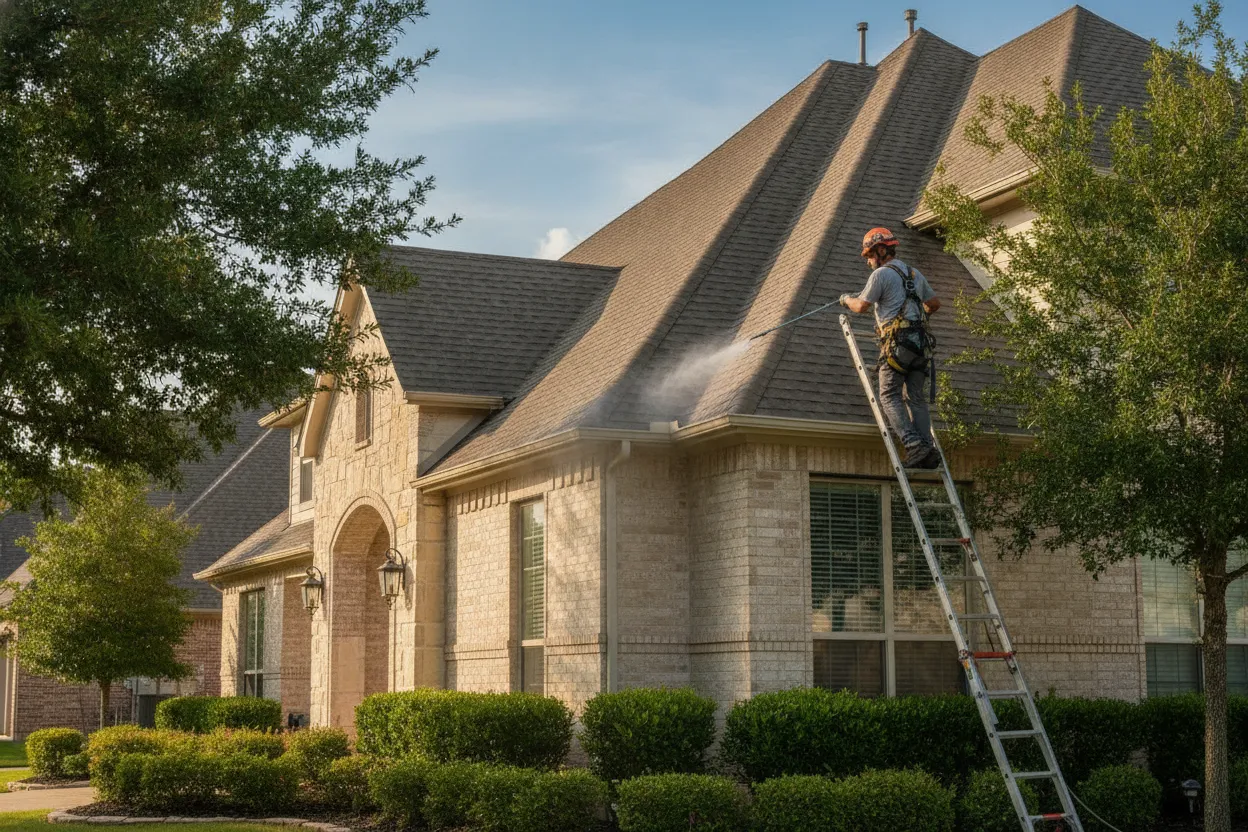
Soft washing takes a different approach. A controlled application targets organic buildup with cleaning solutions rather than relying on force alone. The goal is to clean the surface while limiting unnecessary stress on the roofing material.
Do not assume a low-pressure process is automatically safe for every roof. A technician should still account for age, previous repairs, loose materials, nearby plants, and drainage. A careful plan matters more than a generic equipment label.
For a broader comparison of surface-safe methods, read Window Hero Southlake's guide to why power washing can ruin a roof. The related pressure washing and soft washing guide covers additional exterior surfaces.
| Approach | Possible benefit | Main concern |
|---|---|---|
| Scrubbing or scraping from the roof. | May remove visible growth in a small area. | Climbing creates fall risk, and scraping can disturb shingles. |
| High-pressure washing. | Can remove surface debris quickly. | May damage roofing materials, flashing, gutters, or granules. |
| Controlled soft washing. | Uses treatment and limited pressure for organic growth. | Requires material-specific planning and landscape protection. |
| Roofing repair. | Addresses leaks or damaged materials. | It is not a replacement for cleaning when the issue is surface growth. |
The practical choice is to match the method to the roof, not to choose the strongest spray. A roof-cleaning professional can explain whether the visible issue is growth, staining, debris, damage, or a combination.
Get a Free Quote for a Roof Assessment
What Happens During a Professional Soft-Wash Visit?
A roof-cleaning visit should begin with a conversation about the property. Share what you have noticed, when it appeared, and whether the roof has had repairs or previous treatments.
The technician then reviews the visible roof sections, access points, gutters, landscaping, and nearby surfaces. This review helps identify areas that need extra protection and surfaces that should not receive runoff.
The cleaning plan should name the intended method. It should also explain how the team will limit pressure, protect plants, manage overspray, and handle debris around the gutters or roof edge.
During treatment, the goal is controlled application rather than forceful blasting. Organic material may loosen or fade over time instead of disappearing instantly. A professional can explain what result to expect on the specific roof.
After the work, ask which areas were treated and whether any repair concerns were noticed. Request a clear recommendation for follow-up checks. That record can help you compare changes from the ground later.
A cleaning service should not promise that every stain will vanish or that moss cannot return. Roof age, material, shade, moisture, and debris all affect the result. Clear expectations are part of a safe service plan.
What to Do Before a Roof-Cleaning Visit
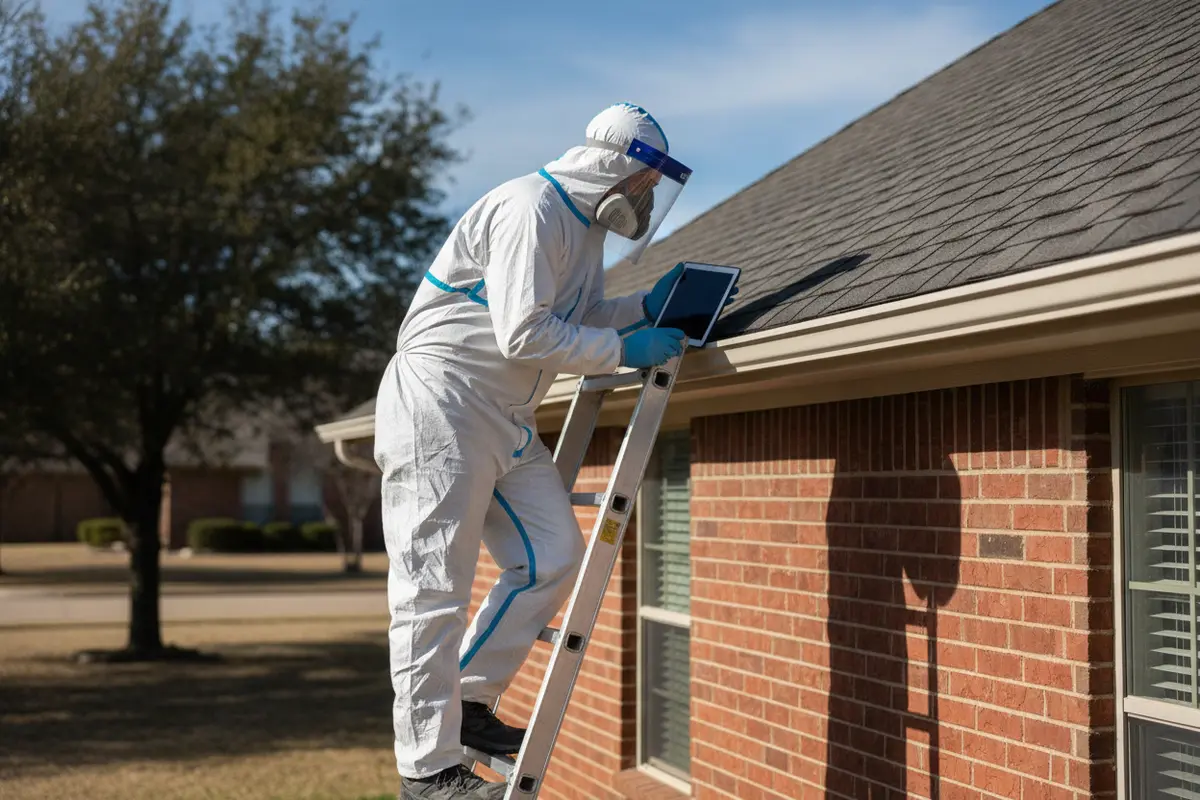
Good preparation does not require climbing onto the roof. It gives the technician useful information and helps protect the rest of the property.
- Photograph the roof from the ground. Capture the affected slope, nearby trees, gutters, and visible debris.
- Note the growth pattern. Record whether moss appears beneath shade, near a valley, or along a gutter edge.
- Check for indoor warning signs. Look for ceiling stains or damp attic areas, but do not treat a cleaning visit as leak diagnosis.
- Move fragile outdoor items. Clear patio furniture, decorations, and loose items from the work area when practical.
- Point out sensitive landscaping. Identify garden beds, ponds, pets, and plants that need protection during exterior work.
- Ask what the service includes. Confirm the proposed method, runoff plan, gutter debris handling, and any follow-up recommendations.
These steps are useful for a Southlake home and for properties in Colleyville, Flower Mound, Westlake, and Grapevine. Tarrant County homes with mature trees may show different growth patterns on shaded and sunny roof slopes.
How Moss Removal Differs by Roof Material
Roof materials are not interchangeable. A cleaning method that seems acceptable for one surface may be wrong for another. The technician should identify the material before choosing equipment or solutions.
Asphalt shingles
Asphalt shingles can collect moss, algae, and dark organic staining. Avoid aggressive brushing and high pressure. A low-pressure treatment may be appropriate when the shingles are stable and the surrounding property can be protected.
Tile roofs
Tile can crack or shift when a person walks across it carelessly. The treatment plan should account for the tile type, access, age, and any visible damage. If a tile is broken, cleaning does not fix the underlying problem.
Metal roofs
Metal roofs can develop organic buildup near shaded sections, seams, and debris pockets. Cleaning should avoid unnecessary force and should consider coatings, fasteners, drainage, and nearby surfaces.
Flat and synthetic roofs
Flat and synthetic roofing systems need material-specific care. Ponding water, seams, membranes, and drainage paths can affect the service plan. Ask for an evaluation before selecting a treatment.
When a roof is old, steep, visibly damaged, or difficult to access, ask a roofing professional to evaluate it before cleaning. That extra opinion can prevent a maintenance project from overlooking a repair issue.
How to Keep Moss From Returning
Moss control starts with moisture, shade, and debris management. No prevention step guarantees that growth will never return. The aim is to reduce favorable conditions and notice changes early.
- Trim branches that create heavy shade or drop recurring debris, while keeping tree work separate from roof cleaning.
- Keep gutters and downspouts clear so roof runoff can move away from the home.
- Watch shaded roof slopes after wet weather and compare them with sunny sections.
- Keep leaves from collecting in valleys or behind roof features when they can be removed safely from the ground.
- Schedule a visual roof check when the appearance changes rather than relying on an automatic wash interval.
- Ask about follow-up treatment if moss was widespread or returned quickly.
Roof and gutter care work together. Debris that stays on a roof can enter gutters, while blocked gutters can keep roof edges and nearby surfaces damp. A homeowner may choose to discuss both services during one exterior-maintenance conversation.
Window cleaning can also fit into a broader exterior-care plan. Many homeowners bundle roof, gutter, house-washing, and window services when preparing a property for guests, a sale, or routine upkeep.
For a longer maintenance view, see the Southlake roof and gutter maintenance guide. For timing guidance, read how often North Texas homeowners should check their roofs. You can also review the guide to removing algae, mold, and mildew from home exteriors and the Southlake gutter-cleaning guide.
How to Compare Roof-Moss Removal Quotes
A low quote is not always the best value if it leaves the method or scope unclear. Compare what each provider plans to inspect, treat, protect, and explain after the visit.
- Ask whether the quote covers the full roof or only named sections.
- Confirm whether gutters, downspouts, plants, and outdoor items are included in the protection plan.
- Ask how the provider handles visible damage, loose shingles, or suspected leaks.
- Check whether the quote identifies soft washing, pressure limits, and any expected follow-up.
A clear scope makes it easier to compare service offers. It also helps prevent a roof-cleaning quote from being confused with a roof-replacement estimate.
When Should You Hire a Professional?
Professional help makes sense when the roof is steep, wet, heavily covered, or difficult to reach safely. It is also a better choice when you cannot identify the roofing material or the growth has returned after a DIY attempt.
Do not climb onto a mossy roof to save a service call. Moisture and organic growth can make the surface slippery. A fall can create a much larger cost than a planned evaluation.
Ask for professional guidance when you see missing or lifted shingles, cracked tiles, exposed underlayment, sagging, active leaks, or damage after a storm. Those conditions may need a roofer before any cleaning work.
Window Hero Southlake provides roof cleaning for Southlake-area properties with a low-pressure soft-washing approach. A quote can help you understand the scope without committing to a method before the surface is evaluated.
Get a Free Quote for Southlake Roof Cleaning
Frequently Asked Questions
Can I remove roof moss with a pressure washer?
High pressure is not a safe default for roofing. It can damage shingles, tile, flashing, gutters, and protective granules. Ask about a material-appropriate soft-washing method instead.
Is roof moss a sign that I need a new roof?
Not necessarily. Moss can indicate persistent moisture and shade, but it does not prove that the roof needs replacement. A roofer should evaluate leaks or damaged materials.
Will soft washing prevent moss from returning?
Cleaning can remove existing organic buildup, but no treatment guarantees permanent prevention. Shade, tree debris, moisture, roof condition, and drainage can support regrowth.
Should I clean my gutters when removing roof moss?
Often, it is useful to discuss both services. Roof debris can reach gutters, and blocked drainage can keep roof edges damp. The final scope depends on the property.
What is the safest first step for a Southlake homeowner?
Take ground-level photos and request an assessment from a qualified roof-cleaning professional. Do not climb onto a wet roof or start with a pressure washer.