
How drone window cleaning works is easier to understand when you see it as a ground-controlled exterior cleaning system, not a free-flying gadget. A tethered drone carries the cleaning head up the facade while a trained operator controls its position, water flow, and cleaning pattern from a safe ground zone.
Get a Free Quote for Commercial Drone Cleaning
How does commercial drone window cleaning work?
Drone window cleaning combines a tethered aircraft, a ground-based water and power system, trained remote pilots, and controlled passes across exterior glass. The drone keeps the cleaning equipment at the building face while the crew stays on the ground, helping property managers clean hard-to-reach surfaces without setting up a swing stage for every section.
The process begins with a site review. The cleaning team looks at building height, facade materials, glass coatings, nearby people and vehicles, air movement, water access, and areas that need protection. A commercial building may have open glass curtain walls, recessed windows, masonry, metal panels, or delicate architectural details. The plan must account for all of them.
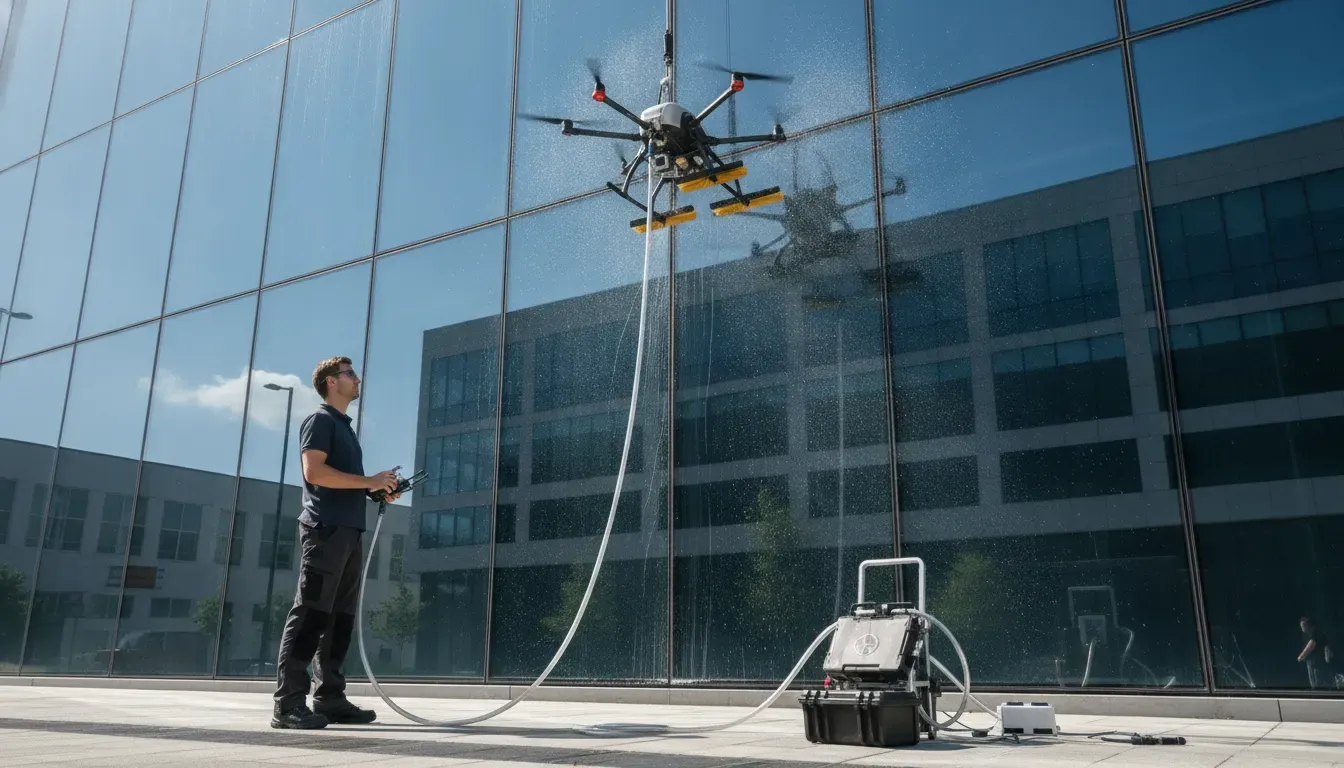
Next, the crew establishes a controlled work area. Hoses, power equipment, purification equipment, and safety barriers remain at ground level. The drone connects to this equipment through a tether. That tether helps supply the system and keeps the aircraft connected to the cleaning setup during the work.
After the preflight inspection, the operator guides the drone to the first cleaning zone. The cleaning head makes measured passes across the surface. The crew controls distance, spray pattern, pressure, and overlap so the cleaning method matches the glass and facade.
Most projects use a rinse and cleaning sequence rather than one blast of water. The team may pre-rinse loose debris, apply an approved cleaning solution when needed, and finish with purified water. A final inspection checks for missed areas, remaining mineral deposits, and runoff concerns.
The system is tethered, ground-controlled, and designed for repeatable passes
A commercial cleaning drone is part of a larger system. The aircraft, tether, hose, water purification equipment, controls, barriers, and trained crew work together to create a repeatable cleaning process. This setup allows the operator to focus on surface coverage while a ground team manages water, equipment, and site safety.
The tether is one of the most important differences between a cleaning drone and a consumer camera drone. It supports the cleaning operation and helps the crew maintain a consistent connection to the aircraft. The ground operator does not simply send the drone up and hope it reaches the glass. The operator works from a planned position and keeps the cleaning pattern within the approved work zone.
Professional equipment also gives the crew more control than a garden hose or consumer pressure washer. Window Hero's commercial drone materials describe precision sensors, GPS guidance, and auto-land technology. These features help the pilot position the cleaning head and return the equipment safely when a pass is complete or conditions change.
The result is a controlled workflow that can be repeated across floors and elevations. For a property manager, repeatability matters because the goal is not just one clean pane. The goal is consistent coverage across a large facade with minimal disruption to tenants, visitors, and building operations.
What technology does a drone window cleaning system use?
A drone window cleaning system uses flight controls, a tether, a cleaning head, pumps, hoses, water treatment, and safety equipment. The technology is valuable because each component solves a specific high-rise cleaning problem, from reaching upper glass to delivering a consistent final rinse.
- Tethered aircraft: Carries the cleaning head to elevated exterior glass while remaining connected to the ground system.
- Precision flight controls: Help the operator maintain a stable position and consistent distance from the facade.
- Cleaning head: Directs the water or cleaning solution toward the surface in a controlled pattern.
- Pumps and hoses: Move water from the ground equipment to the elevated cleaning point.
- Purified water system: Reduces mineral residue that can remain when ordinary tap water dries on glass.
- Ground safety equipment: Includes barriers, hose management, communication tools, and a defined staging area.
Window Hero also describes drone systems capable of pressure levels suited to commercial exterior cleaning. Pressure is not automatically better for every surface. A trained crew adjusts the method to the glass, facade, joints, coatings, and surrounding materials. Delicate surfaces may need a gentler approach, while durable masonry or heavily soiled areas may need more cleaning power.
Water quality is equally important. Purified water contains fewer dissolved minerals than ordinary water, so it can dry with less spotting on suitable glass surfaces. The final result still depends on the building condition, contaminants, weather, surface type, and the cleaning plan.
How high can drone exterior cleaning reach and how fast?
Window Hero's commercial drone service is designed to clean exterior surfaces up to 15 stories, or approximately 150 feet, and its materials cite a rate of about 300 square feet per minute. Actual production depends on facade design, soil conditions, access, weather, water supply, and the required finish.
Those figures describe equipment capability, not a promise that every building will be completed at the same speed. A building with broad, open glass elevations may allow efficient continuous passes. A property with deep recesses, many ledges, tight corners, landscaping, or pedestrian traffic may require more setup and repositioning.
The height advantage is most useful when traditional access would require significant preparation. Rope access, lifts, scaffolding, or swing stages can involve roof access, anchor planning, equipment movement, and coordination with occupants. A drone can reduce some of that setup for appropriate exterior surfaces, while ground crews still handle areas that require a different technique.
| Cleaning approach | Access method | Best fit | Planning consideration |
|---|---|---|---|
| Tethered drone cleaning | Ground-controlled aircraft and cleaning head | Large exterior glass and accessible facade elevations | Requires a clear work zone, suitable conditions, and trained operators |
| Water-fed pole cleaning | Ground-based extension pole | Lower elevations and reachable windows | Reach depends on building height, access, and pole positioning |
| Lift or swing stage | Elevated platform | Surfaces needing close manual access or detailed work | Requires equipment setup, access coordination, and protected operating areas |
| Rope access | Technicians suspended from approved anchor systems | Complex elevations and areas requiring direct technician access | Requires specialized planning, qualified personnel, and building access controls |
See the complete commercial exterior cleaning and drone services guide
What certifications and safety steps does the operator need?
Commercial drone cleaning requires more than knowing how to fly a drone. Window Hero identifies FAA Part 107 certification for its remote pilots and uses a site-specific safety process that considers airspace, people, vehicles, equipment, weather, building materials, and emergency procedures.
The Federal Aviation Administration explains that commercial small unmanned aircraft operations generally follow Part 107 rules. The FAA also notes that some operations require additional authorization or a waiver. A responsible cleaning plan must account for the specific flight environment instead of assuming that every building can be treated the same way.
Before a project begins, the team should define the perimeter and keep unnecessary people outside the work area. The crew must manage hoses and power equipment so they do not create trip hazards or interfere with entrances. The operator also monitors wind, visibility, nearby aircraft concerns, and changes in site activity.
Building safety is part of surface safety. The crew needs to know whether the glass is tinted, coated, damaged, etched, or surrounded by materials that react differently to water or cleaning solutions. A pre-service evaluation helps determine where drone cleaning fits and where another method is more appropriate.
When conditions change, the safest choice may be to pause, reposition, or reschedule. High-rise work should never be rushed to meet an arbitrary production target. The value of the technology comes from combining reach and efficiency with disciplined site control.
When is drone cleaning better than traditional high-reach methods?
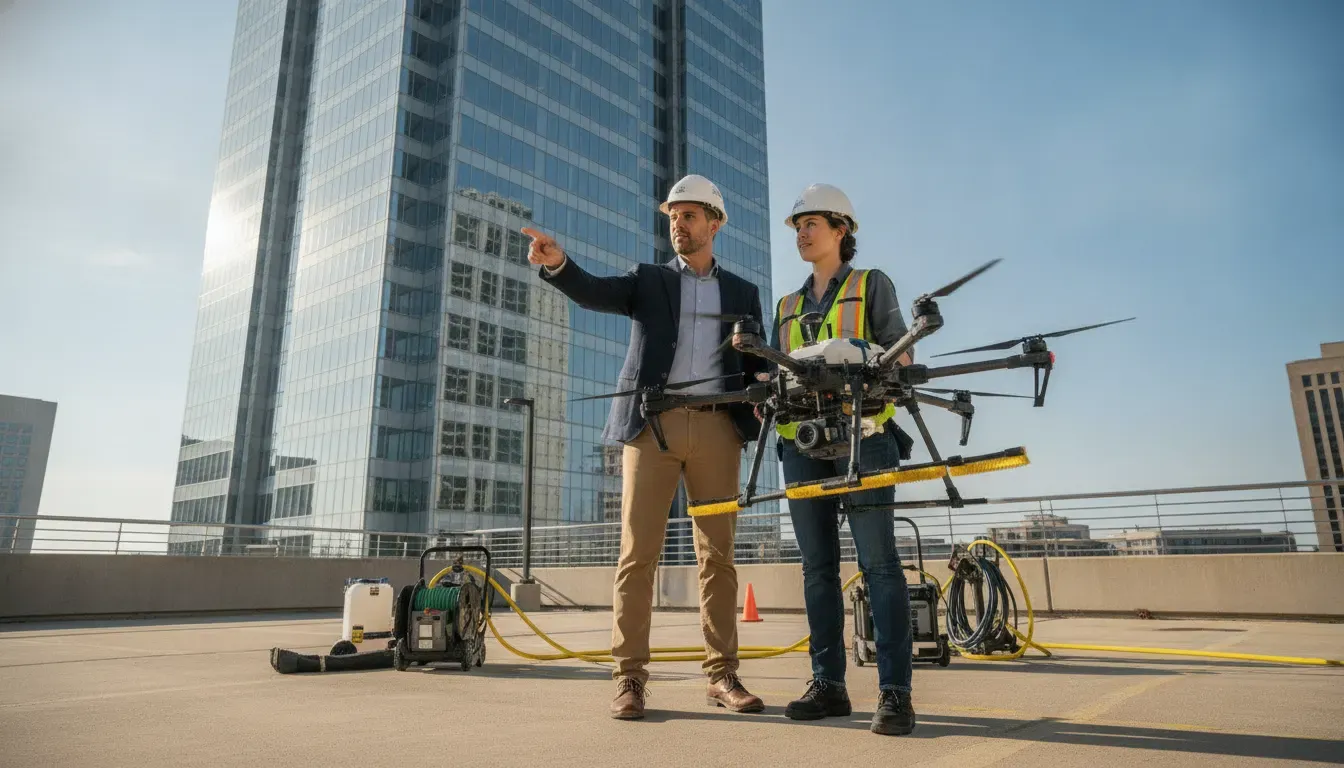
Drone cleaning may be a strong option when a commercial property has broad exterior glass, difficult upper elevations, limited roof access, or a need to reduce setup and tenant disruption. It is not a universal replacement for every high-reach method. A site assessment should determine the best combination of drone and ground cleaning.
Drone cleaning can be especially useful for office buildings, hotels, hospitals, schools, campuses, apartments, and other large properties with repeatable exterior elevations. Window Hero's commercial service materials also identify high-rise offices, data centers, universities, and other commercial properties as potential applications.
Property managers may consider a drone approach when they want to:
- Reduce the amount of suspended or elevated work needed for suitable exterior surfaces.
- Clean upper glass without placing a lift in every work area.
- Limit disruption near entrances, sidewalks, tenants, and guest areas.
- Coordinate a recurring maintenance plan for a large building or property group.
- Pair aerial cleaning with traditional work on lower elevations, ledges, frames, sidewalks, and other surfaces.
Traditional methods may remain the right choice for interior glass, detailed frame cleaning, damaged surfaces, tight architectural features, or areas that need direct technician contact. A strong commercial plan does not force one tool onto every part of a building. It assigns each surface to the method that delivers the right balance of access, finish, safety, and efficiency.
Window Hero's commercial and professional window cleaning support can complement drone work when a building needs a broader maintenance plan. Related exterior services, such as pressure washing, may also be scheduled for concrete, walkways, loading areas, or other surfaces around the property.
How should a property manager prepare for a drone cleaning quote?
A useful drone cleaning quote starts with building details, not just a request for a price. Share the property address, approximate height, surface types, access constraints, preferred service window, and known tenant or pedestrian concerns. Window Hero can then evaluate whether drone cleaning, ground methods, or a combination is the best fit.
Before requesting a quote, gather:
- Building address and the best on-site contact.
- Approximate number of stories and the elevations that need cleaning.
- Photos or plans showing glass, facade materials, recesses, ledges, and roof access.
- Information about sidewalks, entrances, parking, landscaping, and nearby traffic.
- Preferred timing, including after-hours or weekend windows when appropriate.
- Any prior cleaning concerns, hard-water buildup, construction residue, or glass damage.
Window Hero's commercial process includes a property evaluation before service. That step helps the team identify where drone cleaning can produce efficient coverage and where technicians should use another tool. It also gives property managers a clearer maintenance plan instead of a one-size-fits-all recommendation.
In the DFW market, a building may be located in Southlake, Colleyville, Flower Mound, Westlake, Grapevine, or another nearby service area. Local access, building layout, and site activity can vary significantly. A short quote conversation is the fastest way to confirm serviceability and the next step.
Request a free 5-minute commercial drone cleaning quote
Frequently asked questions
Do window cleaning drones work?
Yes, commercial cleaning drones can clean suitable exterior glass and facade surfaces by delivering water or cleaning solution from a ground-controlled aircraft. Results depend on the building surface, soil, weather, access, and the operator's cleaning plan.
Does the drone touch the windows?
The cleaning system is designed to direct water or solution at the exterior surface from the drone-mounted cleaning equipment. The exact approach depends on the equipment, surface, and project requirements. A site evaluation confirms the right method.
How high can drone window cleaning go?
Window Hero's commercial materials describe drone exterior cleaning up to 15 stories, or approximately 150 feet. The usable height for a specific project depends on the building, local conditions, airspace, work zone, and the surface being cleaned.
Is drone window cleaning safe for a commercial building?
Drone cleaning can reduce the need for workers to operate at elevation on suitable surfaces, but it still requires trained operators, a controlled work zone, equipment checks, and an assessment of weather, airspace, people, vehicles, and building materials.
How much does commercial drone window cleaning cost?
Commercial pricing is quote-based because height, glass area, access, soil, surface type, service frequency, and site logistics vary. Window Hero can evaluate the building and recommend a practical combination of drone and traditional cleaning methods.
Talk with Window Hero Southlake about your building's exterior cleaning plan.