
Planning gutter cleaning North Fort Worth TX homeowners can use starts with noticing where roof runoff goes. Leaves, seed pods, and roof grit can collect in troughs or block downspouts, especially after windy weather and seasonal storms. A simple inspection helps you spot trouble before water spills over the edge.
Why does gutter debris deserve attention?
Clear gutters give rainwater a path from the roof to the downspouts, while blocked sections can cause overflow near siding, landscaping, and walkways.
In North Fort Worth, debris can include leaves, pine needles, seed pods, and granules washed from shingles. The amount depends on nearby trees, roof design, and weather. A home with mature trees overhanging the roof may collect debris faster than a more open lot.
When water cannot move freely, it may spill over the gutter edge or remain pooled in a low section. You might notice streaks on siding, washed-out mulch, or water collecting near the foundation after a storm. These signs do not prove the gutter is the only cause, but they are worth checking.
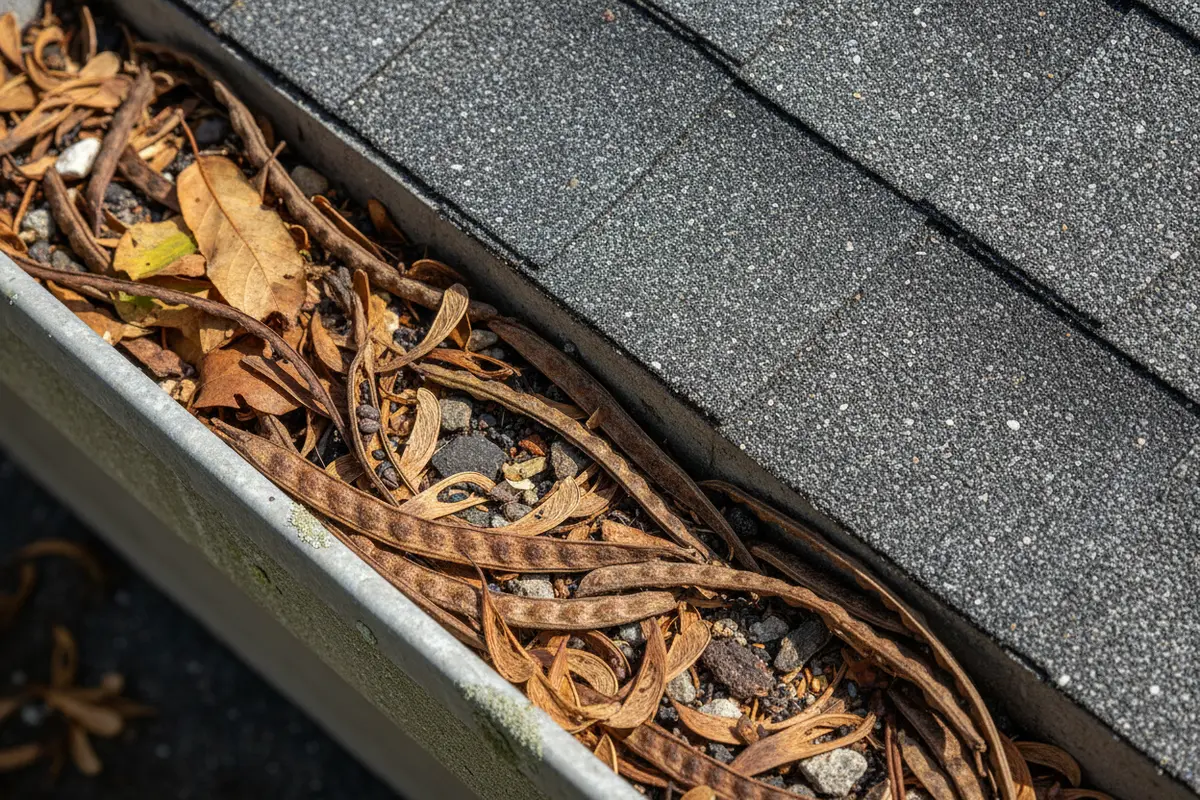
gutter cleaning North Fort Worth TX: What should you check?
Window Hero Southlake recommends checking the gutter channel, joints, outlet, and downspout route as one system, rather than focusing only on visible leaves.
From the ground, look for sagging sections, visible plant growth, stains, or debris at the outlet. During rain, observe whether water exits the downspout and flows away from the house. Do not climb a ladder during a storm or lean over a roof edge to inspect a hidden area.
A downspout can be blocked even when the gutter trough looks mostly clear. Water that backs up, drips at a joint, or pours over the front may point to an obstruction, an alignment issue, or an outlet that needs attention. Professional gutter cleaning in Southlake can include checking accessible drainage paths as part of the maintenance visit.
How can you tell if a downspout is clear?
Window Hero Southlake suggests watching the outlet during safe, ordinary rainfall and noting whether water leaves the system without backing up or spilling at joints.
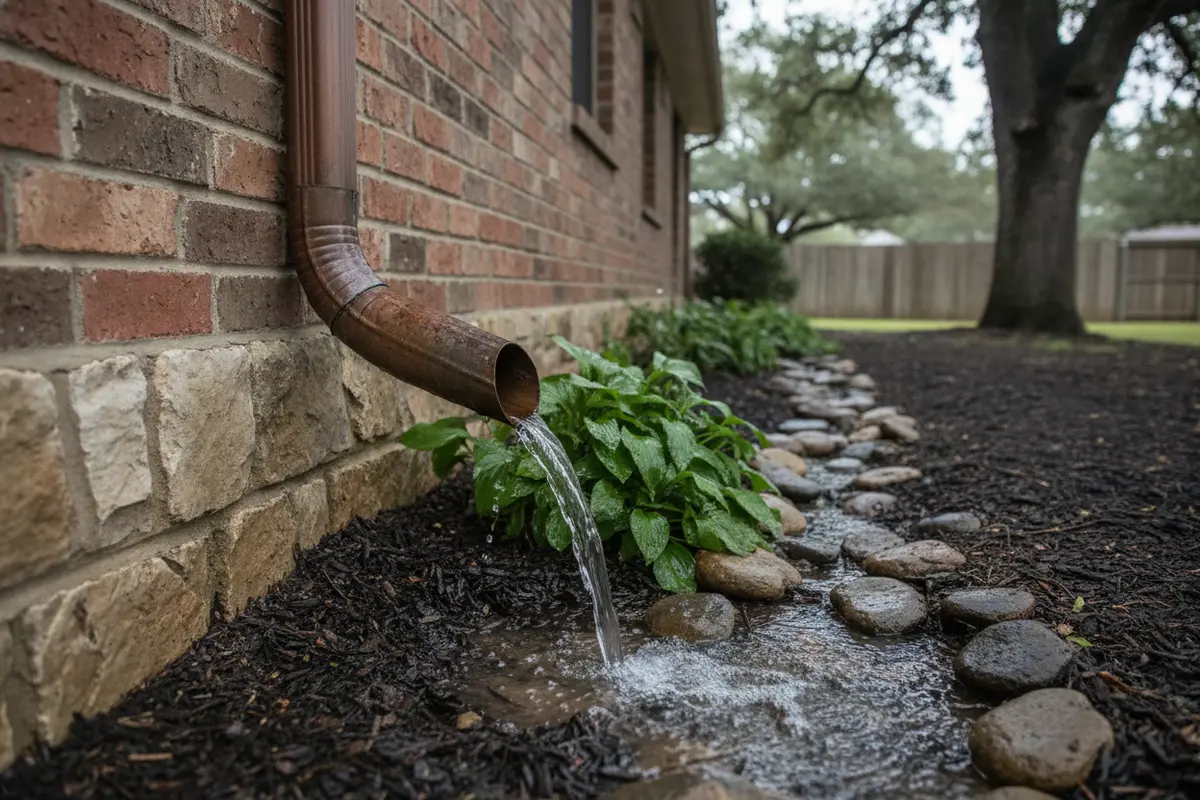
Start with the visible evidence rather than guessing at a hidden blockage. Look for water pouring over the gutter edge while nearby sections remain relatively dry. Check whether a downspout outlet is surrounded by accumulated leaves or whether the water route ends against a wall, planting bed, or walkway. The outlet may need clearing or the discharge path may need adjustment.
After rain, check for a new channel in mulch, soil washed away from a bed, or repeated wet patches near one corner. A single puddle can have several causes, including grading or a nearby drainage feature. Record the location and conditions so a service professional can focus on the symptoms you have seen.
Do not put a hand or tool into a downspout while water is flowing. Avoid climbing to reach a high outlet or removing a connected section if you do not know how it is secured. A ground-level check can identify a concern; it does not require taking an unsafe step to confirm it.
How often should you schedule a cleaning?
Use the property as your guide: tree cover, roof shape, and recent weather matter more than a single calendar rule.
Many homeowners inspect gutters in spring and fall, then check again after major wind or rain events. A house beneath several mature trees may need more frequent attention. A home with little nearby tree cover may collect less, but roof grit and storm debris can still gather.
- Spring: Look for seed pods, twigs, and debris left by winter weather.
- After storms: Check for branches, displaced materials, or new overflow.
- Fall: Inspect as leaves drop, especially where branches extend over the roof.
- After cleaning: Confirm the downspout outlet is not blocked and water moves away from the home.
For example, a two-story home on a tree-lined North Fort Worth street may need a different schedule than a single-story home on a more open lot. Keep a short record of when you see overflow or debris. That makes it easier to choose a practical cadence for your property.
Consider keeping a simple log with the date, recent weather, the affected gutter side, and what you observed. If debris returns quickly on the north side beneath overhanging branches, that information can help you prioritize that section. If the gutters look clear but a corner still spills during heavy rainfall, the issue may involve drainage, alignment, or another part of the system. A note is more useful than relying on memory months later.
Spring and fall are useful reminders, not guarantees that every home needs service twice each year. A property with little tree cover may need less frequent clearing, while a roof surrounded by branches may need inspection sooner. The practical approach is to check after debris-heavy weather and adjust the plan when you see repeated buildup.
What is the difference between DIY and professional cleaning?
The right option depends on access, equipment, comfort at height, and whether you can safely verify the drainage path.
| Option | May fit when | Considerations |
|---|---|---|
| Ground-level observation | You want to spot obvious overflow or visible debris | It cannot confirm every hidden blockage |
| DIY ladder cleaning | You have suitable equipment and experience working safely at height | Falls and roof-edge hazards require careful risk assessment |
| Professional service | Access is difficult or you prefer trained help | Ask what areas and drainage checks are included |
Never reach sideways from a ladder or work near power lines. If you cannot maintain stable footing or safely reach the gutter, do not attempt the work. The City of Fort Worth's mobile commercial cosmetic cleaning information concerns local permitting for certain commercial cleaning activity. It is not a homeowner gutter-cleaning instruction.
Before choosing a service, describe the symptoms you have noticed and ask what the visit covers. Useful questions include whether the gutter channel and accessible outlets are cleared, how downspouts are checked, and whether the provider will point out visible concerns that may need separate repair. Clarifying the scope helps you compare options without assuming that every visit includes repairs or roof work.
A homeowner who elects to clean a low, accessible section should still work only when conditions are dry and stable, use equipment suited to the task, and keep clear of overhead electrical lines. If the ladder cannot be set securely on level ground, the roofline is difficult to reach, or the gutter appears loose, stop and seek qualified help. No checklist makes working at height risk-free.
How do gutter guards fit into the plan?
Gutter guards can help limit some debris entering a gutter, but homeowners should still inspect the system and keep drainage outlets clear.
Guards do not remove debris from the roof, and small particles may still collect depending on the design and surrounding trees. Ask how a guard system should be checked and maintained for your roof. Explore gutter guard options and consider whether the roofline, tree cover, and existing gutter condition make them a fit.
Think about the type of debris on your property before deciding whether guards address the main issue. Broad leaves behave differently from fine needles or roof grit, and a guard does not solve a downspout alignment problem. The existing gutter also needs to be in suitable condition before a guard is considered. A product choice should follow an inspection of the actual problem, not replace one.
Other exterior tasks can be coordinated around the same inspection. Window cleaning, for example, may be planned alongside other property maintenance; see window cleaning services for service details. If you are unsure which work is appropriate, start with the property's visible needs instead of bundling services automatically.
For seasonal planning, the exterior cleaning maintenance calendar offers a broader way to think about timing. Its purpose is to help organize exterior upkeep, while the actual schedule should reflect your trees, roofline, and observed runoff.
How does gutter care connect to roof maintenance?
Gutters and roofs meet at the roof edge, so debris or drainage concerns can be useful prompts to inspect the surrounding area.
Look for loose debris, visible damage, or areas where water repeatedly spills over. A clogged gutter does not by itself mean the roof is damaged. Likewise, a roof issue may have causes unrelated to gutter maintenance. Avoid walking on the roof to investigate; use a qualified professional for work that requires roof access.
When you notice granules or small bits of roofing material in a gutter, the observation alone cannot establish whether the roof needs repair. The amount, age of the roof, and recent weather all matter. Note what you see and ask an appropriate roofing professional to assess concerns that involve shingles, flashing, or roof structure. Gutter cleaning and roof repair are separate tasks, even when the signs appear near each other.
Repeated overflow may also leave water marks near fascia or siding. Take note of the location and whether the problem follows a storm, a particular wind direction, or a period of leaf fall. Photos taken from the ground can help document changes over time, provided the area is safe to observe. Do not climb onto the roof to take a closer picture.
For a broader exterior upkeep plan, review guidance on whether gutter guards may be worthwhile and the Southlake team's overview of factors in a gutter cleaning quote. These related guides can help frame maintenance questions, while your property's visible conditions determine what to address.
Window Hero Southlake serves homeowners in Southlake, Colleyville, Flower Mound, Westlake, and Grapevine. For local information, visit the Southlake location page. The North Fort Worth service page also provides local gutter cleaning details.
Frequently asked questions
Can rain wash debris out of gutters?
Rain may move loose material, but it will not reliably clear compacted leaves or a blocked downspout. Check for overflow and confirm that water exits the downspout.
What if water spills over only in heavy rain?
Heavy rainfall can expose a drainage restriction or capacity issue. Note where overflow occurs and have the gutter and downspout checked when conditions are safe.
Should I clean gutters before roof work?
Discuss timing with the roofing professional. Clearing loose debris may help make the roof edge easier to assess, but the appropriate sequence depends on the planned work.
Do gutter guards eliminate cleaning?
No. Guards may reduce some debris entering the channel, but the roof, guards, outlets, and downspouts still need periodic inspection.
Choose a practical maintenance routine
Inspect after seasonal changes and storms, watch how water leaves the downspout, and note repeat overflow. A routine based on your roof and tree cover can help you respond before minor drainage signs become recurring concerns.
Build the routine around the parts of the system that show the most activity. If one roof edge sits beneath overhanging trees, check it after leaves or seed pods fall. If a particular downspout collects debris at its outlet, include that spot in ground-level observations. Compare what you see after ordinary rain with what happens during a heavier storm. This gives you a clearer picture of whether the concern is occasional or persistent.
For a useful seasonal review, walk the perimeter after the weather clears and note each gutter side separately. Look for debris at outlets, water marks, disturbed mulch, and sections that appear uneven. Record the date and weather, then compare the next inspection. If the same location repeatedly overflows despite visible clearing, ask a qualified service professional to check the channel, joints, and drainage route. This focused record can make a future conversation more productive.
Make the decision based on safe access and what you can actually verify. Ground-level observation is a good way to notice changes, but it cannot confirm every hidden blockage. Cleaning, repair, roof assessment, and guard installation are separate tasks, so clarify the scope before work begins. A measured plan for your home is more useful than assuming every gutter needs identical attention.