
Gutter cleaning Grapevine TX homeowners schedule can help keep roof runoff moving through the gutters and downspouts instead of spilling over the edge. Leaves are only part of the job: check the outlets, look for signs of standing water, and make sure discharge moves away from the house. A simple inspection plan helps you decide what needs attention and when.
Why does gutter debris deserve attention?
Gutters work as a route for roof runoff, so a blockage at the trough or outlet can interrupt that route. In a typical system, water runs from the roof into a gutter, travels to a downspout, and exits near ground level. Debris can collect at any point along that path.
Leaves, small branches, seed pods, roof grit, and windblown litter can settle in the channel. A few scattered leaves may not block water, but a dense layer can hold moisture and collect more debris. Material near an outlet is especially important because it can narrow the passage into the downspout.
Watch for water spilling over the front during rain, a visible pile near an outlet, or a downspout that does not discharge when water is moving through the gutter. These observations do not prove that a gutter is damaged. They are useful reasons to inspect the route and clear any obstruction safely.
For background on stormwater and pollution prevention, the U.S. Environmental Protection Agency provides general resources for homeowners. Keeping roof runoff and loose debris under observation is one part of responsible exterior maintenance.
gutter cleaning grapevine tx: What should you check?
For gutter cleaning Grapevine TX homeowners should look at the entire drainage path, not only the visible gutter trough. Start with the roof edge from the ground, then check the channel, corners, outlets, downspouts, and the place where water exits. This wider view helps reveal where the flow may be interrupted.
Look for buildup without climbing first
From a safe position on the ground, look for obvious clumps, branches, or plant growth in the gutter. Check whether the gutter appears to sag, pull away, or hold water. A ground-level view cannot confirm every issue, but it helps you decide whether a closer inspection is needed.
Do not climb onto the roof to inspect a gutter unless you are trained and equipped to work safely. Ladder work has real fall risks. If access is awkward, the roof is steep, or the gutter is high, contact a qualified service provider instead of taking a risk.
Clear the channel and outlet
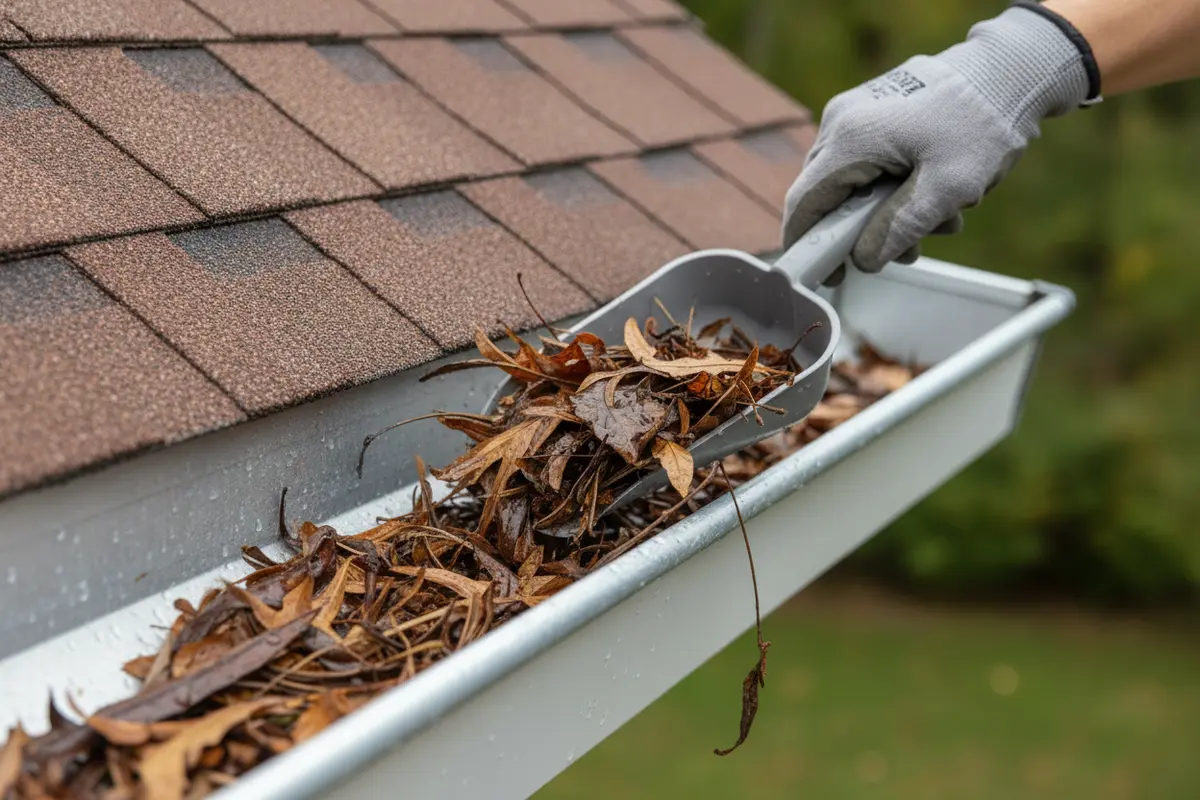
When cleaning is appropriate, remove loose debris from the gutter and pay particular attention to the outlet opening. A clear-looking stretch of gutter can still drain poorly if the outlet is packed with leaves. Work in manageable sections and avoid pushing debris into the downspout.
After removing debris, a careful water check can help show whether water moves toward the outlet and exits the downspout. Use a controlled flow rather than a forceful spray. High-pressure water can damage components or drive water where it should not go. If the gutter leaks, separates, or remains full, cleaning alone may not address the cause.
How can you tell if a downspout is clear?
A downspout is functioning as intended when water can pass through it and discharge at its outlet without an obvious backup. A clog may sit at the gutter connection, inside a bend, or lower in the pipe, so check the upper and lower ends rather than judging by appearance alone.
During a light water test, observe the outlet from a safe place. If water backs up at the top, trickles when the gutter is receiving water, or does not appear at the exit, there may be a blockage or another flow problem. Avoid forcing a tool deep into a downspout; it can damage joints or compact the obstruction.
Also look at where the water exits. The outlet should not be blocked by leaves, landscaping, or stored items. Pay attention to pooling near the foundation, erosion in a garden bed, or water that runs across a walkway. Moveable surface debris can be cleared, but persistent drainage problems may need a broader assessment.
Homeowners who want to understand the basic parts and purpose of this system can read Window Hero's guide to how rain gutters work. If you see recurring overflow, this article on clogged gutters offers related context.

How often should you clean gutters in Grapevine?
There is no single calendar that fits every home; trees, roof shape, storms, and visible debris affect how often a property needs attention. As a starting routine, inspect gutters in spring and fall, then check again after a storm that drops branches or a large amount of leaves. A visual check helps you adjust the schedule to what actually collects at your home.
Homes beneath mature trees may gather leaves and seed pods more quickly than homes with little overhead cover. Complex rooflines can also create corners where debris settles. If a home has had repeated blockages, note when they occur and shorten the interval between inspections until you find a schedule that works.
Use the inspection to check the full system. Look for loose-looking sections, visible seams that may be leaking, outlets covered by debris, and water staining below the roof edge. Record what you see and whether a recent storm changed the condition. That simple record makes it easier to tell whether the same issue keeps returning.
Keep a short inspection note
A brief note can make seasonal decisions easier. Record the date, the areas where debris collected, whether the downspout discharged, and any overflow or pooling you noticed. You do not need a complicated checklist. A few details help you compare one inspection with the next.
For example, if leaves repeatedly collect beside one roof valley, check that area sooner after the next leaf drop. If the gutter looks clear but water pools near the outlet, pay closer attention to the discharge area. If nothing changes between inspections, you may be able to keep the same interval. Let what you observe guide the schedule rather than assuming every home needs the same number of cleanings.
Take photos only from a safe location. A photo from the ground can help you remember where you saw a blockage or staining, but it cannot show the full condition of a roof or gutter. Do not climb or lean over an edge to get a better picture.
Do not wait for a dramatic overflow before paying attention. A quick ground-level check after seasonal changes is practical, but it does not replace a closer inspection when you see a problem. For other exterior tasks, a spring exterior cleaning checklist can help you organize seasonal work without treating every home the same.
Do gutter guards mean you can skip cleaning?
Gutter guards can reduce the debris entering a gutter, but they do not make the system maintenance-free. Small seeds, roof grit, needles, and fine organic matter may collect on or beneath some guard designs. Debris can also build up at corners, seams, and downspout openings.
Inspect the top of the guard and the visible gutter edge. Look for a mat of leaves, water spilling over during rain, or an outlet that appears blocked. If the design allows safe viewing, check whether debris is trapped underneath. Do not remove a guard or climb onto the roof unless you can do so safely and understand how it is attached.
Guarded gutters still need attention when water flow changes or debris is visible. The appropriate service may be clearing the guard surface, checking an outlet, or cleaning the channel below it. The right approach depends on the guard type and what the inspection shows.
Window Hero's gutter guard information can help you learn about the product category, while the Southlake gutter cleaning service page explains the local service option. A service page is not a substitute for inspecting your own system or confirming what your particular guards require.
DIY or professional service: Which option fits?
Choose a cleaning method based on access, safety, the condition of the system, and the amount of debris—not just on whether the gutter looks easy to reach. A one-story gutter with safe ground access presents a different task from a high roofline, steep pitch, or damaged section.
| Situation | Possible next step | Important consideration |
|---|---|---|
| Light debris and safe access | Inspect and clear loose material if you have suitable equipment and experience | Keep stable footing and avoid overreaching from a ladder |
| High, steep, or difficult-to-reach gutters | Request professional help | Do not take on ladder or roof work beyond your ability |
| Overflow continues after clearing | Have the drainage path and gutter condition assessed | A clog may not be the only cause |
| Gutter guards are installed | Inspect the guard surface, outlets, and visible flow | Guards can still need cleaning or attention |
| Water pools near the home | Check the downspout outlet and discharge area | Persistent pooling may require a broader drainage review |
For a DIY approach, use equipment designed for the work, maintain three points of contact when using a ladder, and do not stretch sideways to reach another section. Keep people and pets away from the work area. Avoid pressure washing the gutter or roof as a shortcut. If you notice loose hangers, damaged seams, or uncertain roof conditions, stop and seek appropriate help.
A professional cleaning request is useful when access is difficult, debris is heavy, or you are unsure what is causing overflow. Before booking, describe the number of stories, guard type if known, visible blockage, and any repeat trouble spots. Window Hero's Southlake location page and Grapevine service-area page provide local context. Service details should be confirmed for your address when requesting a quote.
What details should you share when requesting help?
Describe what you have observed rather than guessing at the cause. Mention whether debris is visible, whether water has overflowed, and whether the issue appears at one gutter section or several. Tell the provider if guards are installed and whether you can see a clear path from the gutter to the downspout outlet.
It can also help to explain the roofline access you are concerned about and whether the home has multiple stories. Ask what the requested service includes, how the provider will address the outlet and downspout, and whether any repairs or guard work fall outside the cleaning scope. Clear questions help you compare proposals based on the work being discussed, without assuming that every visit includes the same tasks.
Get a Free Quote for gutter cleaning
How do roof and window cleaning fit into the plan?
Gutter care is one part of exterior maintenance, while roof and window cleaning address different surfaces and concerns. Roof debris can move toward gutters, so it makes sense to notice visible roof conditions during an exterior inspection. Do not assume that a gutter cleaning appointment includes roof cleaning or repairs; confirm the requested scope first.
Window cleaning is separate from gutter cleaning, but scheduling exterior tasks together can help you plan access and the order of work. If roof or gutter debris has left residue on exterior glass, assess the windows after the source is addressed. For local window service details, see Window Hero Southlake's window cleaning page.
For general information about ways to clean roof surfaces, review the Window Hero article on how to soft wash a roof. Roof methods depend on the surface and conditions; avoid applying a technique based only on a general article. If you are planning several exterior tasks in Grapevine or nearby Southlake, Colleyville, Flower Mound, or Westlake, explain your needs when asking about service availability.
Window Hero also describes its local roof cleaning service and window cleaning options. Comparing the requested work in advance helps keep each appointment focused on the relevant surfaces.
Get a Free Quote for gutter cleaning in Grapevine
Frequently asked questions
What are common signs that gutters need cleaning?
Visible debris, overflow during rain, a blocked-looking outlet, or water that backs up instead of leaving through the downspout are reasons to inspect the system. These signs point to a need for assessment; they do not identify every possible cause.
Can I flush a downspout with a garden hose?
A controlled, low-pressure water check may help you see whether water exits freely. Do not use force to push a blockage through, and stop if water backs up, leaks appear, or the outlet cannot be reached safely.
Should I clean gutters after every storm?
Not necessarily. Check after storms that leave substantial branches or debris, and use your own home's inspection history to set a routine. A light storm may not change the system, while a heavy debris drop may justify an earlier check.
Do gutter guards stop all leaves and debris?
No. Guards can limit the amount of material entering the gutter, but fine debris and buildup near openings can still affect drainage. Inspect the guards and outlets, and arrange cleaning when you see a blockage or poor flow.
Choose a practical maintenance routine
Start with a ground-level inspection, note debris and drainage concerns, and check again after seasonal changes or a debris-heavy storm. Keep gutters, downspouts, and discharge areas in view, even when guards are installed. When access or safety is uncertain, request help rather than taking on risky roof or ladder work.