
Commercial solar panels are revenue-producing assets, not just another roof feature. In the Dallas-Fort Worth area, dust, pollen, bird droppings, construction residue, and storm debris can reduce the sunlight reaching the glass. Commercial solar panel cleaning in DFW helps property owners protect energy production, document maintenance, and make better decisions about long-term operating costs.
Get a free commercial solar panel cleaning quote from Window Hero Southlake.
Commercial solar panel cleaning in DFW is a maintenance service for rooftop arrays, carports, warehouses, offices, schools, and solar farms. The right program removes site-specific buildup with panel-safe methods, fits the property's operating schedule, and uses production data to determine whether the recovered energy justifies the cleaning cost.
For a residential overview of the same service family, see Window Hero Southlake's gutter, roof, and solar panel maintenance guide. This article focuses on the different planning, access, safety, and ROI questions commercial property teams must answer.
Why commercial solar panels lose efficiency in DFW
Commercial panels lose output when soiling blocks or scatters sunlight before it reaches the photovoltaic cells. DFW properties can collect windblown dust, pollen, bird waste, roof residue, and construction particles. The effect varies by array tilt, nearby activity, rainfall, shading, and the type of soil on the glass, so a site inspection is more useful than a blanket percentage.
Commercial arrays often sit in conditions that are harder on glass than a typical home installation. Warehouses and distribution centers may be near active construction, loading areas, unpaved access roads, or industrial traffic. Retail centers and office campuses collect pollen, tree debris, and bird waste around rooftop equipment. Ground-mounted arrays can receive more windblown soil than elevated rooftop systems.
Rain does not guarantee a clean panel. A short storm may move dust into streaks, while minerals in water can leave spots after the surface dries. Bird droppings and sticky residue can remain after rainfall. These localized deposits may shade part of a panel and create a maintenance issue even when the array looks acceptable from the ground.
NREL's Photovoltaic Module Soiling Map explains that an insolation-weighted soiling ratio of 0.95 represents a 5% annual energy loss from soiling. That national data point is useful for understanding the measurement concept, but it is not a promised DFW loss rate. Your property's production data, site conditions, and inspection results should guide the decision.
Cleaning is also only one part of performance management. A sudden production drop can come from shading, inverter problems, wiring faults, damaged modules, monitoring errors, or severe weather. A cleaning contractor should not promise that washing alone will solve an electrical problem. The practical goal is to remove a known surface-maintenance variable and document anything that needs an electrician or solar-system specialist.
How often should a DFW commercial array be cleaned?
There is no responsible one-size-fits-all cleaning interval for every commercial array. Start with the panel manufacturer's maintenance guidance, then adjust for visible soiling, production trends, rainfall, pollen, nearby construction, bird activity, panel tilt, and access. A quarterly, semiannual, or event-triggered plan can be evaluated after the first inspection.
A property manager can use these practical starting points when building a maintenance calendar:
| Site condition | Useful planning approach | What to monitor |
|---|---|---|
| Low dust, good rainfall, limited nearby activity | Begin with an inspection-led semiannual review. | Production trend, visible residue, and water spotting. |
| High pollen, active construction, heavy traffic, or bird activity | Review the array more frequently and consider a recurring cleaning plan. | Soiling between cleanings, recurring deposits, and missed output. |
| After a major storm or nearby construction phase | Request a condition check before the next reporting cycle. | Debris, impact evidence, mud, dust, and access hazards. |
| Large or multi-building portfolio | Use a written route schedule with property-specific notes. | Production reports, completion records, photos, and exceptions. |
Facilities teams should compare production data before and after a cleaning, while allowing for weather and irradiance changes. The comparison does not need to be complicated. Use the system's existing monitoring reports, record the cleaning date, note the array condition, and compare similar operating periods when possible.
A recurring plan can also simplify budgeting. Instead of waiting for a complaint or a visibly dirty roof, a property team can set a review trigger based on production trends or site conditions. That approach is especially useful for multi-property managers overseeing buildings in Southlake, Colleyville, Flower Mound, Westlake, Grapevine, and other DFW markets.
Ask Window Hero Southlake about a DFW solar panel cleaning schedule for your commercial property.
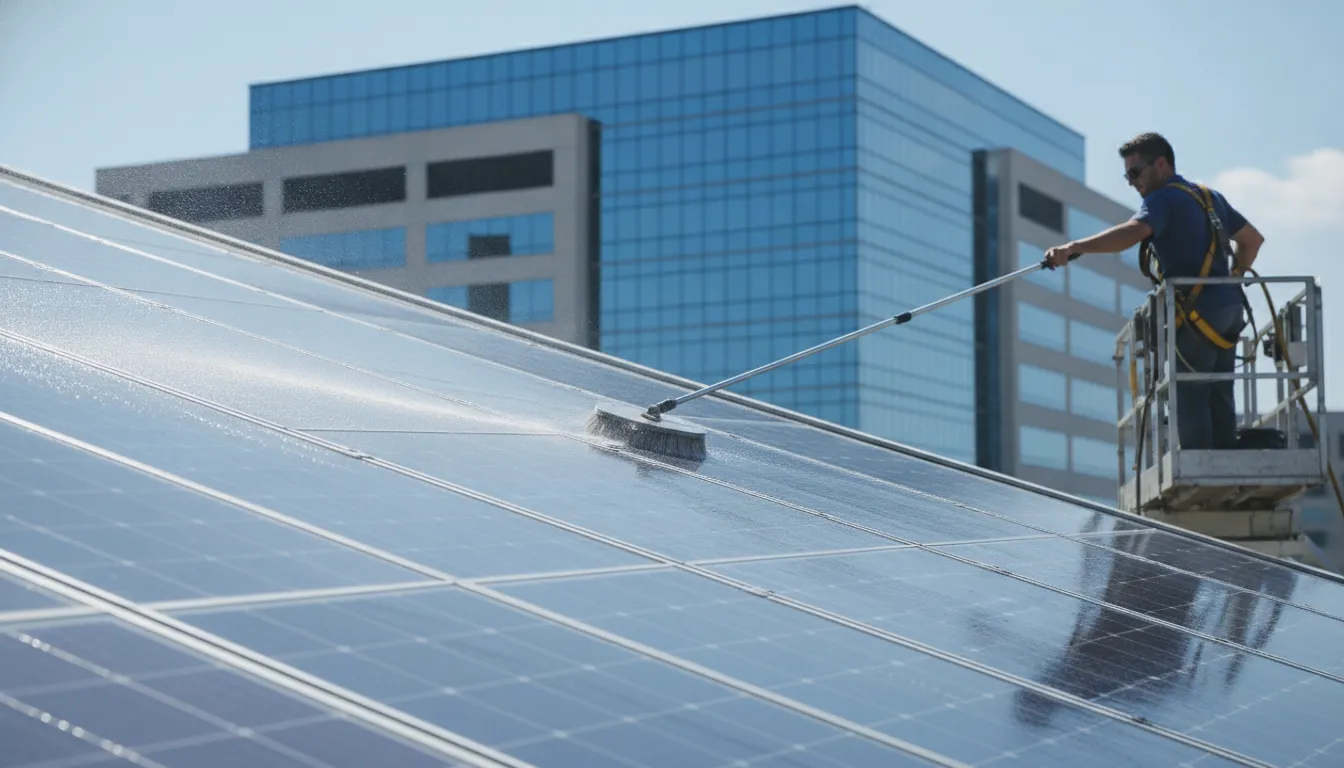
Purified-water cleaning helps protect panel surfaces
Panel-safe cleaning starts with the manufacturer's instructions and a method that avoids unnecessary abrasion or residue. Window Hero Southlake's solar panel service page describes an inspection, pure-water cleaning, non-abrasive tools, and a spot-free finish. The final method should match the panel surface, soil type, access conditions, and warranty guidance for the specific installation.
Commercial solar glass is designed to transmit light, so the cleaning process should not introduce a new problem. Abrasive brushes, aggressive pressure, or unsuitable chemicals can scratch glass, leave residue, or create questions about coatings and seals. A careful crew evaluates the array before selecting tools and water quality.
Purified water is useful because it can dry with fewer mineral deposits than ordinary tap water. That matters on large arrays where spots can remain visible across many modules. Pure water does not eliminate the need for a plan. Technicians still need to manage runoff, protect nearby surfaces, follow site safety requirements, and avoid stepping on panels.
Commercial property owners should keep the panel manufacturer's maintenance instructions available. Ask the cleaning provider what will be used, whether the process involves contact with the panel surface, how access will be handled, and what documentation will be supplied. No cleaning company should override a manufacturer's written restrictions or promise to preserve a warranty without reviewing its requirements.
Where drone-assisted cleaning can help large arrays
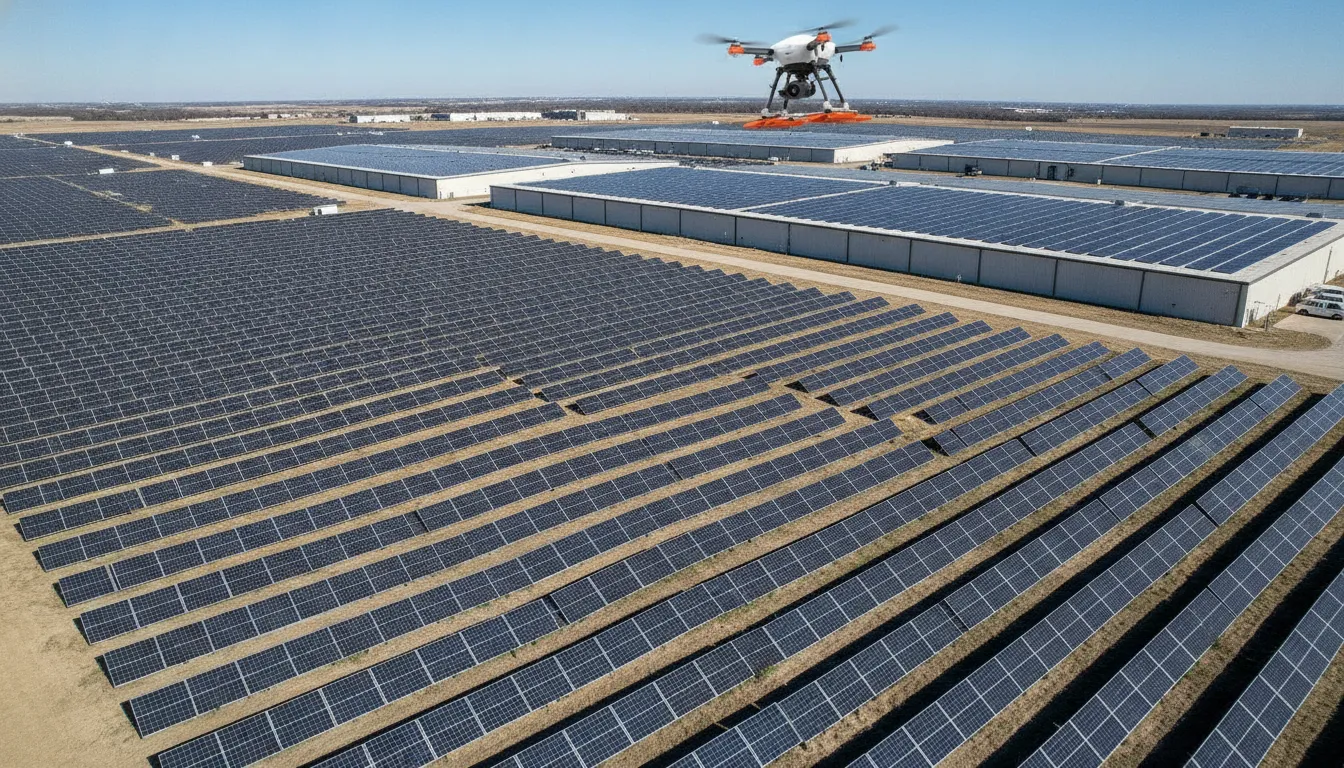
Drone-assisted cleaning can help when a commercial array is large, elevated, difficult to access, or located where traditional roof access would disrupt operations. Window Hero's commercial drone service page lists solar farms among its applications. It describes FAA Part 107-certified pilots, reach up to 15 stories, and coverage of up to 300 square feet per minute. Actual suitability depends on the site assessment.
Drone service is not automatically the best choice for every solar installation. A small, accessible rooftop may be easier to clean with a conventional purified-water system. A large warehouse roof, carport, multi-building campus, or ground-mount array may benefit from a method that limits foot traffic and reduces the amount of equipment moving across the property.
Window Hero's commercial drone cleaning service page describes drones that clean hard-to-reach commercial surfaces while a crew manages the work from the property. It also identifies solar farms, office and industrial buildings, medical buildings, schools, and other commercial settings as applications. These details make drone cleaning a conversation worth having for facilities with unusual height, scale, or access limits.
Before approving drone-assisted work, the property team should confirm the planned flight area, pedestrian controls, equipment staging, weather limits, building access, tenant communication, and any site-specific aviation or facility rules. The contractor should also explain how the cleaning method will be adjusted for panel type and soil conditions.
How do you calculate the ROI of commercial solar panel cleaning?
Estimate cleaning ROI by comparing the cost of the service with the value of energy production recovered after surface soiling is removed. Use the array's own production reports, an agreed cleaning scope, and a measured before-and-after comparison. Do not base a business case on a generic efficiency claim or assume every lost kilowatt-hour is recoverable through cleaning.
A simple planning model is:
Estimated annual energy value recovered = annual kilowatt-hours x measured recoverable fraction x value per kilowatt-hour.
Then compare that result with the annual cleaning program cost. The recoverable fraction should come from the property's data and the contractor's inspection, not a sales promise. If the array has a monitoring platform, the owner can compare similar periods before and after service. If it does not, the first cleaning can establish a documented baseline for future decisions.
| ROI input | What the property team should gather | Why it matters |
|---|---|---|
| Array production | Recent kWh reports and comparable operating periods. | Shows the asset's actual output rather than a generic benchmark. |
| Soiling evidence | Photos, inspection notes, residue type, and areas affected. | Connects a cleaning need to a visible site condition. |
| Energy value | The owner's current utility rate or internal energy value. | Converts recovered production into a business metric. |
| Service scope | Array size, access plan, frequency, reporting, and exclusions. | Prevents an incomplete quote from distorting the comparison. |
| Operational impact | Access restrictions, tenant coordination, and downtime risk. | Captures value beyond the energy line item. |
There can be operational value beyond recovered energy. A documented cleaning schedule helps a property manager show that the asset is being maintained. A condition report may identify cracked modules, nesting, roof access concerns, or drainage issues that need another specialist. Keeping those observations in the property record can support better budgeting and vendor coordination. For the broader residential service context, review Window Hero Southlake's gutter, roof, and solar panel maintenance guide.
Cleaning should still be compared with other causes of underperformance. If monitoring shows an inverter fault or a string-level problem, the owner may need a solar service technician. If a roof leak or structural issue is present, the roof contractor takes priority. Professional solar panel cleaning is strongest as one part of a broader asset-maintenance plan.
Request a free quote and use your production data to evaluate the cleaning decision.
What should a DFW commercial solar cleaning visit include?
A commercial visit should connect the cleaning work to the property's safety plan, access requirements, panel-care instructions, and recordkeeping process. The exact scope varies by array, but a professional conversation should cover inspection, method selection, surface cleaning, runoff and site protection, completion notes, and any conditions that require another trade.
- Scope review: Confirm the buildings, array sections, panel access, operating schedule, and property contact.
- Condition inspection: Identify dust, pollen, bird waste, construction residue, water spots, debris, damaged modules, and access hazards.
- Method selection: Match water quality, tools, pressure, and access method to the panel guidance and site conditions.
- Site protection: Coordinate pedestrians, vehicles, landscaping, drains, tenants, and equipment staging.
- Cleaning and quality check: Remove surface buildup, inspect the finish, and flag areas that could not be safely reached.
- Documentation: Record the service date, completed areas, notable conditions, images, and recommended next review.
Property managers should ask whether the quote covers the entire array or only reachable sections. They should also ask how the crew handles roof access, who supplies water, how runoff is managed, and whether the final report includes photographs. Clear scope language makes vendor comparisons more useful and reduces surprises during scheduling.
Which commercial properties can benefit from a cleaning plan?
Commercial solar cleaning can support properties with rooftop arrays, solar carports, warehouses, offices, schools, medical buildings, industrial facilities, and ground-mounted systems. The strongest candidates usually have visible soiling, recurring site activity, difficult access, production reporting, or a property team that needs documented preventive maintenance.
In DFW, that can include a warehouse near construction, an office campus surrounded by mature trees, a retail center with solar carports, or a multi-building portfolio with different roof conditions. The service conversation is also relevant to property managers who want one exterior-maintenance partner for solar panels, windows, roofs, gutters, and other surfaces.
Window Hero Southlake serves the broader DFW service area, including Southlake, Colleyville, Flower Mound, Westlake, and Grapevine. A local quote should still confirm the property's exact location, array type, building height, access limits, and requested service area before a schedule or price is discussed.
How should property owners compare solar panel cleaning quotes?
Compare commercial solar cleaning quotes by scope, method, safety plan, documentation, and fit for the array, not by price alone. A useful quote identifies the panels included, the access approach, the cleaning method, site protections, scheduling assumptions, reporting, and exclusions. It should also explain what the provider will do when inspection reveals damage or unsafe conditions.
- Does the scope name every building, array, or panel section?
- Does the method follow the panel manufacturer's care guidance?
- Are purified water, tools, access equipment, and site protection explained?
- Can the crew work around tenants, vehicles, production, or school operations?
- Will the provider document completed areas and visible conditions?
- Does the quote separate cleaning from electrical, roofing, or repair work?
- Can the vendor support a one-time inspection or recurring maintenance plan?
A good commercial vendor should be comfortable with these questions. The goal is not simply to make panels look cleaner. It is to create a repeatable maintenance decision that the property owner, facility manager, asset manager, and accounting team can understand.
Commercial solar panel cleaning in DFW FAQ
Does rain clean commercial solar panels?
Rain can remove loose dust, but it may not remove bird waste, pollen film, construction residue, or mineral spots. An inspection can show whether the array needs professional cleaning.
How often should commercial solar panels be professionally cleaned?
The right interval depends on soiling, production trends, weather, nearby activity, panel tilt, and manufacturer guidance. Many property teams begin with an inspection-led quarterly or semiannual review, then adjust from measured results.
Can Window Hero clean a large commercial solar array?
Window Hero Southlake can review commercial solar cleaning needs and access conditions. The quote should confirm the array size, height, surface, location, and whether conventional or drone-assisted access is appropriate.
Is purified water safe for solar panels?
Window Hero Southlake's service page describes pure-water cleaning and non-abrasive tools. The final method should follow the panel manufacturer's instructions and the conditions found during the inspection.
Does cleaning guarantee a specific energy increase?
No. Cleaning removes surface soiling, but output also depends on irradiance, shade, equipment condition, temperature, and system faults. Use the property's monitoring data to measure performance before and after service.
How can I request a commercial solar panel cleaning quote in DFW?
Contact Window Hero Southlake for a free quote and share the property location, array type, access details, desired timing, and any production or maintenance records available.
Get a free quote for commercial solar panel cleaning in DFW.