Commercial drone window cleaning gives property managers another way to plan exterior glass maintenance, especially on tall or difficult-to-access buildings. For Southlake businesses, the right approach depends on building height, access, site conditions, and the work required. This guide explains how drone-assisted cleaning works, what to ask about safety, and how to compare it with conventional methods.
What Is Commercial Drone Window Cleaning?
Window Hero Southlake can discuss commercial drone window cleaning as an option for suitable buildings. Window Hero describes its commercial drone capability as serving properties up to 15 stories, with FAA Part 107-certified pilots.
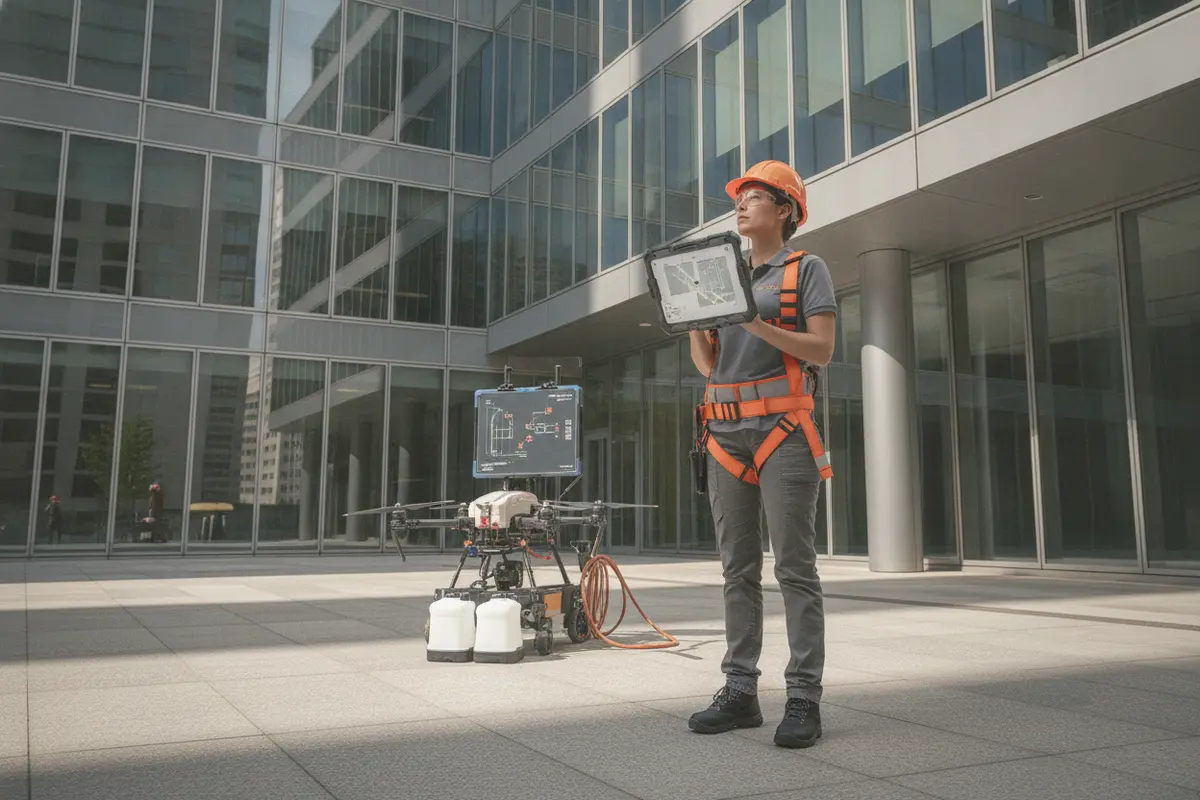
Rather than placing a worker directly on every section of glass, a trained pilot operates the drone from a controlled position. Cleaning equipment on the drone applies water to the exterior surface. The precise setup and cleaning method depend on the building, access, and project conditions.
This is not a universal replacement for every window-cleaning method. The drone must be suitable for the building and conditions, and the property needs a safe, workable area for the team. A site review helps determine whether drone-assisted work is appropriate or whether another method is a better fit.
Commercial property managers can also review Window Hero's commercial window cleaning services to understand the broader service category. A commercial cleaning plan can account for the property's glass and operating needs, rather than treating every building as identical.
Commercial drone window cleaning Southlake: How Does the Work Happen?
For a Southlake property, the process starts with a building and site assessment, followed by a plan for access, timing, work zones, and the cleaning approach. Window Hero's commercial drone cleaning is performed by FAA Part 107-certified pilots.
Before scheduling, the property manager and service team should establish the scope. That means identifying which elevations and windows are included, considering areas that may be difficult to reach, and discussing the property's day-to-day activity. A clear scope helps everyone understand what the work covers.
- Review the property. Discuss building height, glass areas, access points, nearby activity, and any site-specific constraints that could affect the work.
- Confirm the method. Decide whether drone-assisted cleaning is suitable for the areas in scope. Some locations or conditions may call for a different approach.
- Coordinate timing. Plan a service window that considers building operations, pedestrians, tenants, customers, and the team's setup needs.
- Prepare the work area. Agree on where the pilot and equipment will operate, how people will be kept clear of the work zone, and who will communicate with occupants.
- Complete and review the work. Confirm the areas addressed and discuss any access limitations or follow-up needs with the property contact.
These are planning points, not a promise that every project follows an identical sequence. The property layout and the approved scope shape the actual work plan. Share building access rules and operational restrictions early, so they can be considered before a service date is set.
What Safety Questions Should a Property Manager Ask?
A responsible drone-cleaning plan should address pilot qualifications, applicable flight rules, site conditions, a controlled work area, and coordination with people using the property. Ask how these items will be handled before work begins.
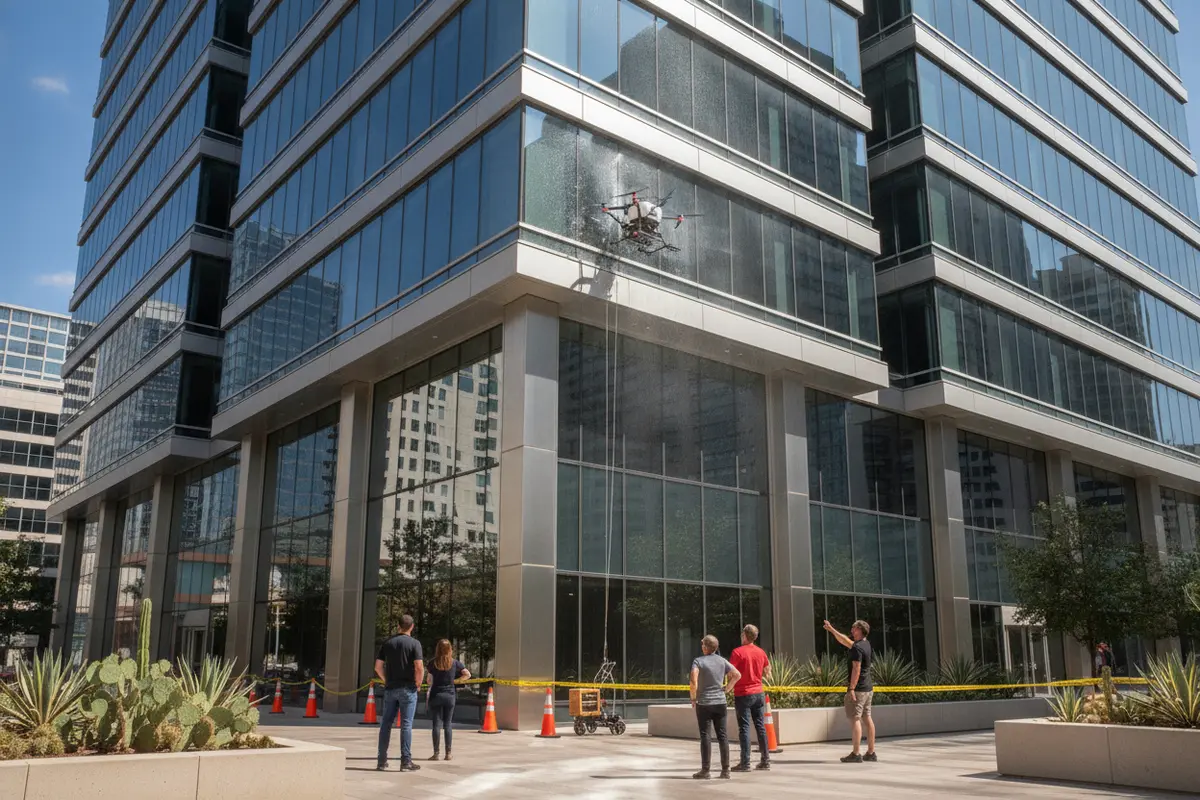
Drone work takes place in an active environment. A commercial site may have entrances, sidewalks, parking, loading areas, residents, customers, or employees near the building. The service team and property contact should discuss how to reduce interruptions and keep uninvolved people away from the immediate work area.
Ask whether the pilot holds the required certification and how the team evaluates the site before confirming the method. Window Hero identifies its commercial drone pilots as FAA Part 107 certified. For current information about U.S. drone rules, consult the Federal Aviation Administration. A building-specific discussion should also cover operating conditions, property permissions, and the team's plan if conditions are not suitable.
- Who is the on-site contact before and during the work?
- Which building elevations and work areas are included?
- How will pedestrian, tenant, or customer activity be considered?
- What site or weather conditions could change the plan or timing?
- What should occupants expect, and how will they receive notice?
- How will the team communicate if an area cannot be reached as planned?
There is no need to assume a drone is automatically the safest or fastest option for every building. The practical question is whether a properly planned drone approach fits this property and the work requested. Clear answers help a manager compare options without relying on a broad claim.
How Does Drone Cleaning Compare With Conventional Access?
Drone-assisted cleaning may suit some tall or access-challenging commercial properties, while conventional methods may be more practical for other buildings. Compare the method against the building, work scope, access needs, and estimate rather than height alone.
Conventional commercial window cleaning can involve a range of access approaches, depending on a property's design and the work. A drone can offer another option for reaching exterior glass. Window Hero's company materials describe its commercial drone capability as cleaning buildings up to 15 stories and operating up to five times faster than traditional methods. Project results vary, so ask how those claims apply to the building being considered.
| Consideration | Drone-assisted cleaning | Conventional access approach |
|---|---|---|
| Best fit | Potential option for suitable tall buildings or exterior areas where drone access is practical. | May be appropriate where the building, access setup, or work scope favors a conventional method. |
| Planning needs | Requires pilot coordination, a suitable operating area, site review, and occupant communication. | Requires an access plan suited to the building and the specific cleaning work. |
| Work-zone discussion | Discuss where the drone will operate and how nearby people and activities will be considered. | Discuss where equipment and workers will be positioned and how the work area will be managed. |
| Estimate questions | Confirm included elevations, site conditions, timing, and any limits to drone access. | Confirm included elevations, access requirements, timing, and any areas needing a different method. |
The table is a starting point, not a substitute for an assessment. Buildings differ in shape, window placement, surrounding space, and daily use. A useful estimate explains the method proposed for the property and identifies any areas outside the scope.
For additional context on glass-care approaches, see Window Hero's guides to how to clean windows and window cleaners. Commercial work has different access and coordination needs from routine home cleaning, but understanding the basic cleaning considerations can help property teams ask informed questions.
Could Drone Cleaning Reduce Cost or Disruption?
Drone cleaning may reduce the time or access costs associated with some projects, but savings depend on the building and scope. Window Hero's materials describe potential cost savings of 30%; ask for a property-specific estimate instead of treating that figure as a guarantee.
Labor, access requirements, building geometry, the number of elevations, and scheduling all affect a commercial cleaning estimate. A drone approach may be efficient for some properties, but a number from a general service description cannot show what one building will cost. A written quote should make the project scope and approach clear.
Disruption also depends on how a site operates. A property manager may need to plan around customer arrivals, tenant schedules, deliveries, or busy entrances. Ask what parts of the site need to remain clear and whether the work can be coordinated around the building's operating hours. If the property has multiple tenants, a clear notice can set expectations and reduce surprises.
Window Hero describes its drone approach as capable of working up to five times faster than traditional methods. Treat this as a company-stated capability, not a guaranteed duration for every site. Ask the estimator what the proposed timing means for your building, which areas it covers, and whether setup or coordination time is included.
Window Hero Southlake serves commercial customers in Southlake and nearby communities, including Colleyville, Flower Mound, Westlake, and Grapevine. A local property assessment can clarify whether a drone approach is appropriate for a specific building. You can also review the Southlake team's local service information and the company's overview of commercial exterior cleaning.
Get a Free Quote for Your Building
How Can You Prepare a Commercial Property?
Preparation starts with information. Share the building address, approximate height, glass areas that need attention, and any known access restrictions. Let the service team know about entrances, outdoor seating, loading areas, tenant schedules, and other activities near the work location.
It can also help to name a point of contact who can answer questions on the service day. Property managers should confirm any internal approval steps, building rules, and notice requirements. If there are multiple decision-makers, align on the scope and timing before the estimate is approved.
Before work, confirm the following:
- The elevations and window areas included in the quote.
- The proposed cleaning method and any areas that may need a different approach.
- The expected service window and the site contact for the day.
- Any tenant or customer notices and the boundaries of the work area.
- How weather or other unsuitable conditions could affect scheduling.
- How completion and any access limitations will be communicated.
These details make estimates easier to compare and help prevent scope confusion. A property manager who already uses a scheduled exterior maintenance program can also consider how window cleaning fits its broader calendar. Window Hero's commercial building cleaning information describes wider exterior maintenance options.
What Details Help Determine Whether a Drone Fits?
A useful assessment considers more than the building's height. The shape of the facade, the position of the glass, nearby structures, and the space around the building can all affect whether drone access is practical. A property manager does not need to know the technical answer in advance. Sharing clear site information gives the cleaning team a better basis for reviewing the project.
Start by identifying the surfaces that matter most. Is the request for every exterior window or only particular elevations? Are there areas with limited access, visible buildup, or a need to work around entrances? If only a portion of the property is included, mark those areas on a site plan or describe them clearly. A specific scope makes it easier to compare estimates on equal terms.
Consider the surroundings, too. Nearby pedestrian routes, outdoor dining, parking, landscaping, and neighboring buildings may influence where a work area can be established. Share any access rules and restrictions early. If the property has a facilities or security team, include the appropriate contact in the planning discussion.
Finally, explain what a successful visit should accomplish. Some managers prioritize a particular elevation or service window; others are comparing methods for a larger maintenance plan. State those priorities when requesting a quote. The team can then clarify what is feasible, what is included, and whether another access method should be considered for any part of the work.
When Should You Consider a Drone-Assisted Quote?
A quote is worth considering when a building has tall exterior glass, access challenges, or an operating schedule that calls for careful coordination. It is also useful when a property team wants to compare a drone option with another suitable method before setting a maintenance plan.
Share the questions that matter to your team. You might need clarity about which elevations are included, how the work area will be handled, or what may affect the timing. A good estimate should respond to those questions in plain language and avoid implying that one method works for every structure.
For Southlake-area properties, ask about the building and location directly. Window Hero Southlake can review the requested scope and discuss whether its commercial drone capability is a fit. You can also browse Window Hero's commercial and exterior cleaning articles and its window cleaning service overview for more background on the service category.
Request a Commercial Window Cleaning Quote
Frequently Asked Questions
How many stories can a Window Hero drone clean?
Window Hero describes its commercial drone cleaning capability as reaching properties up to 15 stories. Whether a specific building is suitable depends on the site, conditions, and scope, so request an assessment before assuming the full facade can be serviced by drone.
Are the drone pilots certified?
Window Hero states that its commercial drone cleaning uses FAA Part 107-certified pilots. Ask the service team about the pilot and the project's operating plan, and consult the FAA for current U.S. drone information.
Is drone window cleaning always less expensive?
No single method is the lowest-cost choice for every property. Window Hero's materials cite potential cost savings of 30%, but building access, scope, site conditions, and scheduling affect an individual estimate. Request a quote based on the specific building.
Can drone cleaning be scheduled while a business is open?
Scheduling depends on the property and the work plan. Discuss customer and tenant activity, entrances, deliveries, and the proposed work zone with the service team. They can then consider timing and site coordination for the requested scope.
What should a commercial quote include?
Ask for the areas included, proposed method, expected timing, site preparation needs, and any limitations or conditions that could affect access. A clear scope helps the property team compare options and communicate the plan to occupants.
Commercial drone window cleaning can be a useful option for the right building, but a careful site review and clear scope should guide the decision.