
Window film for commercial buildings in DFW can address several different concerns, from strong afternoon sun to tenant privacy. The right choice depends on the glass, the building's exposure, and the outcome you want. Solar control, privacy, and security films are not interchangeable, so it helps to define the problem before comparing products. This guide explains what each type may do, what to check before installation, and how to prepare for a useful conversation about your property.
Why do commercial buildings in DFW consider window film?
Window film can change how existing glazing handles sunlight, visibility, or impact, but the intended result should guide the product choice. Window Hero Southlake can discuss your property's needs and confirm whether the requested scope is a fit.
Commercial buildings face different window conditions. A west-facing office may have uncomfortable afternoon glare. A storefront may need clearer product displays while reducing reflections. A conference room may need more visual privacy. In each case, the useful starting point is the specific window and the issue it creates.
Film is generally a retrofit applied to existing glass. It may offer a way to modify glazing without replacing every window, but suitability depends on the glass type and the film specification. The U.S. General Services Administration describes low-emissivity window film as a retrofit that can reduce direct solar heat and help insulate; results depend on the application and building conditions. See the GSA overview of low-e window film.
For property teams considering broader exterior maintenance at the same time, see this DFW commercial exterior cleaning and drone-services guide. Window film planning is a separate decision from cleaning, but coordinating access and scheduling can help organize work at a busy property.
Window film for commercial buildings in DFW: Which options fit?
Choose a film by its primary purpose: solar control for sunlight and glare, privacy film for visibility, or security film for added glass-retention performance. Ask a qualified installer to verify compatibility with the specific glazing.
Product names can sound similar while describing different functions. Use this comparison to frame questions, not as a substitute for a product specification or site assessment.
| Film type | Typical purpose | Questions to ask |
|---|---|---|
| Solar control | Manage solar heat and glare while considering visible light and the desired appearance. | How will the selected film affect glare, daylight, reflectivity, and the existing glass? |
| Privacy or decorative | Limit direct views or create a visual treatment for selected interior or exterior-facing glass. | Is privacy needed during daytime, at night, or both? How much light or visibility should remain? |
| Security or safety | Help hold glass fragments together after breakage when used as part of a suitable system. | What performance is specified, what installation details are required, and what does the film not protect against? |
These categories do not promise a particular energy-bill reduction, privacy level, or protection from every impact. Film choice, glass construction, installation, and site conditions all matter. Request the manufacturer's documentation for the exact product under consideration.
What should window film for commercial buildings in DFW solve?
Solar-control films are intended to manage some effects of sunlight through glazing. Depending on the product, a specification may describe solar heat rejection, visible light transmission, glare reduction, or low-emissivity performance.
Compare those measures together rather than choosing based on a single headline number. Start with the problem your team needs to solve, then compare proposals against that priority.
- For glare: Decide how much daylight or outdoor view occupants should retain.
- For localized heat: Identify the rooms or workstations that experience the issue instead of assuming every elevation needs the same treatment.
- For product selection: Ask the provider to explain relevant specification values in plain language and relate them to your goals.
- For project records: Keep the proposed product, installation areas, and expected appearance in writing so you can compare options consistently.
The U.S. Department of Energy's Better Buildings Solution Center presents a high-performance window film case study describing a particular product's performance. It is useful background, but the results for one product or building do not predict results for another DFW property.
Before choosing solar film, collect a few details about the problem. Note which rooms are affected, what time the glare is strongest, and whether occupants need clear views outdoors. Identify the window orientation if known. Also note whether the goal is to reduce glare, moderate solar heat, preserve daylight, or balance several priorities.
- Ask about light: What change in visible light transmission should occupants expect?
- Ask about appearance: Will the film look tinted, reflective, neutral, or otherwise different from the current glass?
- Ask about compatibility: Is the product suitable for the existing glass and any coatings or insulated-glass construction?
- Ask about documentation: Can the provider supply product specifications and relevant warranty terms?
Window film is one possible retrofit consideration, not a guaranteed energy solution. The Lawrence Berkeley National Laboratory publication on solar-control window film retrofit discusses applications intended to improve thermal comfort near windows and reduce glare. Evaluate any proposed film against the building's actual conditions and project goals. Before moving ahead, ask how the proposed appearance will look from inside and outside, whether adjacent panes will match, and what maintenance guidance applies after installation. If window upkeep is also on your list, this guide to window cleaning offers general care information; follow the film manufacturer's directions for treated glass.
Get a Free Quote for Your DFW Property

Privacy and decorative film for tenant spaces
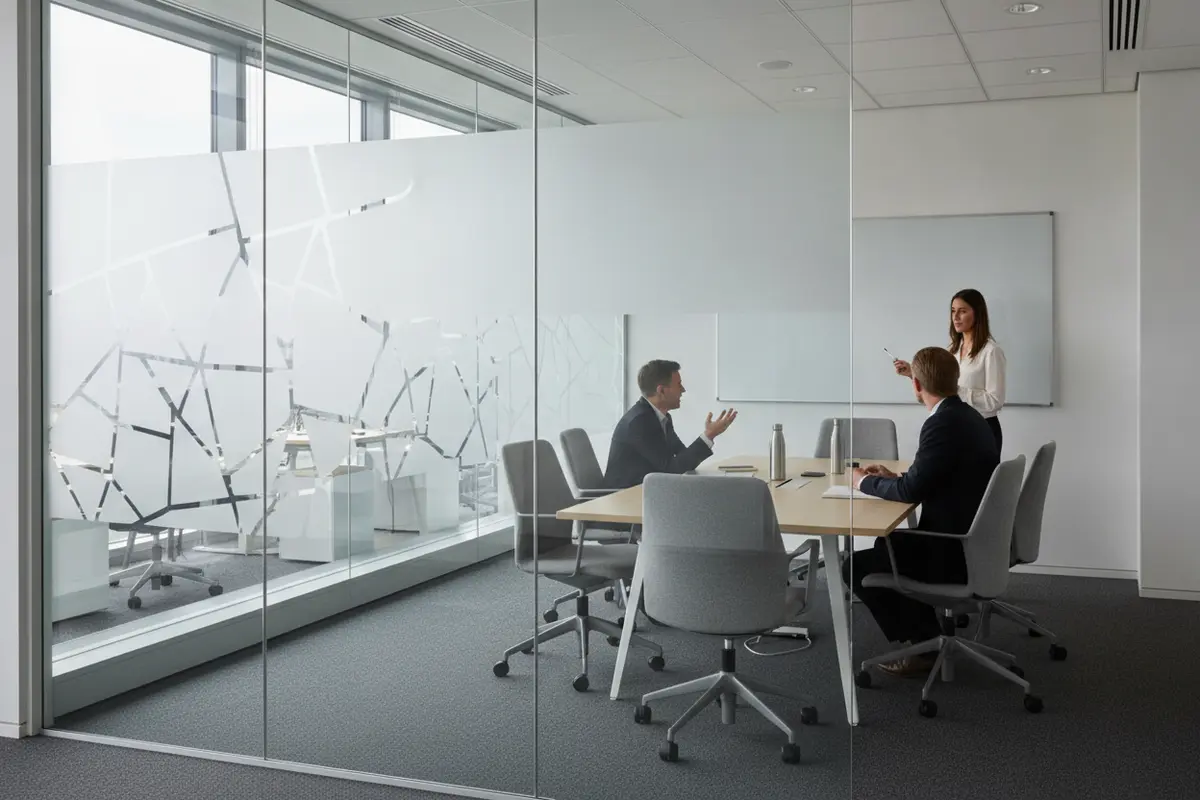
Privacy film is often considered for meeting rooms, interior partitions, treatment rooms, and street-level glass. The first question is when privacy is needed. Some films obscure views in one direction or under certain lighting conditions, while others use a frosted or patterned appearance. Do not assume that daytime privacy also provides nighttime privacy when interior lights are on.
Define the area and the sightline you want to change. A conference room may need coverage only at eye level, while an entry or interior glass partition may call for a decorative band. Clarify whether people should still see shapes, movement, or a clear view through the glass. If the business uses branded graphics or signage, coordinate those separately and confirm any applicable building requirements.
For mixed-use spaces, map the windows by function. A storefront display may benefit from retaining an open view, while a back-office room may need greater concealment. A consistent film across every pane is not automatically the best solution. A room-by-room plan can help avoid blocking daylight where it is useful. Ask for a sample or a demonstration in the actual lighting conditions if appearance is important. Check sightlines from the locations where customers, staff, or visitors will stand. Confirm whether exterior appearance must remain consistent across the facade, and whether landlord or property rules limit colors, reflectivity, or patterns. These checks can prevent choosing a film that solves one privacy concern but creates an unwanted look elsewhere.
For commercial properties evaluating window care alongside a film project, review commercial window cleaning information and the broader commercial exterior cleaning services. Ask how the requested film work fits the property's scope; do not assume window cleaning and film installation are the same service.
Security film: What does it do, and what does it not do?
Security-oriented films are designed for specific glass-retention purposes. A film may help hold broken glass together, depending on the product and how the system is specified and installed. It does not make glass unbreakable, and it should not be described as a guarantee against entry, injury, or property loss.
For a security-related project, involve the property's facilities or security professionals in defining the requirement. Ask whether the objective is to reduce glass fragments, support a particular standard, or address a broader threat. Then request documentation for the film, attachment method, glass type, and installation. Film alone may not meet the needs of a complete security plan.
Consider how the space is used and what other components matter. Doors, frames, locks, alarms, and procedures may be part of a larger plan. Confirm any code, insurance, landlord, or tenant requirements before authorizing work. If the building has multiple types of glazing, ask whether the same specification applies across all openings. Do not infer a security rating from a product label alone. Ask which test method or system configuration supports the stated performance, whether film attachment details are included, and what limitations remain. Keep records of the product documentation and the agreed scope with the property's maintenance files. These questions help distinguish an appearance or fragment-retention upgrade from a broader security project that may require other measures.
How can a property team plan around business hours?
For an occupied building, the project plan matters as much as the film selection. List the spaces that need access, note any customer-facing or sensitive areas, and identify when rooms are available. Confirm how the team will communicate schedule changes and whether tenants or employees need advance notice. If only part of a building is included, label the affected rooms or windows clearly so the scope is easy to verify.
Ask the provider to explain what site preparation is expected and whether furniture, window coverings, or nearby equipment must be moved. Clarify how the work area will be protected and how the team will handle access restrictions. Do not assume the same timeline or preparation applies to every film or building. A written plan lets a property manager coordinate occupants without promising a schedule before the site details are reviewed.
Consider whether other exterior work needs to happen at a different time. For example, cleaning windows and applying film are separate activities, so ask the relevant providers how to sequence them and follow the film manufacturer's instructions. Keeping the work scopes distinct makes responsibilities easier to track.
How should a property team prepare for a window film quote?
A useful quote discussion starts with the affected windows, the problem to solve, and the desired result. Window Hero Southlake can review the request and clarify the available scope before you decide what to do next.
Prepare a simple inventory before requesting an estimate. You do not need a full architectural survey to start a conversation, but accurate notes help explain the project. Include the building address, the areas involved, approximate window counts or dimensions if available, and photos taken from safe, accessible locations.
- Describe the issue. Explain whether the priority is sun and glare, visual privacy, or a glass-retention concern.
- Identify the windows. Note floors, elevations, room names, and any differences in glass appearance or construction.
- State the desired outcome. For example, describe whether you want less direct glare while retaining daylight, or privacy for a specific meeting room.
- Share constraints. Mention business hours, tenant access, approval steps, and any schedule restrictions.
- Ask for product details. Request the exact product information, compatibility guidance, appearance expectations, and written scope.
Ask who will verify the glazing and how the installation plan addresses it. Commercial windows may differ across one building, especially after phased renovations. A visual inspection and product-specific review are important before a final selection. Confirm which party handles approvals, access, preparation, and cleanup. For a multi-tenant building, identify a point of contact for each affected space and determine how occupants will receive schedule updates. Ask whether the proposal covers every listed pane or only selected areas, and how changes to the scope will be recorded. If the property has restricted hours or sensitive operations, share those requirements early. A written scope should make clear what is included, what remains the property team's responsibility, and what conditions could require a revised plan. This helps prevent mismatched expectations when the work is coordinated across several rooms or tenants.
Window Hero Southlake serves customers in Southlake and surrounding communities including Colleyville, Flower Mound, Westlake, and Grapevine. For local service details, see the Window Hero Southlake location page. You can also review its Southlake window cleaning service information and the general window film service page when considering what to ask about your project.
Get a Free Quote for Your Commercial Property
Frequently asked questions
Can window film lower a commercial building's energy bills?
Some solar-control products are designed to reduce solar heat gain or improve comfort near windows, but savings are not guaranteed. Building orientation, glazing, climate, controls, and occupant use all affect outcomes. Request product-specific information and avoid relying on a general savings claim.
Does privacy film work after dark?
It depends on the film and lighting conditions. A product that limits views in daylight may provide less privacy at night when a room is illuminated. Ask for an explanation of privacy from both sides under the conditions when the room is used.
Does security film prevent a window from breaking?
No. Security film does not make glass unbreakable. Some systems are designed to help retain broken glass, but the actual performance depends on the product, glass, and installation details. Ask for documentation and consult the appropriate security professional for threat-related decisions.
Can the same film be used on every window in a property?
Not necessarily. Glass type, exposure, function, appearance requirements, and project goals may vary by opening. Have the specific glazing evaluated and confirm that the proposed film is compatible before approving a building-wide specification.
Plan the next step for your DFW property
Start by listing the windows and defining the issue you want to address. Compare solar, privacy, and security options by their documented purpose, then confirm compatibility and expectations for the specific glass. A clear scope helps a property team decide whether film is an appropriate retrofit and what questions to resolve before scheduling work.