
Knowing how to clean epoxy garage floor surfaces starts with a gentle routine, not a powerful machine. Sweep away grit, use a mild cleaner when needed, and rinse or wipe the surface so residue does not remain. The exact care instructions from your coating installer or product manufacturer should always come first.
How to clean epoxy garage floor: a safe routine
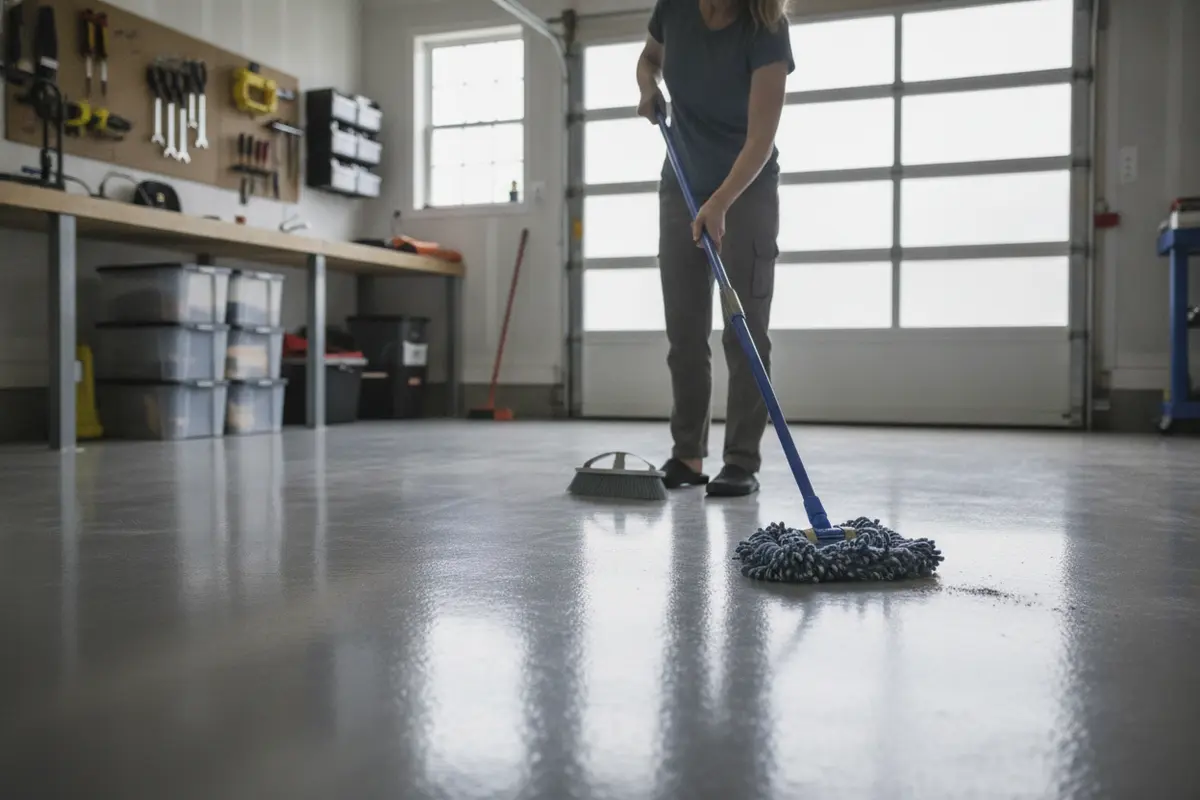
For routine care, remove loose grit first, then use a soft mop and a small amount of mild, floor-safe cleaner. Work in manageable sections and dry the floor if water remains.
Fine sand and dirt can act like abrasives under shoes or tires. Sweep or vacuum before adding water. Use a soft-bristle broom or a vacuum attachment that will not scratch the coating. Move stored items carefully instead of dragging them across the floor.
- Clear the work area. Move portable items, park vehicles outside, and give yourself room to mop. Do not move heavy equipment alone.
- Remove dry debris. Sweep from the back of the garage toward the door. Pay attention to corners, expansion joints, and the area beneath shelves.
- Prepare a mild cleaning solution. Follow the coating maker’s care instructions. If none are available, use a small amount of a mild cleaner in water rather than a concentrated or abrasive product.
- Mop in sections. Use a soft microfiber mop or non-abrasive sponge. Rinse the mop often so you are not spreading grit and dirty water.
- Remove cleaner residue. Wipe with clean water if the cleaner’s label or coating instructions call for rinsing. A clean, dry microfiber cloth can help remove leftover moisture.
- Let the surface dry. Keep people and vehicles off wet areas. Make sure the floor is dry before returning stored items or parking a car.
Start with a small test area if you are unsure how the floor will respond. That is especially useful when you do not know which coating was installed. Avoid flooding the garage, since water can move toward the doorway or collect near stored belongings.
Before you begin, check the weather and choose a time when the garage can stay clear until the floor dries. Open the garage door if conditions allow, but do not let wind blow fresh dust onto a damp surface. If the floor slopes toward the garage opening, use only enough water to dampen the mop. A bucket that is wrung out well gives you more control than pouring water directly onto the floor.
Divide a large garage into small zones, such as one parking bay at a time. This helps you notice whether dirty water is leaving a film before you clean the next area. Change the rinse water when it turns visibly dirty. If you have a floor drain, do not assume every cleaner or spill can go into it; follow product directions and local disposal requirements.
What should you use on an epoxy garage floor?
A soft broom, microfiber mop, clean water, and a mild cleaner approved for the floor are enough for most ordinary dust and dirt. More aggressive products are not automatically more effective.
Check the product label and your floor-care instructions before using a cleaner. If a product is intended for a different surface, do not assume it is suitable for a coated floor. Avoid abrasive scouring pads, stiff wire brushes, and powders that can scratch or dull the finish. Do not mix cleaning products. When you have a question about a household product’s ingredients or intended use, consult its label and the U.S. Environmental Protection Agency.
Some floor-care guides mention diluted vinegar or other homemade mixtures, but a recipe found online may not match your coating or its warranty. Follow the installer’s directions instead. If you cannot identify the coating, choose the least aggressive method and ask the installer or manufacturer before trying a specialty product.
| Cleaning need | Lower-risk approach | Use caution with |
|---|---|---|
| Dust, sand, and leaves | Soft broom or a vacuum with a suitable floor attachment | Dragging debris, rough brushes, or metal tools |
| Everyday dirt | Microfiber mop, water, and a small amount of approved mild cleaner | Excess cleaner that leaves a film |
| Sticky spot | Blot and lift with a soft cloth; use a cleaner approved for the coating | Scraping with a sharp blade or using an unknown solvent |
| Oil or vehicle fluid | Absorb and clean promptly according to the floor-care instructions | Allowing a spill to sit or spreading it with a wet mop |
| Unknown mark or residue | Test an approved cleaner in a discreet area, or ask the installer | Bleach, strong acids, harsh solvents, or abrasive pads without approval |
The table is a cautious starting point, not a substitute for product instructions. A decorative flake floor, a clear topcoat, and a different coating system may have different care requirements.
Which stains need a different approach?
Blot fresh spills before they spread, then clean the spot with a product approved for your floor. Identify the spill first; an unknown chemical or solvent can make a stain or coating problem worse.
For oil, automotive fluids, or other drips, place an absorbent material over the spill and lift it rather than wiping outward. Dispose of used absorbent material according to its product directions and local requirements. After the bulk is removed, use the coating maker’s recommended cleaner. Do not pour a strong cleaner over the whole area to treat one spot.
For mud or tracked-in dirt, let heavy mud dry enough to lift without smearing, then sweep or vacuum it away. Follow with a damp mop. If dirt enters through the garage door, a regular sweep near the threshold can reduce how much gets tracked across the floor.
For tire marks or a stubborn dark scuff, begin with a soft cloth and mild, approved cleaner. Work gently and stop if the sheen or color appears to change. Do not reach for a razor, steel wool, abrasive pad, or solvent just because the mark is persistent. A coating professional can help identify whether the mark is on the surface or the finish has been affected.
For paint, adhesives, or an unidentified spill, check the product label and coating instructions before applying anything. Solvents can affect some coatings, and scraping may leave scratches. If the stain does not lift with an approved mild method, take a clear photo and ask the installer what to use.
When a spill happens, first protect yourself and keep children or pets away from the area. Identify the material if you can do so safely, then check its label or safety directions before cleanup. Do not touch an unknown substance with bare hands or combine it with another cleaner. If a spill gives off strong fumes or causes irritation, leave the area and follow appropriate safety guidance instead of continuing to scrub.
A cautious spot test is simple. Choose a small, low-visibility area and apply only a cleaner approved for the floor. Use a soft cloth, follow the product directions, and check the area after it dries. Stop if you notice a change in color, gloss, texture, or tackiness. Do not expand the test to a larger area until you know the result is acceptable. If the floor-care instructions are unavailable, ask the installer before testing a specialty cleaner.
It can help to keep a small cleaning kit near the garage: a soft broom, microfiber cloths, a mop, and the cleaner approved for the coating. Store chemicals securely and keep them in their original labeled containers. When a spill happens, identify it before reaching for a product. A quick note about what spilled and when can also help if you need advice later.
Get a Free Quote for Outdoor Pressure Washing
What should you avoid when cleaning the floor?
Do not assume a garage floor should be pressure washed because it is concrete underneath. An epoxy coating is a finished surface, and an overly forceful or poorly controlled cleaning method can cause problems at weak spots, edges, or existing damage. Window Hero Southlake’s pressure washing service is for appropriate exterior surfaces, not a recommendation to pressure wash a coated indoor floor.
Also avoid these common missteps:
- Skipping the sweep. Mopping over grit can drag it across the finish.
- Using an unapproved chemical. A product that removes a stain may also affect the coating or its appearance.
- Mixing cleaners. Use one product at a time and follow its label.
- Leaving a soapy film. Too much cleaner can leave residue that attracts dirt or feels slick.
- Using sharp tools. Knives and metal scrapers can gouge the surface.
- Ignoring a changing floor. Peeling, bubbling, cracks, or a newly rough area call for assessment, not stronger scrubbing.
If you are uncertain about a product, do not test it across the floor. Ask the installer or coating manufacturer to confirm a suitable method. Keep the product container and note what was spilled, since that detail can help identify the safest next step.
How can North Texas homeowners keep the floor cleaner?
In a busy North Texas garage, dust, leaves, mud, and debris can arrive on shoes, tires, and stored equipment. A short, regular sweep is easier than scrubbing a large buildup. Place a mat near the entry if it suits your space, and clean the mat itself so it does not become another source of grit.
After rain, check for water and soil near the garage threshold. If water repeatedly enters the garage, cleaning the floor will not address the source. Look for the path it takes and consider whether exterior drainage, door sealing, or another repair needs attention. Avoid directing water toward the house while cleaning.
A simple maintenance rhythm can make cleanup more manageable. Sweep when you notice visible grit, and check the floor after a vehicle brings in mud or leaves. Keep an absorbent cloth accessible for drips, but avoid leaving a damp item on the coating for a long time. If seasonal yard work sends extra soil toward the garage, focus on the threshold and the route between the driveway and the parking area.
Keep routine garage-floor care separate from outdoor maintenance. For exterior concrete or other suitable outdoor surfaces, learn about pressure washing options and the local Southlake pressure washing service. Those services do not replace the gentle care recommended for a coated garage floor.
Other exterior tasks can be planned separately. Window Hero Southlake lists house washing, gutter cleaning, and window cleaning among its local services. These links are useful when you are organizing exterior upkeep, not instructions for cleaning the epoxy floor.
You can also use the exterior cleaning frequency quiz to think through timing for outdoor maintenance. For a broader explanation of how gutters handle roof runoff, see how gutters work. Keeping water moving away from the home can help you spot exterior issues, while floor cleaning remains a separate, low-pressure task.
When is professional exterior cleaning appropriate?
Consider professional exterior cleaning when an outdoor surface needs attention or a job is difficult to manage safely. For an epoxy garage floor, use coating-specific care guidance instead of assuming an exterior cleaning service is appropriate.
A professional exterior cleaner may be relevant for outdoor concrete, siding, or other serviceable areas. The right method depends on the surface and condition. Before booking, describe the material, the location, the type of buildup, and any nearby plants or items that need consideration. Window Hero Southlake provides exterior cleaning services in its Southlake area; ask about the particular outdoor surface when requesting information.
When describing an outdoor project, be specific about what needs cleaning and where it is located. Mention whether the area is a driveway, walkway, siding, or another surface, and point out any visible damage or delicate nearby features. Clear details help determine whether the request fits an exterior service. They also keep the conversation separate from advice about the epoxy coating inside the garage.
For a garage floor with peeling, bubbling, cracks, exposed substrate, or a change in texture, contact the coating installer or a qualified flooring professional. Those conditions may indicate a coating issue rather than ordinary dirt. Cleaning more aggressively can obscure what is happening or worsen a vulnerable spot.
Get a Free Quote for Exterior Cleaning
Frequently asked questions
Can I use a pressure washer on an epoxy garage floor?
Do not assume that pressure washing is suitable for a coated indoor floor. Start with a soft broom, microfiber mop, and cleaner approved for the coating. Ask the installer before using a powered washer or any high-pressure method.
How often should I clean an epoxy garage floor?
Clean it when dust, grit, or spills build up, and sweep more often when the garage sees frequent vehicle or foot traffic. Your coating maker may give a schedule that fits its specific finish.
What is the safest way to remove an oil spot?
Blot fresh oil with an absorbent material instead of spreading it. Then use the cleaner recommended for your floor. If the oil has set or the coating changes, ask the installer for next steps.
Can I use vinegar or bleach on an epoxy floor?
Do not use vinegar, bleach, or another strong cleaner unless the coating instructions specifically approve it. Products can affect different finishes in different ways. Follow the maker’s care guidance and test only an approved product in a small area.
Does Window Hero Southlake clean epoxy garage floors?
The available service information covers exterior cleaning, including pressure washing, rather than epoxy-floor care. Contact the coating installer for floor-specific cleaning questions, and ask Window Hero Southlake about an appropriate outdoor cleaning project.
A gentle routine, prompt spill care, and coating-specific instructions can keep ordinary garage-floor cleaning straightforward. When a mark or surface change does not respond to a mild method, pause and ask the coating professional before trying something stronger.